Health & Fitness
Do You Know What to Look for in Sunscreen?
Make sure to read the label on the bottle.

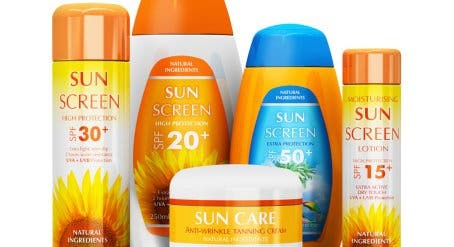
That sunscreen you just bought may not be the best choice for you, says a NY dermatologist, especially if you don’t know what to look for on the product label.
To help consumer’s make wiser choices, the FDA in 2012 mandated that sunscreen packaging spell out exactly what’s inside (with the percentage of active ingredients listed on the package) and how much sun protection is provided.
But according to a recent study, only 43 percent of people understand the definition of the sun protection factor (SPF) value.
Find out what's happening in Port Washingtonfor free with the latest updates from Patch.
“The SPF is an indication of how long it will take you to develop a sunburn while wearing that particular SPF containing sunscreen as compared to unprotected skin,” said Katy Burris, MD, a dermatologist at the North Shore-LIJ Health System. “So, if it normally takes you 10 minutes to burn, an SPF of 30 will allow you to be out for 300 minutes before burning.”
And, no matter what the SPF number is, you still need to reapply sunscreen every two hours due to sweat, absorption and the product rubbing off.
Find out what's happening in Port Washingtonfor free with the latest updates from Patch.
Dr. Burris says there are four things you want to check on a sunscreen label.
- An SPF of at least 30.
If a patient is extremely fair skinned, has a condition that makes them very sensitive to the sun or traveling to a part of the world where the sun is stronger, I may recommend a higher number, depending on their history,” said Dr. Burris. “But 30 is generally sufficient for most people.”
- Whether the sunscreen is water or sweat resistant. There are no water or sweat PROOF, sunscreens, only RESISTANT.
“According to FDA regulations, ‘water resistant’ sunscreen means that it maintains its SPF after 40 minutes in the water, while ‘very water resistant’ can last up to 80 minutes,” she said. “Remember to allow a few minutes between application and exposure to water so it allows the sunscreen to be absorbed. And most importantly, remember to reapply.”
- Whether the sunscreen contains physical blockers (zinc oxide or titanium dioxide), which deflect the UV light or chemical blockers (octylcrylene, avobenzone, octinoxate, to name a few), which absorb the UV radiation.
“Physical sunscreens tend to be better tolerated by most people because the chemical filters used in chemical sunscreens may sometimes be slightly irritating. They also work immediately upon application, whereas chemical blockers must be applied 20 minutes before sun exposure,” said Dr. Burris. “However, physical sunscreens can be a bit thicker so may be more difficult to apply or may leave white streaks, whereas chemical blocks are usually more aesthetically appealing. Many of today’s sunscreens contain both physical and chemical blockers.”
- That your sunscreen is broad spectrum, which protects against both UVA and UVB radiation.
UVB are the shorter wavelengths that cause sunburn and damage on the surface of the skin, while UVA are the longer wavelengths that penetrate deeper and cause premature aging. Both play a role in the development of skin cancer.
“So much of the aging process is exacerbated by UVA rays, so make sure to apply a good sunscreen that covers both UVA and UVB daily,” said Dr. Burris. “Also, UVB leads to sunburns, which lead to DNA damage directly and ultimately to an increased risk of developing skin cancer later on in life.”