Community Corner
Furor over Prospect Park West Bike Lane Misguided
Cian O'Day, a neighborhood resident and cyclist, addresses the controversy surrounding the Prospect Park West bike lane.

Cian O'Day is a writer, editor and cyclist who lives in the area.
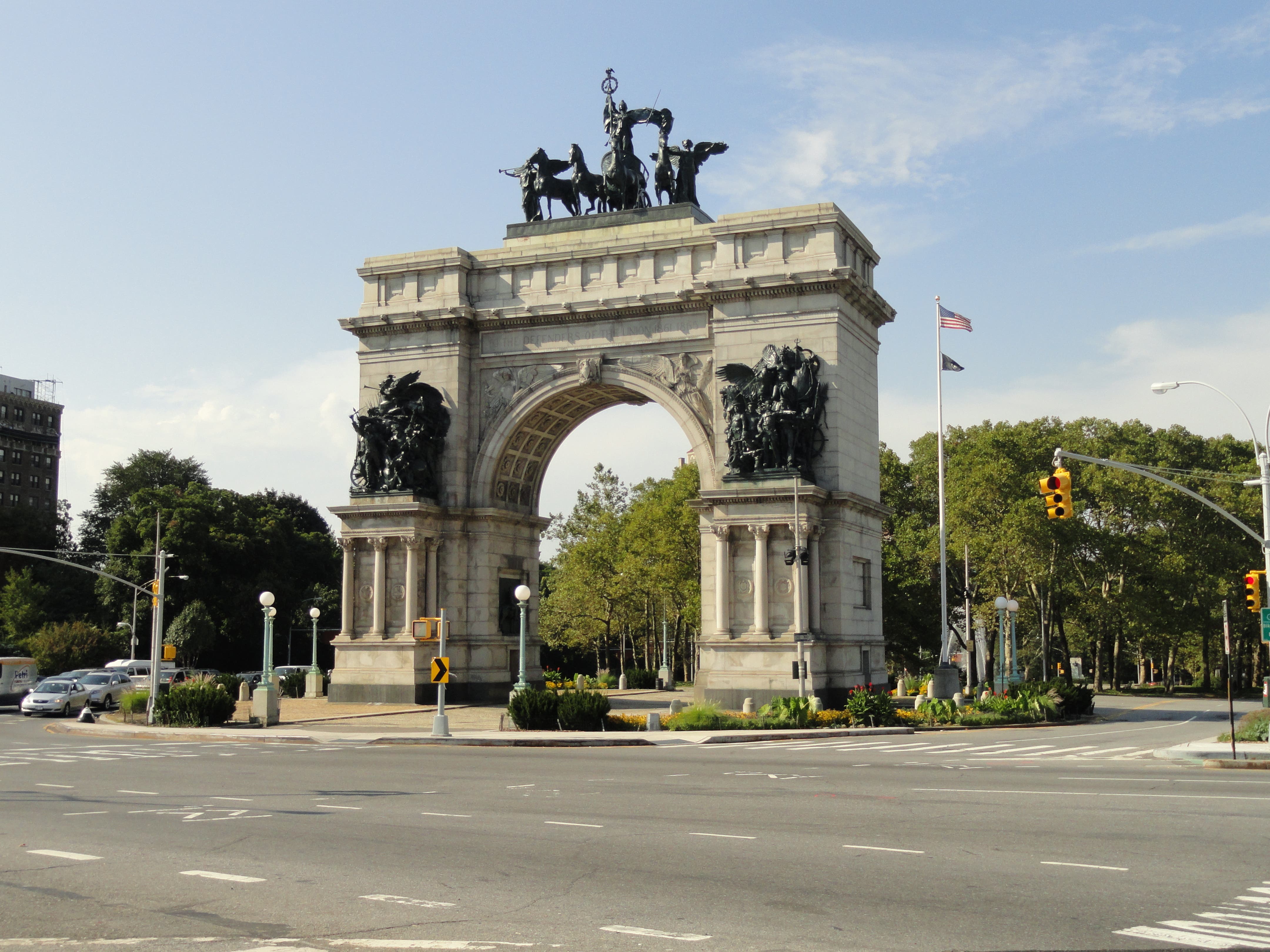
The Soldiers' and Sailors' Memorial Arch looms stoically over Grand Army Plaza. The Arch honors the Union's casualties during our bloody Civil War. Last Thursday, the Arch loomed over the throws of a different conflict, this one bloodless and banal by comparison. Its casualties depend on whom you ask.
Four months ago, the New York City Department of Transportation installed a two-way bicycle lane along Prospect Park West. Like the cycle tracks along First and Second Avenues in Manhattan, the Prospect Park West bike lane has not garnered universal acclaim. Opponents of the bike lane organized a protest for last Thursday during morning rush hour. Supporters of the bike lane, in turn, organized a counter-protest. Reports varied on specifics, but supporters of the bike lane easily outnumbered opponents, anywhere from three-to-one to five-to-one.
Find out what's happening in Prospect Heights-Crown Heightsfor free with the latest updates from Patch.
The Prospect Park West bike lane begins at the Grand Army Plaza entrance to Prospect Park and runs between a wide sidewalk and a row of automobile parking for a length of nineteen blocks. The vibrant green lane emulates the other cycle tracks installed throughout the city, notably First and Second Avenues. It eliminates one lane of traffic and a handful of parking spots along Prospect Park West.
Beyond those bare facts, the two sides of the debate cannot agree on much. Opponents Thursday claimed that the bike lane is unsafe for seniors, redundant, and ugly. Supporters countered that the lane is safe for motorists, bikers, and pedestrians alike as well as green in intent not just color.
Find out what's happening in Prospect Heights-Crown Heightsfor free with the latest updates from Patch.
What's lost, opponents say, is the majesty of the park-lined boulevard. What's lost, supporters counter, is a dangerous expressway motorists too often treat like a racetrack.
Critics of the bike lane are not limited to the 50 or so local residents that turned out Thursday morning. Borough president Marty Markowitz charges the bike lane as the byproduct of an unchecked agenda. Whose agenda? Transportation Department commissioner Janette Sadik-Khan's and her crusade to remake all five boroughs into a carbon-free paradise whether we city dwellers like it or not.
On the flip side, supporters cite more bike lanes as a step in encouraging more practical biking, like commuting, and thus a step in freeing neighbors and countrymen from dependence on foreign oil. Take that bin Laden.
As an avid cyclist, I support more bike lanes in the city in general and the Prospect Park West bike lane in particular. Both sides of the bike lane debate, however, are in danger of missing the forest for the trees.
Bicycles and automobiles share a parallel timeline yet occupy distinct histories. Cars did not replace bikes in some grand progression of transportation history. Both were products of Victorian ambitions. Both emerged in their modern recognizable forms in the 1880s. Demand and designs of both cars and bikes have responded to the social and economic realities of the times.
Driving is the result of perceived need, disposable income, and convenience; cycling of fitness, thrift, and environmental consciousness. While there is significant overlap, cycling and driving are unique social phenomena. Cycling and driving will not be an either/or proposition for the near future. The reality is this: cars and bikes must share the road. Getting both to do so safely is the issue and a thorny one at that.
Over the last few years the city's Department of Transportation has more than doubled the miles of bike lanes in the five boroughs. Prior to 2006, the city offered about one mile of bike lanes for every 65 miles of roadway, a paltry ratio. (Bicycling's best cycling city in America for 2010, Minneapolis, boasts one mile of bike lanes for every ten miles of roadway.) Moreover, the city has been active in creating bike lanes along major roads, making commuting a realistic option for the average cyclist. All these new bike lanes along busy roads naturally raise concerns about the safety of those new lanes.
Last week, the DOT released the results of its summer-long study of traffic along Prospect Park West. Among its findings, cycling has tripled during the week and doubled on weekends. Cycling on the sidewalk has dropped precipitously from over 45 percent during the week and over 20 percent on weekends to under 5 percent total. Motorist traffic underwent the most astounding transformation. The percentage of motorists speeding illegally down Prospect Park West has dropped from 75 percent to under 15 percent, encouraging numbers for everyone's safety.
To dismiss claims that the bike line is ugly and redundant is perfectly reasonable. Anyone who spends more time staring at the green lanes rather than the green foliage of the park has larger problems than a dedicated bike lane. To dismiss claims that the bike lane makes Prospect Park West unsafe for seniors, however, is irresponsible.
Lost in the shuffle of last week's controversy is that the Prospect Park West bike line is still undergoing review by the city. City Councilman Brad Lander and fellow supporters of the bike lane posted a Web survey to poll community sentiment and explore ways to make the bike lane universally safe. There's no denying the dramatic increase in safety for motorists and cyclists along Prospect Park West. And there's no reason pedestrians' concerns, especially those of elderly pedestrians, cannot be studied and, should the claims be proven substantial, addressed by simple, practical measures such as increased signage and barriers near crosswalks.
Opponents want the bike lane gone and Prospect Park West reverted to what it was before the summer. Supporters want to preserve the bike lane and their safe passage to points beyond Prospect Park. The casualty here does not threaten to be the majesty of a boulevard or the environmental conscious of a neighborhood. The casualty could be a sane, sober, and holistic approach to neighborhood safety.
Get more local news delivered straight to your inbox. Sign up for free Patch newsletters and alerts.