Politics & Government
County Executive: HUD Has a "Utopian Vision" for Westchester
Out of a meeting with the head of HUD, Robert Astorino describes deep differences between the county and the feds over the still-unsettled fair housing settlement.


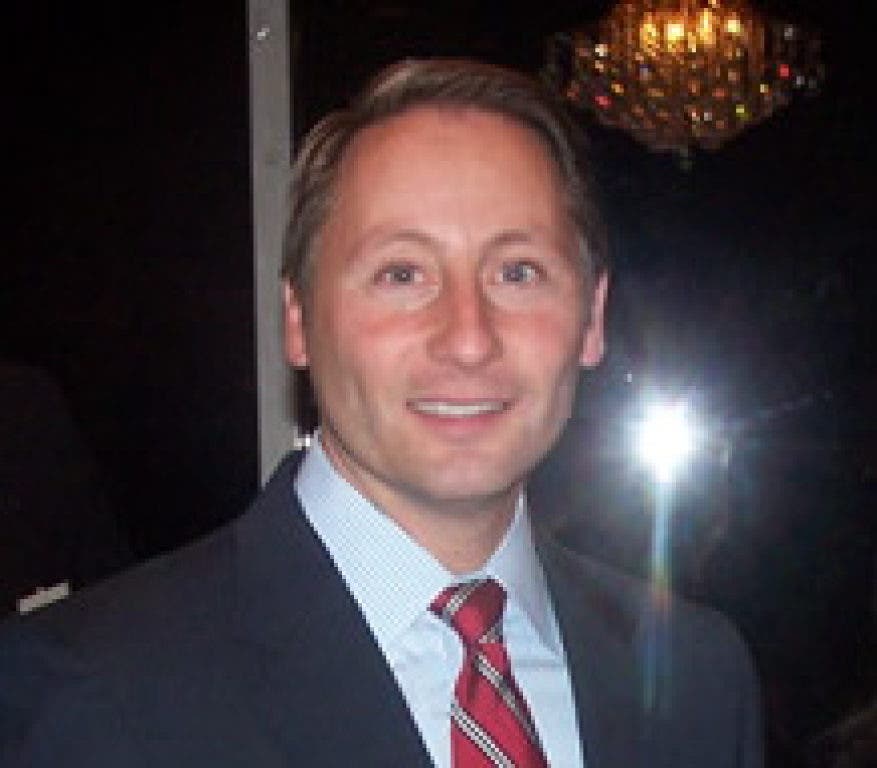


Talks today between Westchester County Executive Robert Astorino and Shaun Donovan, secretary of the U.S. Department of Housing and Urban Development, revealed deep disagreements over aspects of the county's fair housing settlement.
This fight is over neighborhood integration, and it pits some of the most well-known and wealthy communities in the United States against the feds. Scarsdale and Chappaqua are among the most upscale communities just north of New York City in Westchester, which is struggling with HUD over court-ordered fair and affordable housing.
"HUD in its vision for utopia can't use Westchester as its national model," Astorino said afterward. "I'm not going to sue municipalities and demand they rip up their zoning codes."
Find out what's happening in Rivertownsfor free with the latest updates from Patch.
The county got into the situation because officials had looked the other way while communities eager to receive federal block-grant funds for sidewalks and other civic improvements fudged the demographics on their applications to include their more diverse neighborhoods—even if the projects were elsewhere.
Caught by an anti-bias group which sued, the county decided to settle instead of paying back the money, and affordable housing became the currency.
Find out what's happening in Rivertownsfor free with the latest updates from Patch.
County officials agreed to oversee the construction of 750 units in the whitest, richest communities, getting local zoning changed if necessary through a variety of incentives and threats.
Now HUD move beyond the "four corners" of the settlement with an eye to integrating the least diverse school districts racially and ethnically. That, HUD said, meant that fully half the affordable housing had to be 3-bedroom units to accommodate children who would go to local schools.
The change would double the cost to taxpayers to almost $100 million, Astorino said. "That's completely unacceptable."
Plus, 70 percent of Westchester residents do not live in nuclear families with children, according to the Congress for the New Urbanism.
In addition, HUD wants officials to state in writing that racial segregation is the cause for demographic imbalance in its most expensive, exclusive communities.
The Anti-Discrimination Center, which brought the federal suit in 2006, the underlying issue of segregation in its plan—and that helps municipalities perpetuate it. Center officials have argued that Westchester's community patterns were formed over a long time through explicit racial exclusion.
But sticker price—not discrimination—is the issue, Astorino said. Westchester is the fourth most diverse county in New York, and just as in Manhattan, "people can live anywhere they want if they can afford it....Should we be going into Chinatown and dragging other ethnicities into housing [there] because of HUD's utopian view?"
HUD's demand that the county recruit minority residents from outside Westchester is unnecessary because change has been occurring naturally, Astorino said. "Westchester in the new Census has had a 53 percent increase in the Hispanic and black population."
Affordable housing has been a tough issue in Westchester for decades. Its leafy suburban communities, oft catergorized as "bucolic," woke up in the 1980s to the departure of their teachers, firefighters, police officers and public works employees after yet another steep rise in housing prices.
Blue-ribbon commissions and county officials created plan after plan. Several communities devised their own programs: Briarcliff Manor and Yorktown, for example, OK'd higher-density developments where builders set aside a few units parceled out under community rules to eligible residents or employees.
But the issue of affordability has remained intractable in both the exurban towns with two-acre zoning and the older, settled villages along Long Island Sound.
Not a surprise in a county where the median sale price for a single family home was $685,000 in the second quarter of 2011, according to the Westchester Putnam Association of Realtors.
Astorino said HUD officials acknowledged the county is about a year ahead of schedule in carrying out the basic plan even as the deal is still being hammered out. They also agreed to look at the possibility of releasing grant money they've been withholding from diverse communities such as Mount Kisco and Port Chester, which are non-eligible under the settlement.
Astorino also had meetings set with Sen. Kirsten Gillibrand and congresswomen Nita Lowey and Nan Hayworth. A conference call for county and federal officials is being scheduled for next week.
Get more local news delivered straight to your inbox. Sign up for free Patch newsletters and alerts.