Rochester, NY|Local Classified|Recommendation|
How Manuj Mittal is bridging skill gap b/w Rochester NY employers expectations and uni graduates
Many universities are unable to keep up with the rapid changes in the business. Employers anticipate that 39% of workers' basic skills would change or become obsolete by 2030, according to the World Economic Forum's Future of Jobs Report 2025. According to the estimate, 92 million current employment would disappear and 170 million new jobs will be created this decade. Many individuals who are getting ready to join this evolving economy are currently enrolled in courses at universities that might not accurately represent the job market of the future.
Few experts have a more comprehensive viewpoint on this issue than Manuj Mittal. After working in accounting, investment banking, mergers and acquisitions, auditing, and financial advisory services in both India and the US. His current research focuses on how colleges might better prepare students for employers whose demands are evolving quickly.
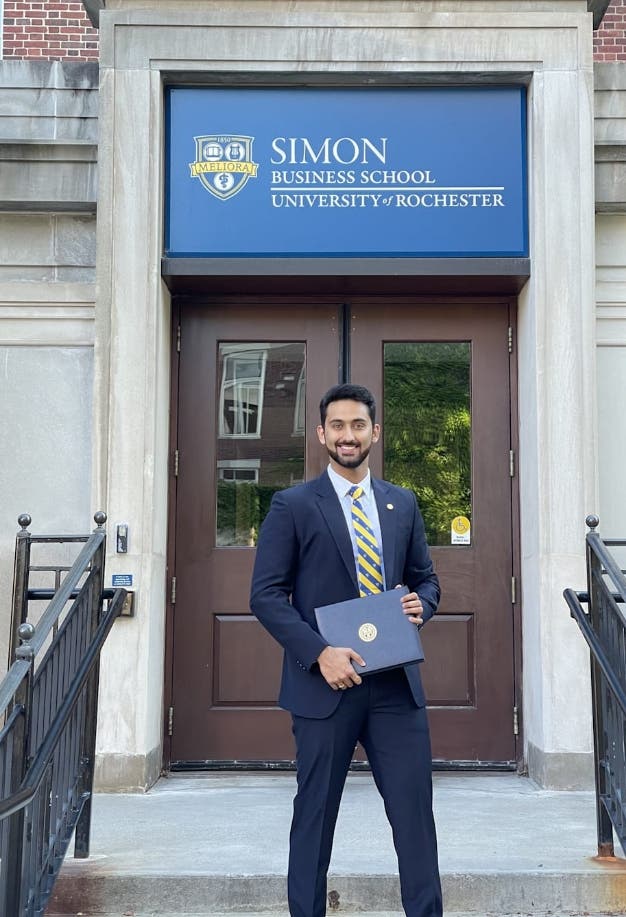
Before obtaining an MBA and a Master of Science in Finance from the University of Rochester's Simon Business School, Mittal studied chartered accountancy in India, which is equal to the U.S. CPA. His work at Morgan Stanley and Grant Thornton gave him firsthand knowledge of how companies assess talent and the abilities that set successful individuals apart.
His desire to mentor upcoming professionals led him to pursue higher education. He learned from advising students that technical expertise and stellar academic records did not necessarily address the practical concerns of employers regarding judgment, communication, flexibility, and preparedness for the job.
Mittal works with graduate finance and accounting students at Rochester's Simon Business School on professional development, networking, employer involvement, and career strategy. He contributed to the creation and co-teaching of Career Strategy and Professional Readiness, a 14-week graduate course that blends career planning with real-world workplace readiness. In addition to technical proficiency, the course places a strong emphasis on professional judgment, communication, flexibility, and career management.
The necessity of this strategy is further supported by hiring trends. According to the Job Outlook 2025 Spring Update from the National Association of Colleges and businesses, 65% of businesses use skills-based recruiting procedures, while 38% use GPA as a screening filter for recent graduates. According to a different NACE survey, over half of the institutions did not match their learning objectives with career-readiness competencies.
According to Mittal, this highlights a structural problem: while many colleges have changed how they train students, corporations have changed how they find talent.
His doctoral research at the Warner School of Education at the University of Rochester looks at how academic programs might be redesigned to boost institutional efficacy, enhance student performance, and assist graduates' long-term professional growth. Instead of blaming businesses alone, his work explores what colleges themselves can do.
The problem is becoming more pressing due of artificial intelligence. The increasing automation of routine analytical work increases the value of abilities that technology cannot readily replace. Financial modeling, variance analysis, due diligence, document review, and report preparation—tasks that have historically helped junior professionals gain experience—can all be aided by AI.
Entry-level workers are required to evaluate data, convey insights, use judgment, solve issues, and collaborate well with AI tools as these tasks become automated. Mittal views this as more than just a personnel issue; it is a curriculum difficulty.
In response, he suggests making experiential learning a fundamental component of higher education. Before graduating, students can practice making decisions in the workplace thru employer-sponsored projects, consulting assignments, coursework-integrated internships, and realistic simulations. This perspective is reflected in the graduate course he assisted in creating, and his PhD study investigates how such methods might be extended throughout higher education.
In addition to his doctoral studies, Mittal has written a book about ongoing self-improvement, which reflects his conviction that success in the workplace necessitates constant learning and adjustment. In addition, he mentors students outside of the classroom as co-chair of the Higher Education Students Association and thru Residential Life and Housing.
Mittal's work serves as a useful link between academia and the contemporary workplace in Rochester. He is assisting students in going beyond merely obtaining degrees to cultivate the flexibility, discernment, communication, and lifelong-learning mindset that are increasingly valued in a changing labor market by tying classroom instruction to employer expectations, experiential opportunities, and meaningful professional experience.