Politics & Government
City Of Rye Mayor And 3 Councilmembers Sue Ethics Board Over Rebuke
The city lawmakers contend the board issued an "irrational and arbitrary and capricious" opinion in the wake of a controversial tree law.


CITY OF RYE, NY — City of Rye Mayor Josh Cohn and three of his City Council allies have filed suit against the city's Board of Ethics after the panel issued an opinion that the four local lawmakers violated the city code of ethics.
In a case filed on Tuesday in the Supreme Court of the State of New York, City of Rye Mayor Josh Cohn and Councilmembers Carolina Johnson, Julie Souza and Benjamin Stacks are suing the City of Rye Board of Ethics, accusing that board of overstepping its authority.
The petitioners are "seeking an Order and Judgment holding that the Board of Ethics acted in excess of its jurisdiction; its determination to proceed was affected by errors of law, was an abuse of discretion, was irrational and arbitrary and capricious; it is proceeding in violation of lawful procedure; and it has denied Petitioners due process in violation of the United States Constitution and the Constitution of the State of New York."
Find out what's happening in Ryefor free with the latest updates from Patch.
The Board of Ethics conducted an investigation and issued a non-confidential finding that limits Councilmembers to vote on issues regarding a so-called tree moratorium. The board's opinion said that the lawmakers' actions gave an appearance of a conflict of interest.
In the suit, lawmakers disputed both the premise of the investigation and the ethics board's findings.
Find out what's happening in Ryefor free with the latest updates from Patch.
"The City of Rye has been plagued with significant amounts of clear cutting of trees," the recently filed suit contends. "Tree removal has changed the landscape and character of the City and raised concerns among its citizens. Discussion of a possible change in the law regarding trees dates to at least the Spring of 2021."
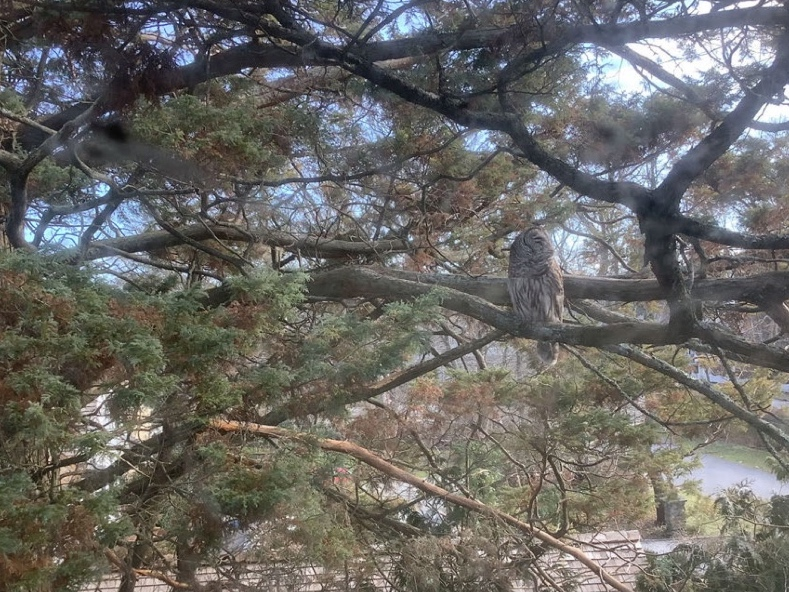
In January of this year, Mayor Cohn found out that 40 mature trees in a wooded parcel of property next to his home would be clear-cut within the following week. By February 3, several complaints and concerns from the community, including one resident claiming to speak on behalf of "The Owl of Lynden St.," about the clear-cutting of the trees had been received by city officials.
The city's corporation counsel advised the mayor that a special meeting would allow setting a public hearing on the moratorium, from which the mayor recused himself. The special meeting was noticed on February 3, with the meeting to be held on February 6.
On February 4, the trees next to the mayor's property were clear-cut, which the lawsuit contends eliminated the basis for the mayor's earlier recusal. At the February 6 meeting, while three council members did not participate (William Henderson, Josh Nathan, and Lori Fontanes), Mayor Cohn and Councilmembers Carolina Johnson, Julie Souza and Benjamin Stacks moved to open a public hearing on a tree-cutting moratorium at the February 15, council meeting.
The City of Rye's Board of Ethics got involved as concerns over a potential conflict were raised. The board is made up of City Manager Greg Usry, Corporation Counsel Kristen Wilson, and three members of the public: Edward B. Dunn (former mayor), Elizabeth Griffin Matthews (former councilmember), and Edward Stein. According to the City of Rye's website, boardmembers "meet on an as-needed basis and render advisory opinions on specific situations to officers and employees of the City with respect to General Municipal Law and the City's Code of Ethics."
On February 8 and February 10, Councilmembers Henderson, Nathan and Fontanes asked the Board of Ethics for an "advisory opinion" on the issue.
Wilson and Usry "recused themselves as a voting member of the Board." According to the petition, Wilson's position was that the special meeting appeared to be a conflict of interest and the mayor's participation continued to have an "appearance of a conflict of interest," despite the fact that the tree clear-cutting had already taken place, because the special meeting was already scheduled before the trees were cut down.

The Board of Ethics issued a "Confidential Advisory Opinion" on February 13, describing the issue as "whether it is appropriate for a councilmember to attend and vote on actions pertaining to the proposed tree moratorium" at the February 15 meeting. The board found that the council members' "extraordinary rush to call the [special] meeting gives a 'reasonable basis for the impression' that the Councilmembers who attended and voted at the February 6th meeting were influenced to take such action because of the proximity to the Mayor's property and to protect the Mayor's property and therefore to provide an elected official with a personal benefit."
The lawsuit filed by lawmakers, however, contends that the Board of Ethics claimed that the mayor and the three council members were in breach of the city's code of ethics "for simply acting within the proper scope of their public duties."
The lawsuit also noted that although the board's opinion was marked "confidential," it was widely distributed to local media outlets, which is a breach of the code of ethics section "prohibiting an officer or employee of the City to disclose confidential information acquired by him/her in the course of his/her official duties."
The lawsuit claims that "the Board's decision is unhinged from the basic principles and tenants of [the code of ethics], and as such is arbitrary, capricious, and irrational." The suit argues that "the pronouncements of the [Ethics] Board directly impact the actions and functions of the Rye City Council, effectively putting Councilmembers in the untenable position of carrying out their duly elected responsibilities and being portrayed as breaching the City's Code of Ethics or abdicating their elected position as it relates to the tree and clear-cutting issue and crippling the City's ability to address this long-standing issue."
According to court documents, the lawmakers sought to resolve the matter without litigation, and sent the Board of Ethics an analysis of their opinion and a request that it be withdrawn. The board ultimately rejected this offer.
"After the Board weaponized its role and failed to follow its limited grant of power and confine itself to its limited purpose, the Petitioners are now left with no choice but to defend themselves and their reputations through the only means available - this litigation," according to the court filing. "Moreover, the Petitioners' defense of the City's integrity process will ensure that the Respondent's role is returned to its rightful and limited place, avoid a chilling effect over City officers and employees, and ensure that future City office holders and employees are not subjected to similar abuses of power."
The lawmakers have framed the unusual step of suing the city's ethics board as necessary not just for their own reputations, but to maintain a working local elected government.
"The public disclosure of a confidential Opinion further serves to weaponize what should be a sacrosanct confidential advisory ethics board," the suit contends. "A rogue local Board of Ethics has acted well beyond their legislative grant of authority and made irrational findings that participation in a duly notice meeting of the City Council would be a breach of City's Code of Ethics."
The city officials are asking that the judge vacate the Board of Ethics Advisory Opinion and declare it legally infirm, issue a writ of prohibition against the board's "intrusion into the legislative procedure, process and municipal law," and declare that the petitioners followed procedure and there was no basis for a conflict of interest.
They are also seeking attorneys' fees.
SEE UPDATE: 'Withdraw Lawsuit Or Resign': Rye Political Rivals' Joint Statement
Get more local news delivered straight to your inbox. Sign up for free Patch newsletters and alerts.