Neighbor News
High School Students on Political Involvement Without the Ability to Vote
How students in two classes at Sachem High School East view the political atmosphere and how they fit in before they can go to the polls.

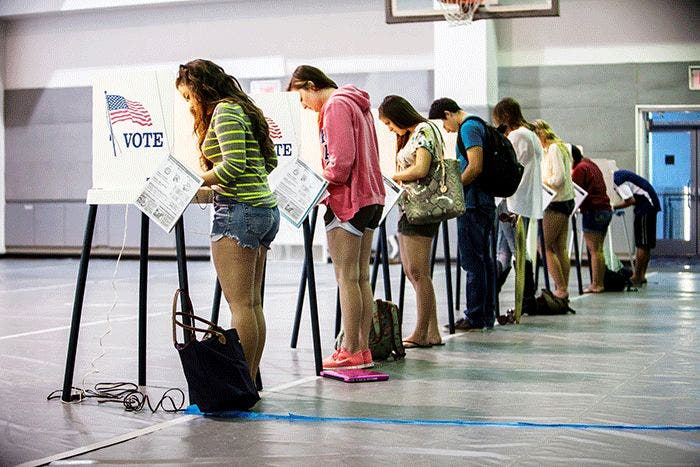
One demographic was one of the most talked about this election season: young people. Bernie Sanders’ campaign was based in the youth vote.
But what about young people that can’t exercise their right to vote? How can high schoolers and younger be involved in the political system without voting?
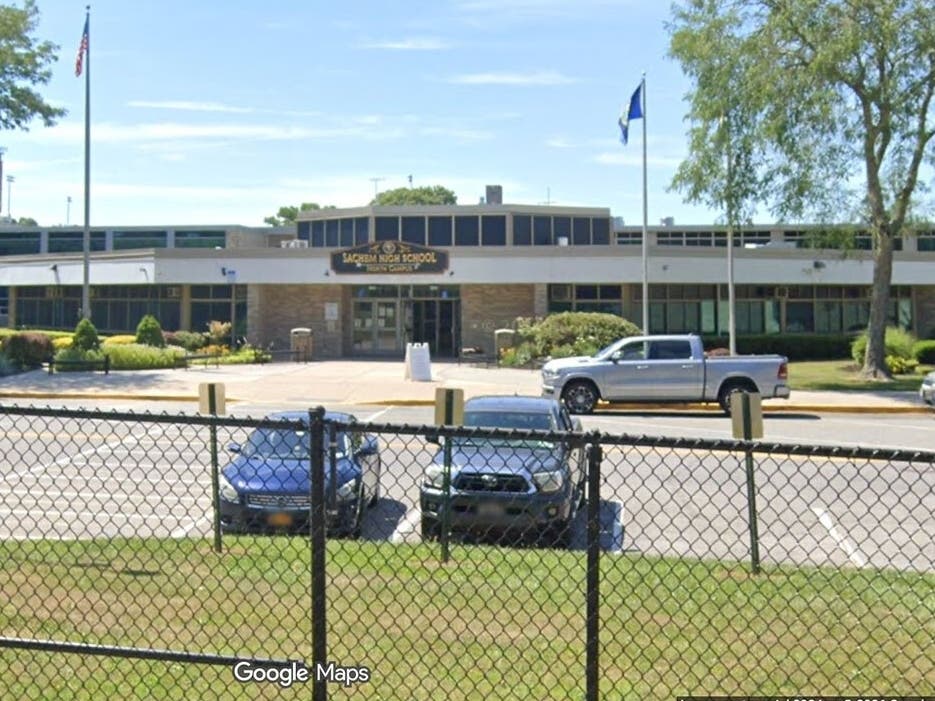
At Sachem High School East in Farmingville, NY, teacher Nicholas Antonucci educates his students about the world of politics and government in the Advanced Placement Government and Politics class, mixed with students of different ethnicities, races, backgrounds, and ages.
Find out what's happening in Sachemfor free with the latest updates from Patch.
Antonucci makes sure he stays neutral in his instruction when talking about political and controversial issues, in an effort to give students facts, rather than his opinion, and the students can see this.
“Mr. Antonucci does a really great job of staying objective. With other teachers, I find it unfair that they’re so political and it’s not even a political class,” said Brooke S., a senior in the third period GOPO class.
Find out what's happening in Sachemfor free with the latest updates from Patch.
Students in the class were asked about where they get their political ideas. A typical finding is that many teenagers develop the political views their parents have. Many of the students agreed that this was the case, adding that the environment you surround yourself with is also a large factor.
“A lot of my friends have the same ideas I do, and not on purpose,” said Brooke H., another senior in the third period class.
Brooke S. also added to this that age is an important factor. She noted the first-hand experience she had talking about important issues with freshmen versus seniors.
The issue of information gathering came up naturally in the discussion. Students were well aware of the potential bias in the media and the framing that can be experienced from different sources. They also recognized the issue of being in an echo chamber – surrounding yourself with ideas that only you agree with.
“A lot of people might rely on one single source for their media and that definitely skews your beliefs,” said Ilyssa, a junior in the GOPO class.
So how can these teens be politically involved without voting for a candidate in any form of office? Many of them were open to the prospect of volunteering for campaigns and doing outreach for different causes, but the real value to them was social participation.
The most effective way the students believed they could participate in the political process was through having conversation and sharing information. They added that it was hard to be completely uninvolved due to the popularity of social media.
“As a teenager, you can definitely get involved and have conversations to open people’s minds,” Ilyssa said.
Many people believe that politics don’t matter as much to young people, since their demographic is the least likely to come out to the polls each election, especially in midterm and off-year elections. These students defied that notion, saying that these policies that are being talked about do matter to them.
“We’re going into the adult world and their policies are going to affect us now,” said Melanie, a senior in the fifth period class.
Fellow senior, Jessica, added that a lot of young people are worried about the other things going on in their lives, which prevents them from being well educated enough to know about the candidates, and is a big part of their hesitation for going out to vote.
“If I don’t really know about them, I’m not going to just throw my vote in,” said Shane, a senior from fifth period, talking about local elections.
These students, however, are excited to go to the polls as soon as they can, many of them citing that they would have voted in November if they could have.
“This was the first election that a lot of us were actually engaged in, and being almost at that age, we’re all jumping at the opportunity to ‘do our civic duty,’” said Miranda, a senior in the class.
The issues these students were concerned about varied, but all reflected the hot button issues that have dominated the recent campaign. The most popular answers were climate change and college affordability.
“The environment is something that impacts everyone,” said Sarah, a senior from third period.
“It does affect everyone, not just a set group or one country,” added Emily, a fellow senior.
There was a general consensus that the reason the students were so involved with this recent election was taking the AP GOPO class.
“I’ve been encouraged by Mr. Antonucci and it motivated me to watch everything and I’m more informed than I have been in the past,” said TJ, a senior in Antonucci’s third period class.
Only one student out of both classes said he voted this year, with the rest waiting for their 18th birthday.