Neighbor News
Students Say Hands-On Learning Makes a Difference
Students and faculty from Sachem East's broadcast journalism program share how learning by doing has benefitted them.

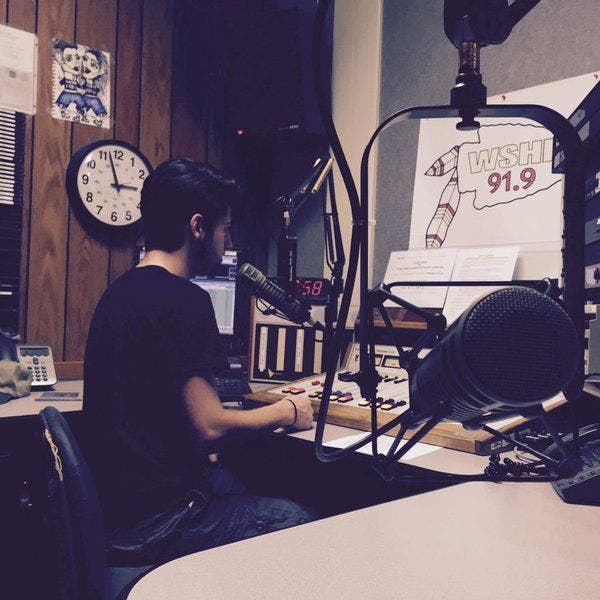
At Sachem High School East, students take the typical classes you would see at any high school. However, one class is unique in the school’s curriculum, and the students in this class do much more than watch a PowerPoint every day.
In her Broadcast Journalism class, senior Erin Leonard learns with hands-on experience –something not often valued in a high school curriculum – how to work at a radio station. She and her fellow students use the sound board, microphones, and other equipment to put on a live, on-air radio show each week.
“I’ve gained so much more knowledge about things that I never even knew existed,” Leonard said.
Find out what's happening in Sachemfor free with the latest updates from Patch.
WSHR is Sachem’s student-operated FM radio station, broadcasting on the 91.9 frequency. It has been a part of the district for decades, and has kept up with the changing media landscape to teach students the most up to date knowledge for broadcasting.
Leonard enjoys this class because it’s not only a topic she is interested in, but her and the other students get to make their own choices when it comes to the things they learn and do.
Find out what's happening in Sachemfor free with the latest updates from Patch.
“We have the freedom to choose what we want to do and we really don’t have that many restrictions,” she said. “I get to learn about things that I want to learn about.”
Broadcasting via radio isn’t the only skill Leonard and her classmates have taken away from this class, even as the midway point of the school year approaches. Public speaking and time management are just a couple of important general skills she has improved because of this class.
“Now because of this, I’m able to talk in front of other people. You don’t get to learn that type of stuff in other classes,” she said.
The Broadcast Journalism class works in conjunction with WSHR, providing daily classroom learning while students do their actual show in their free time.
Lawrence J. Patten is the instructor for East’s section of the class. Patten is an English teacher at East, but his style in the Broadcast class is much different.
“To an outsider who walks into the class, at first glance they might think it’s chaos or that there’s no classroom management,” he said.
Students aren’t just sitting listening to him lecture. One group may be preparing for a show, another group may be working on a project, another group may be studying for one of his exams, and another group could be doing other work. This is an everyday occurance in Patten’s class and no two days are the same.
“I had a student say to me ‘It’s amazing how differently you teach this class than an English class,’” Patten said.
Patten also relies on other students to help educate during class and guide new students in the studio.
“Having a student show their peer how to do it, you guys tend to respond more to that,” he said.
The hands-on experience of the Broadcast Journalism class has had a positive effect on students’ learning experience, according to Patten. He recognizes that this class isn’t for everyone, and that it requires a certain level of professionalism.
“There has to be some maturity to it as well, and a level of trust,” he said.
As for student success, it ties into the appeal of other hands-on classes like the arts and special interests, and eventually becomes an embedded skill.
“You see success with kids who are going through the art program or the technology program, it eventually becomes second nature,” Patten said.
Leonard and Patten both agree that there should be more hands-on work done in classrooms when possible.
Patten looked back to his experience as a student, noticing that he always did better in science class when there was a lab – a way for him to work on what he had learned – rather than written tests or lectures. He said that he knows from experience that this helps a lot of students when there is an opportunity to get more involved with the topic being taught.
Leonard pointed out the often-short attention span of students in a lecture class and the trouble they have retaining information in that type of environment.
“I feel like more kids would pay attention in class if they had more hands-on experience.”
She’s right. According to the non-profit organization, Resource Area for Teaching (RAFT), in 2011, 99% of students who participated in more hands-on activities reported being more engaged and retained the knowledge longer.
The experiential learning going on in the Broadcast Journalism class and at WSHR go beyond the typical classroom expectations, according to the students taking the class, and don’t just provide radio knowledge, but helpful life lessons.
“There are so many other life lessons that you learn from taking this class,” Leonard said. “I’ve been so much more prepared [after] taking this class.”