Crime & Safety
DA, Police Notice Upward Trend In Teens And Rx Drug Abuse
The Dobbs Ferry PTSA sponsored an informational session on kids, prescription drug abuse and how to stop it.

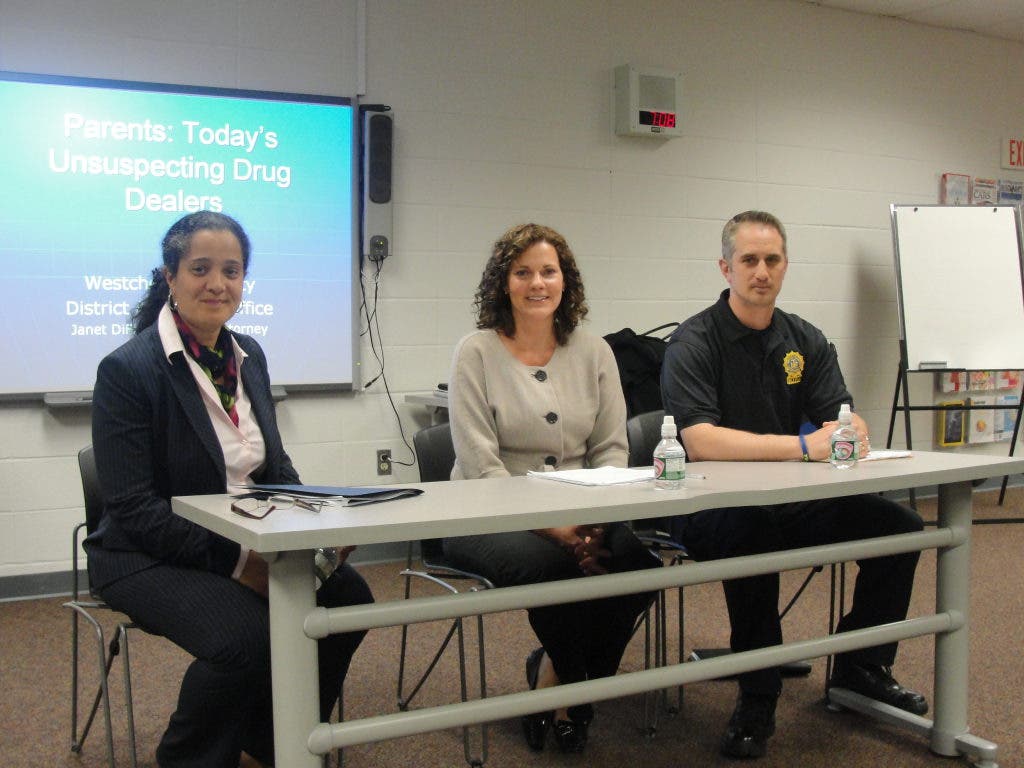


Dobbs Ferry Youth Officer Justin Kamke said he had recently spoken with a teenager caught with medication that was not prescribed to him.
"The kid said that because it was a prescription medication—and not an illegal drug—that it isn't as bad. We need to change that perception," Kamke said.
A few weeks ago in after overdosing on a friend's parent's prescription sleep aid. The teens allegedly stole the pills while adults were out of the house.
Find out what's happening in Scarsdalefor free with the latest updates from Patch.
"This is an increasing problem among young people," said Assistant District Attorney for Westchester Susan Brownbill-Vega. "Many young people find these substances readily available in their own homes, so they use them thinking it's safer and more legal than doing other types of drugs."
Besides prescription medications, teens are also using over-the-counter meds—like cough syrup—and inhaling the air at the bottom of aerosol cans, commonly known as "huffing," Brownbill-Vega said.
Find out what's happening in Scarsdalefor free with the latest updates from Patch.
"You have to be careful both with drugs prescribed to you and to your children," Brownbill-Vega said Wednesday night in a Dobbs Ferry PTSA-sponsored panel discussion in which she presented with Student Assistance Counselor Meredith Ohmes and Dobbs Ferry Youth Officer Justin Kamke.
Let Patch save you time. Get great local stories like this delivered right to your inbox or smartphone everyday with our free newsletter. Simple, fast sign-up here.
"If you have surgery, for example, you may get an entire bottle of pills—but you'll probably only need the pain medication for one or two days. Now, you still have 48 pills left in the medicine cabinet."
Likewise, even when the teens themselves are prescribed medications after injuries or surgeries, they may become addicted to the drugs or sell them to other students. "Under the law, 'sale' is defined as anytime someone exchanges illegal substances to another person, even if money isn't involved," she said.
And sale of a controlled substance can be a major crime...with serious repercussions.
Pain medications—like Oxycontin (Oxycodone) and Vicodin—are the most commonly abused drugs among teens, Brownbill-Vega said.
Others include:
- ADHD medications—like adderal—to cram for exams.
- Sleep aids, like Ambien and Lunesta
- Anti-anxiety medications, such as: Klonopin, Xanax and Valium
What they don't realize is that these drugs can have the opposite effect if you take them when not prescribed to you, Brownbill-Vega said. Additionally, the DAs office has seen a rise in kids pulverizing and snorting these drugs—for an instantaneous high—or mixing them with alcohol.
"We need to make them understand, 'Dude, this could kill you!,'" she said. "Kids don't make that connection."
Over-the-counter drugs kids abuse are:
- Cough syrup—to get high
- Diet Pills (especially among girls with eating disorders)
- Laxatives
"Make sure your kid really has a cough before letting him or her take cough syrup," she said.
Even household items like whipped cream bottles and cheese whiz can be a problem, when teenagers spray the substance into a paper bag and breathe in the fumes.
"Huffing can cause nerve damage, vitamin loss and even death," she said.
Brownbill-Vega said that the key to avoiding these problems in your home is "keeping open communication with your kids. Know where they're going—with whom."
She even said that taking a peek at your child's facebook wall isn't a bad idea.
"Sometimes they tell you they're 'fine,' but what they're really feeling is right up there on that screen."
She also suggests maintaining a strict "No Use" policy in your home. "You may not think they're listening, but they are," she said.
Another important action parents can take is to get rid of leftover drugs.
"We now know that flushing pills down the toilet is bad for our water, but you can crush them and throw the away with coffee grounds or an old stew," she said.
Probably the best means of disposal is to turn them in at specific Prescription Take-Back Days run by the county. The next one is on June 5 in Valhalla.
Brownbill-Vega and Ohmes had similar lists of actions parents can take including:
- Calling her (Ohmes), a guidance counselor or school psychologist.
- Setting a strict "no drug use policy."
- Eating dinner together.
- Incorporating religion or spirituality into family life
- Learning the signs and symptoms of drug use.
Officer Kamke said he'd even heard of instances of kids approaching other students they know have just had surgeries and asking to buy the pain medications.
"We recommend that parents allocate the medication to their kids and watch them take it," he said.
According to Ohmes, more affluent areas are more succeptable to this type of teenage drug abuse. "Combining boredom and money can definitely make drug use more likely," she said. "Kids with $25 or more to spend per week are much more likely to buy and use drugs."
Brownbill-Vega added "No community is immune to this type of activity."
But what the three panelists stressed above all is that the most important thing for parents to do is take action.
Get help.
"If you know your child is doing something like this, it's not something to keep secret or try to hide," Brownbill-Vega said. "Addiction is a human frailty and we're all human."
Learn more on the National Institute on Drug Abuse's website here.
Get more local news delivered straight to your inbox. Sign up for free Patch newsletters and alerts.