Crime & Safety
Scarsdale Lawyer Charged in Martin Shkreli Fraud Case
Evan Greebel is accused of aiding Shkreli, who separately became infamous for jacking up the prices of certain prescription drugs.


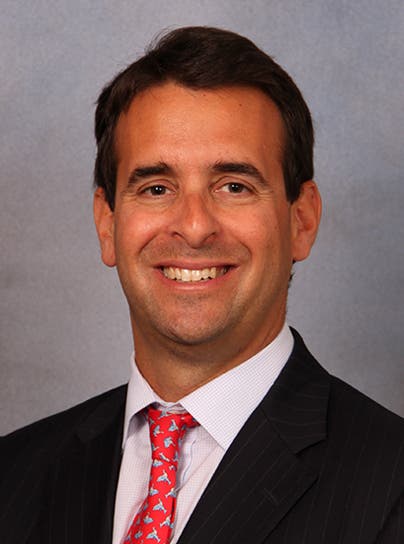
Scarsdale resident Evan Greebel, a former partner in the law firm Katten Muchin Rosenman LLP, was arrested by federal authorities Thursday in connection with his alleged role in a fraud scheme with Martin Shkreli, the former CEO of the biopharmaceutical company Retrophin Inc.
Shkreli, best known as the executive who jacked up the prices of certain vital prescription drugs, was charged with securities fraud, securities fraud conspiracy, and wire fraud conspiracy “for orchestrating three interrelated schemes” to defraud investors in companies he previously ran.
Greebel, 42, who was outside counsel for Retrophin, was charged with wire fraud conspiracy for assisting Shkreli “conceal and further” the alleged scheme.
Find out what's happening in Scarsdalefor free with the latest updates from Patch.
“As alleged, Martin Shkreli engaged in multiple schemes to ensnare investors through a web of lies and deceit,” said United States Attorney Robert L. Capers in a statement. “His plots were matched only by efforts to conceal the fraud, which led him to operate his companies, including a publicly traded company, as a Ponzi scheme, where he used the assets of the new entity to pay off debts from the old entity. When regulators and auditors questioned Shkreli’s decisions, he joined forces with Evan Greebel, who used his law license and training to conceal and further the scheme.”
Capers added, “The charges and arrests announced [Thursday] reflect our commitment to hold accountable corporate executives and licensed professionals who betray their positions of trust in order to fraudulently enrich themselves.”
Find out what's happening in Scarsdalefor free with the latest updates from Patch.
In addition to being the former CEO of Retrophin, Shkreli also was founder and managing member of hedge funds MSMB Capital Management LP (MSMB Capital) and MSMB Healthcare Management LP (MSMB Healthcare), which also were part of the alleged scheme.
“The charges announced today describe a securities fraud trifecta of lies, deceit, and greed,” stated FBI Assistant Director-in-Charge Diego Rodriguez. “As charged, Martin Shkreli targeted investors and retained their business by making several misrepresentations and omissions about key facts of the funds he managed. He continued to lie about the success of the investments and used assets from Retrophin to payoff MSMB investors. In the end, Shkreli and Greebel used a series of settlement and sham consulting agreements that resulted in Retrophin and its investors suffering a loss in excess of $11 million. While the charges announced [Thursday] are significant, they are but one example of what’s left to come as the FBI continues this investigation.”
Below are details of the alleged scheme, as outlined by Capers:
As detailed in the indictment and below, between September 2009 and September 2014, Shkreli, together with others, orchestrated three interrelated fraudulent schemes: (i) a scheme to defraud investors and potential investors in MSMB Capital, (ii) a scheme to defraud investors and potential investors in MSMB Healthcare, and (iii) a scheme to defraud Retrophin.
The MSMB Capital Hedge Fund Scheme
Between September 2009 and January 2011, Shkreli and his co-conspirators falsely represented to potential investors, among other things, that: (i) MSMB Capital was a transparent investment vehicle for sophisticated investors with monthly liquidity; (ii) Shkreli would only receive a one percent management fee per year based on net assets of the partnership; (iii) Shkreli was entitled to receive twenty percent of the limited partners’ net profits for the year; and (iv) MSMB Capital had retained independent certified public accountants as auditors who would issue an audit report on the annual financial statements. Shkreli also failed to disclose to investors that he had lost all the money he managed in Elea Capital, his prior hedge fund, and that Lehman Brothers had a $2.3 million default judgment against him. Finally, Shkreli lied to his biggest investor telling him that MSMB Capital had $35 million in assets under management, when in fact MSMB Capital had less than $700 in its bank and brokerage accounts. Based on these and other false representations, Shkreli and his co-conspirators induced approximately $3 million in investments from eight investors.
In February 2011, MSMB Capital failed to settle a short position of more than 11 million shares of Orexigen Therapeutics, Inc. (OREX) that Merrill Lynch ultimately closed at a loss of over $7 million. At this time, MSMB Capital also suffered more than $1 million in other trading losses. Based on these trading losses, the value of assets in MSMB Capital’s bank and brokerage accounts, not including the OREX losses at Merrill Lynch, declined from more than $1.12 million on January 31, 2011 to $58,500 at the end of February 2011. MSMB Capital did not engage in any trading after February 2011.
For months following the complete loss of the investments in MSMB Capital and the end of trading activity, Shkreli continued to send fabricated performance updates to investors that touted profits of as high as forty percent since inception. In September 2012, more than eighteen months after MSMB Capital had lost all its assets, Shkreli sent an email to MSMB Capital investors informing them that he was winding down the fund and that “original MSMB investors (2009) have just about doubled their money net of fees.” Shkreli also misappropriated funds from MSMB Capital by withdrawing more than $200,000 from MSMB Capital, which was far in excess of the one percent management fee and the twenty percent net profit incentive allocation permitted by the partnership agreement.
The MSMB Healthcare Hedge Fund Scheme
Following the collapse of MSMB Capital after the failed OREX trades, from approximately February 2011 to November 2012, Shkreli solicited investments in MSMB Healthcare from potential investors while concealing from them his disastrous past performance as a portfolio manager for MSMB Capital and Elea Capital and the $7 million liability that Shkreli owed Merrill Lynch for the February 2011 OREX trades. Shkreli also falsely represented that MSMB Healthcare had $55 million in assets under management. Based on these and other false representations, Shkreli and his co-conspirators induced approximately $5 million in investments from thirteen investors.
As with MSMB Capital, Shkreli provided MSMB Healthcare investors with performance updates that were based, in large part, on an internal inflated valuation of Retrophin, his private biopharmaceutical company that had received investments from MSMB Healthcare. Here again, Shkreli misappropriated funds by withdrawing money from MSMB Healthcare that was far in excess of the one percent management fee and the twenty percent net profit incentive allocation permitted by the partnership agreement. Additionally, without the investors’ knowledge or consent, Shkreli improperly used MSMB Healthcare assets to pay for obligations that were not the responsibility of MSMB Healthcare, including using at least $900,000 to settle claims brought by Merrill Lynch in connection with the failed OREX trades.
The Retrophin Misappropriation Scheme
Between March 2011 and September 2014, Shkreli and Greebel, together with others, engaged in a scheme to defraud Retrophin by misappropriating Retrophin’s assets in an effort to pay off Shkreli’s personal and unrelated professional debts and obligations. Specifically, Shkreli and Greebel defrauded Retrophin by causing it to: (i) transfer Retrophin shares to MSMB Capital even though MSMB Capital never invested in Retrophin; (ii) enter into settlement agreements with defrauded MSMB Capital and MSMB Healthcare investors to settle liabilities owed by Shkreli and the funds; and (iii) enter into sham consulting agreements with other defrauded MSMB Capital, MSMB Healthcare, and Elea Capital investors as an alternative means to settle liabilities owed by Shkreli and his hedge funds.
In December 2012, despite the fact that Retrophin’s books and records did not reflect any investments by MSMB Capital, Shkreli and Greebel engaged in a series of fraudulent and backdated transactions to create the appearance of an investment by MSMB Capital in Retrophin. They orchestrated these transactions, in part, to support Shkreli’s false representations to the U.S. Securities and Exchange Commission in November 2012 that MSMB Capital was still in operation and had $2.6 million in assets under management.
Between February 2013 and August 2013, Shkreli and Greebel, together with others, caused Retrophin to enter into settlement agreements with MSMB Capital and MSMB Healthcare investors to resolve their claims and threats of claims which were based on Shkreli’s false representations about the exceptional performance of the funds. Notably, Shkreli and Greebel did not seek authorization from the Board prior to entering into these fraudulent settlements. Shkreli and Greebel caused Retrophin to pay more than $3.4 million in cash and RTRX stock to settle claims with seven MSMB Capital and MSMB Healthcare investors.
In August 2013, when Retrophin’s external auditor questioned the settlement agreements and determined that Retrophin was not responsible for the claims resolved in the settlement agreements, Shkreli and Greebel caused MSMB Capital and MSMB Healthcare to execute indemnification agreements and promissory notes for the benefit of Retrophin even though they knew that the funds had no assets. Shkreli and Greebel, together with others, then devised an alternative approach to settle with the remaining defrauded hedge fund investors, namely, settlement agreements under the guise of consulting agreements. On October 16, 2013, when Shkreli initially questioned this new approach, Greebel explained, “We can call it a settlement agreement, but given [the auditor’s] recent behavior they may require it to be disclosed in the financials. I was trying to prevent that issue.” Between September 2013 and March 2014, Shkreli and Greebel caused Retrophin to enter into four sham consulting agreements with defrauded investors from the funds. Retrophin did not receive any legitimate consulting services based on these sham agreements, but paid more than $7.6 million in cash and RTRX stock to settle claims that the auditors had previously determined were not the responsibility of Retrophin.
If convicted, both Shkreli and Greebel could each face a maximum sentence of 20 years’ imprisonment.
The criminal case has been assigned to United States District Judge Kiyo A. Matsumoto. The government’s case is being prosecuted by the Business and Securities Fraud Section of the Brooklyn U.S. Attorney’s Office. Assistant U.S. Attorneys Winston Paes, Alixandra Smith, and David Kessler are in charge of the prosecution.
Photo: Evan Greebel
Get more local news delivered straight to your inbox. Sign up for free Patch newsletters and alerts.