Schools
School Officials Brace for Cuomo's Cuts
Gov.-elect Andrew Cuomo has proposed cutting state aid to schools as a way to hold the line on taxes. But school administrators say the bulk of their costs are imposed by state mandates, and further cuts will result in disastrous job losses.
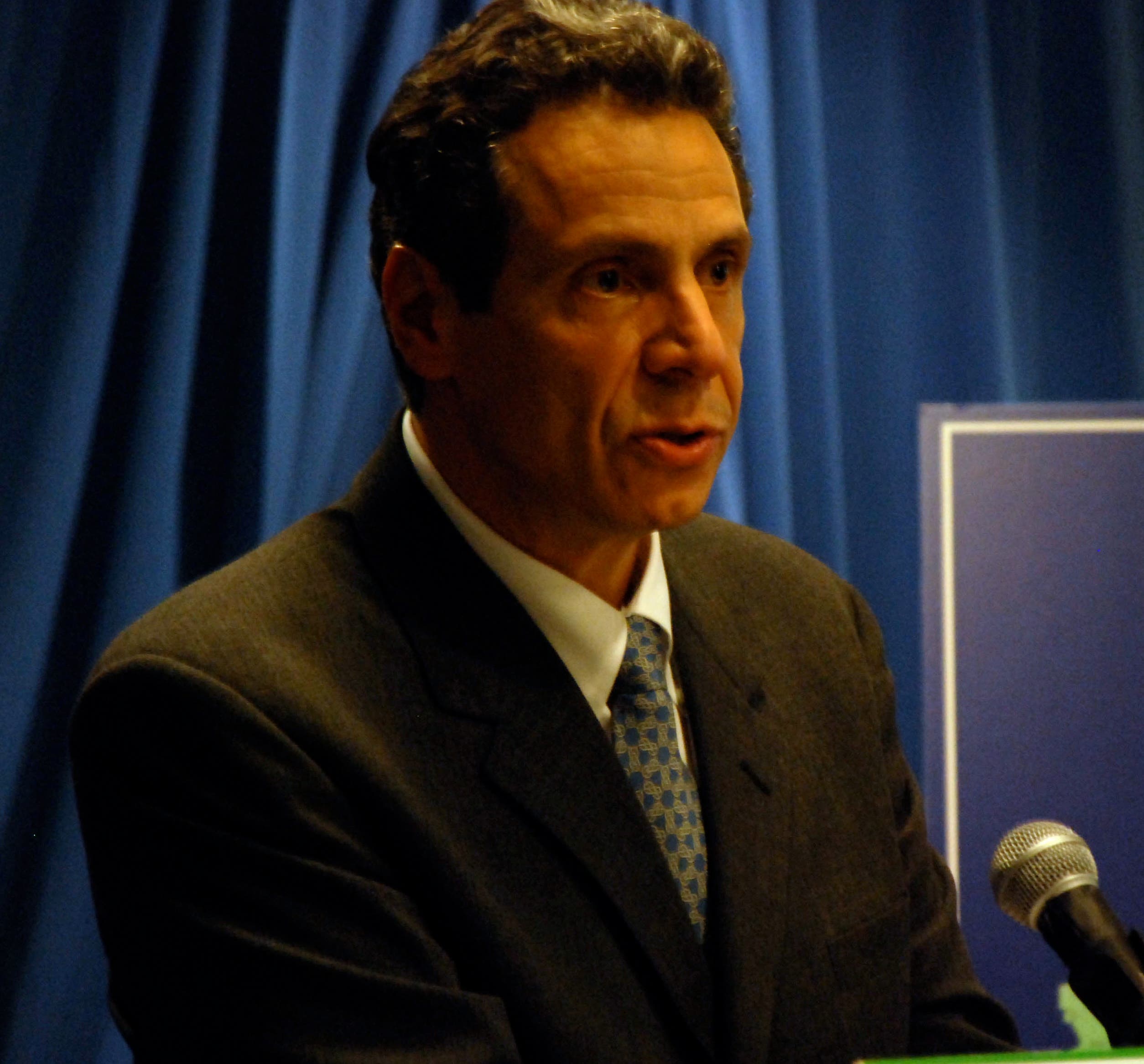
Gov.-elect Andrew Cuomo has hit the ground running since his landslide victory earlier this month, promising to freeze taxes while solving the state's fiscal woes by cutting waste and making government more efficient.
The state will face a budget deficit as high as $10 billion next year, and with education spending eating up a third of state spending, Cuomo has made it clear in recent weeks that school districts should expect to share in the pain.
Speaking to reporters a few days after his election, Cuomo said that schools have been given plenty of resources, but have still failed to deliver improvements in performance.
Find out what's happening in Scarsdalefor free with the latest updates from Patch.
"How do you have the highest education spending in the state of New York and you're number 40 in terms of performance?" asked Cuomo, referring to the $17,000 New York spends per student and a statewide graduation rate that has slipped below 70 percent.
"The answer can't always be 'more money, more money, more money,'" he added.
Find out what's happening in Scarsdalefor free with the latest updates from Patch.
School officials in Westchester decried the impending cuts, and offered the incoming governor another solution: less mandates, less mandates, less mandates.
"The bulk of our labor costs, which are our most significant costs, are driven by state laws and other factors over which we have little or no control," said Dr. Howard Smith, superintendent of the Tarrytowns Union Free School District.
"We have already reduced our labor force by about as much as can be done responsibly without serious implications for the quality of our educational programs and services," said Howard. "If the new governor thinks we rank low now, wait until he sees what will happen if we are forced to take even more resources away from our students through additional staff cuts."
Smith and other local administrators said that any cuts to education funding need to be packaged with relief from mandates, including reporting requirements and employee benefit contributions.
On the campaign trail, Cuomo said he supported mandate relief for schools but was generally vague on specifics. But Cuomo also supports a 2 percent cap on annual property tax increases—which would essentially institute a ceiling on how much money school districts could drum up from local residents—and a redistribution of school aid to urban and rural districts, meaning Westchester's high-performing suburban districts could suffer even more.
Cuomo campaign spokesman Josh Vlasto declined to comment for this article.
State Sen. and Senate Education Committee Chair Suzi Oppenheimer, D-Mamaroneck, said in a statement that she would continue to work toward mandate relief.
"Given the pace of our economic recovery, we expect next year to be a challenging one for both the state and the nation," said Oppenheimer. "[I will] work to eliminate unnecessary unfunded mandates in education and to provide school districts with the flexibility they need to reduce their costs and operate more efficiently."
Among other measures, Oppenheimer championed legislation that allows districts to consolidate their purchasing through BOCES and reduces paperwork by implementing an electronic data collection system.
However, Oppenheimer is fighting for her political life, and could lose her Senate seat while her party could lose control of the chamber. She's currently leading GOP rival Bob Cohen by about 500 votes with thousands of ballots left to be counted. The race's outcome, which may not be decided for weeks, could shift the balance of power in the Legislature and affect education funding, among other issues.
Schools are also facing the loss of millions of dollars in federal funding that was tucked into the 2009 stimulus bill, explained Rye schools Superintendent Edward Shine.
"State aid was reduced for the last two years, [but] the state used federal funds to offset the reductions," said Shine. "Those funds will not be available next year, so there is a funding cliff to be confronted."
The Rye district stands to lose nearly $1 million from the expiration of the federal funding. According to Superintendent Christopher Coulet, the White Plains school district, which has reduced its staff by 10 percent since 2008, will lose more than $3 million.
"We've been cutting and trimming, but now we're really going to have to start chopping," said Coulet. "It comes at a difficult time in our history, as our nation and state are grappling with preparing students for a 21st century global economy. Right at that moment, we are reducing the resources that are available."
The stimulus money must be spent by September of next year, meaning districts could use some of the remaining money as a Band-Aid to balance 2011-12 budgets.
Despite two straight years of cuts, New York's schools have fared better than those in other states facing budget crunches. Hawaii and Utah shortened their school days, California's districts have laid off more than 20,000 teachers and Illinois has eviscerated many of its pre-K and after-school programs.
According to a Siena poll released this week, most tax-weary New Yorkers would still prefer tax hikes to cuts in education spending.
Predictably, school officials such New Rochelle Superintendent Michael Organisciak agree with the poll.
"Mr. Cuomo needs a platform to hit the ground running, but I'm a little disappointed that he picked education as a primary area to investigate," said Organisciak, adding that his district has already cut 79 jobs over the past two years.
"Unless things magically change over the next couple of months, we're going to have further personnel reductions," said Organisciak.
Cuomo is required to submit his budget proposals by Feb. 1, and state law requires the Legislature to pass a spending plan by April 1. However, the latter is largely a pipe dream—this year, lawmakers didn't pass a budget until the first week of August.