Schools
Schools' Curriculum Evaluated by Prestigious Educational Consortium
Members of the Tri-State Consortium visited Scarsdale's schools in May to assess the district's innovative approach in developing "inquiry-based" learning methods.
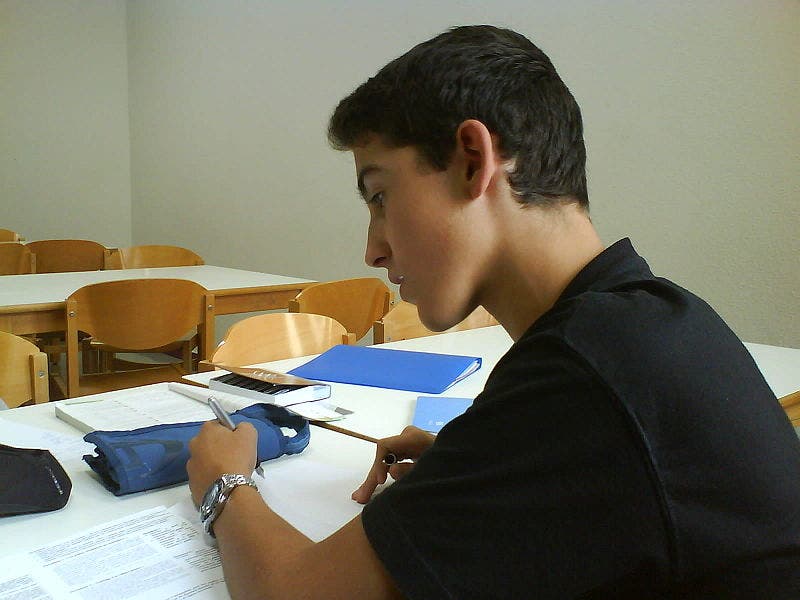
Last month, a team of teachers and administrators from member districts of the Tri-State Consortium conducted a curriculum assessment in Scarsdale's schools.
The Tri-State Consortium (TSC) is an organization comprised of "already high-performing school districts" in New York, Connecticut and New Jersey. In Westchester County, 16 school districts participate in the TSC, including Bronxville, Eastchester, and Harrison.
Members of the TSC work to augment student performance through the development of "alternative assessment models" that encourage academic achievement beyond what critics say are the relatively low standards set forth by the New York State Board of Regents.
The recent assessment in Scarsdale, started on May 20, spanned the course of two days and included 22 teachers and administrators who were divided up between each of the district's schools. Using a three-pronged model, the team looked at student performance, as well as external and internal support systems.
According to Lynne Shain, the district's Assistant Superintendent for Instruction, this pilot assessment "had a little bit of a different twist."
"It was less evaluative and more really geared toward trying to understand what we're doing and taking the next logical steps."
Shain said that the TSC heard reports from department chairs and held conversations to establish how the district had gone about organizing a student centered, "inquiry-based" approach to science and social studies curriculums.
While the district is still in its first year of focusing on this effort, Shain said the district's mission, as part of the Scarsdale Education for the Future initiative, is to "enhance our students ability to think creatively and critically."
The inquiry-based approach to curriculum, Shain said, gives students the opportunity to learn not through instruction geared solely toward test preparation, but by formulating questions and working creatively to find answers.
"When we own the question, we're motivated to work to solve the question," she said.
"What the members of the visiting team saw is how we organized ourselves to do this work. [We're] explicit, intentional, and mindful in our practice," she said.
The ninth grade world history curriculum, Shain said, is "an example of how students can stretch themselves and are able to make connections."
Find out what's happening in Scarsdalefor free with the latest updates from Patch.
Students were to choose a city anywhere in the world that existed around 1700 and analyze cross-cultural influences that traders may have brought. They then designed a display that features those influences.
After the displays were created, students visited those of their peers and returned back to the classroom to write an essay about how one could argue that the world was already a "global village" in the 1700s. The TSC observed completed projects on early 18th-century cities during their visit.
Other aspects of the district's inquiry-based educational approach include the development of an eighth grade human rights project in the social studies department.
Scarsdale Middle School Principal Michael McDermott said the eighth graders "do a research project in an area of human rights" that culimnates with a one-minute public service announcement (PSA.)
An awards ceremony will be held in mid-June to honor students with the best videos.
Calling it "a different way to think about the end of the year," McDermott said the PSA idea "originated with the state changed the state assessment schedule."
Find out what's happening in Scarsdalefor free with the latest updates from Patch.
McDermott explained that teachers and administrators ultimately decided that because they didn't want to "subject eighth graders to this terrible ordeal of non-stop testing" an interdisciplinary program would be established with a "common set of standards to influence skills."
The TSC's will send their assessment results to Shain in the coming weeks, at which point she will join the district's teachers and administrators in pinpointing the pros and cons of current learning and teaching methods.