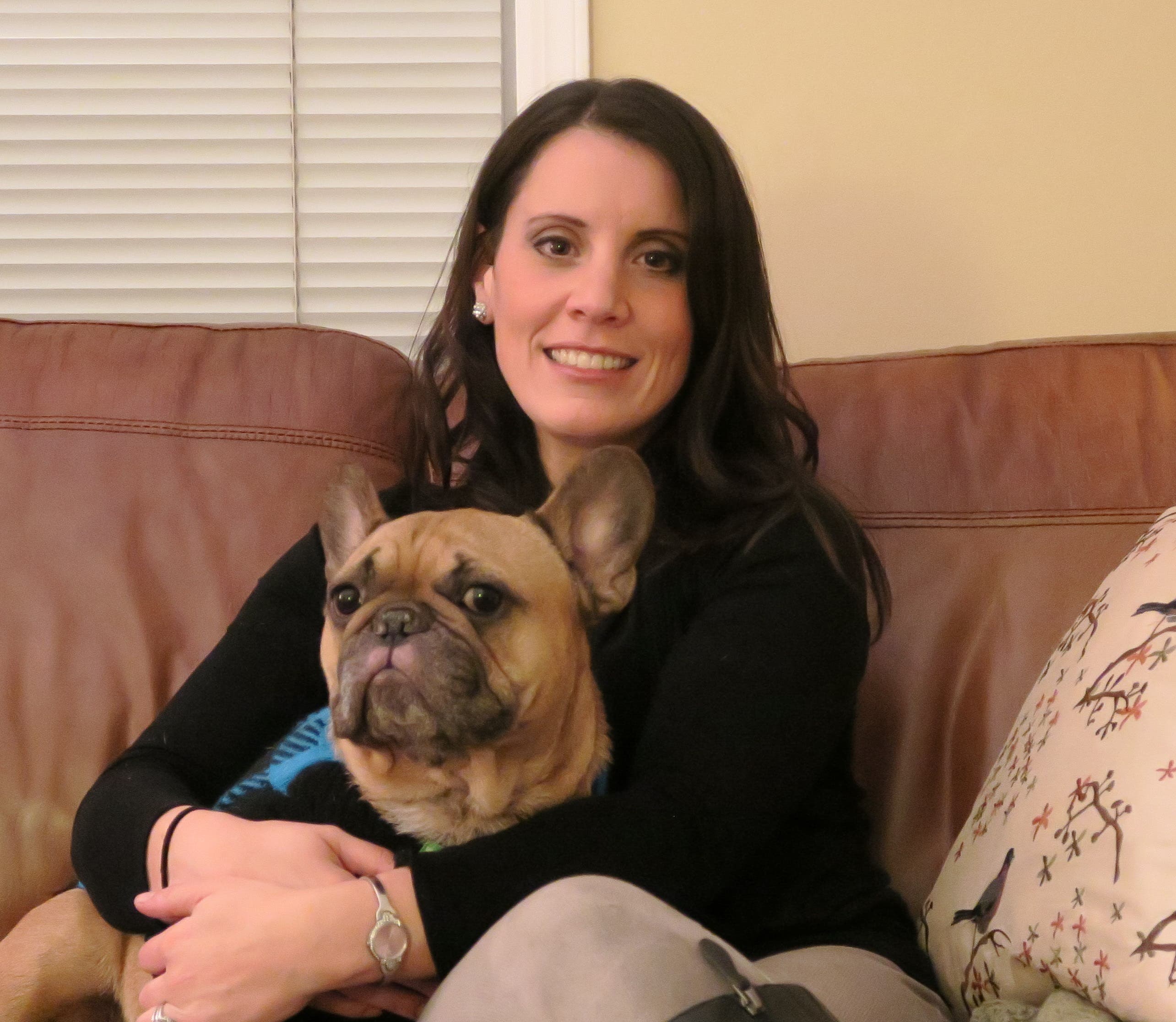
“Butch” (Emotional Support Animal) ESA
Transformations Counseling Group would like to welcome Butch, our newest staff member. Butch is a three year-old French Bulldog who has been certified as an Emotional Support Animal (ESA). Butch works closely with therapist Lori Thompson, LMSW to provide emotional support and safety to clients who are going through hard times. Butch helps our clients, especially our younger ones, to feel comfortable and makes it easier for them to open up during therapy sessions.
Butch became a member of our group only a few months ago and has already created change. He is kind, caring and non-judgmental just like the rest of our staff. He has a face that can make anyone smile. Even the most stubborn teenager or shyest child find themselves willing to open up to Lori with Butch in the room. The most “manly of men” kneel down to make baby talk with him as they walk into our waiting room. When people come to our office it is because they are going through a difficult time or are in crisis. If it is their first time in therapy, clients are usually nervous, not knowing what to expect. It helps to have a friendly, little furry face greeting them as they enter the waiting room. Butch eases tension and makes people smile; a great beginning to the therapeutic process.
Find out what's happening in Smithtownfor free with the latest updates from Patch.
Why Butch?
It’s now commonplace to have dogs trained to do an array of different jobs; some guide the blind, alert a person who has seizures, detect illegal substances at the airport and detect bombs.
Find out what's happening in Smithtownfor free with the latest updates from Patch.
How does a dog assist by being present as a person seeks psychological counseling? What we now know is that by simply petting a dog you can lower blood pressure and/or enhance oxytocin release which is the body’s natural stress reliever.
In 2014 Dr. Hannah Allen-Miller completed her dissertation at the Michigan School of Professional Psychology entitled “Animal Assisted Psychotherapy: An Exploration of The Adult Client’s Experience of Individual Psychotherapy with the Assistance of a Dog”. Following her own revelations stemming from her relationships with her own pets, Dr. Allen-Miller focused her research on the patient’s perspective of a dog in a psychotherapy session and she recorded the stories and recollections of seven participants.
One participant described her first meeting with her therapist and felt that the presence of “Ivy”, the therapist’s dog “made the situation instantly feel right.” Another participant who had seen Ivy during 90% of his sessions described the greeting ritual: “Each time I arrive for my session, the little bell above the door rings and moments later there was Ivy always wagging her tail.”
A third participant reported that during her sessions with an 8-year-old yellow Labrador retriever named Taffy they might “mutually ignore each other until an emotional need arises. If Taffy is not already next to me, I will call her to me, then I find myself holding her, wrapping my fingers lightly in her fur, feeling her warmth, her breath, and even her heartbeat.”
Forth client reported “I had seen so many therapists and specialists that I was tired and uninterested in seeing one more, until I heard that there would be a dog involved.” A dog named “Wind” was an energetic, outdoorsy Black Labrador/Boxer/Staffordshire Terrier mix who was able to create an intense connection. The participant reported “… my love of animals kept me coming to appointments. Over a long period of time (like a year!) … I started noticing my ability to self-regulate better which I attribute to harnessing what Wind exuded most: self-awareness and calmness.”
For these seven participants, the presence of a dog provided was a beneficial augmentation of their individual psychotherapy sessions with their therapists. It is proposed that humans naturally and instinctively may feel safe in the presence of calm animals; perhaps because an animal may signal the presence of a dangerous predator.
Butch comes with his own personal story. His first owners neglected him and did not provide proper care and nutrition. He developed a very serious skin condition that they never treated causing him to lose most of his hair. Finally his owners agreed they did not want him and decided to give him up. A rescue organization on Long Island took him in and gave him some much needed TLC. He was given proper nutrition and plenty of exercise. But most of all he was given love which he returned tenfold! Tuncay Adem who runs the rescue decided to keep Butch as his own because he felt Butch had something special about him. Mr. Adem who has battled cancer twice decided to take Butch with him during his last round of chemotherapy; he says “Butch stayed by my side through all my treatments. There were moments when I felt so sick that I wanted to give up; but Butch never gave up on me”
As research has shown that animals can heal even the most traumatized person and Butch shows us that he has the magic that can warm souls and build trust in what can often by an uncomfortable situation. We consider him our hero.