Community Corner
Smithtown, A History: Henry Highland Garnet
Once an indentured servant at Epenetus Smith's Tavern, Henry Highland Garnet went on to become an influential abolitionist.
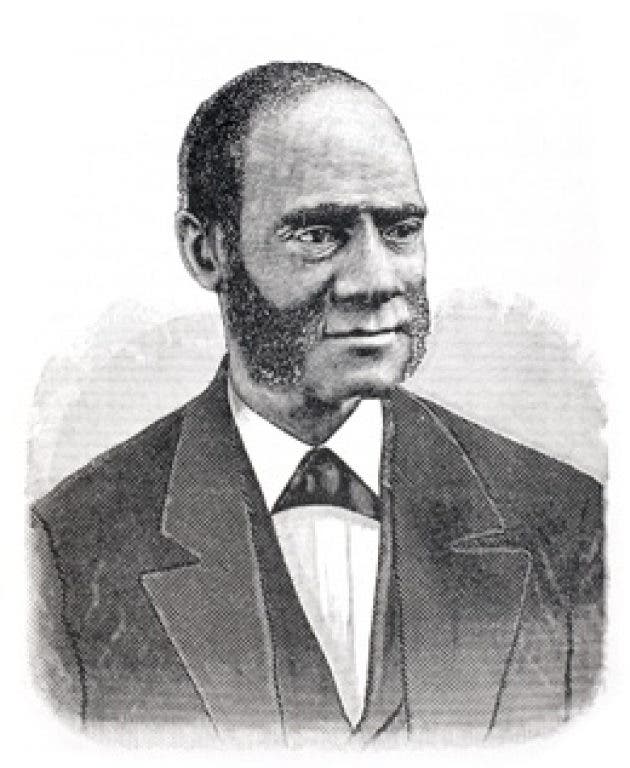

In the 1800s, Henry Highland Garnet was a Presbyterian pastor and noted abolitionist who believed in political action. What most historians fail to mention is that he also spent time as an indentured servant in Smithtown.
Dr. Kathleen Velsor, an associate professor at SUNY at Old Westbury and director of the Underground Railroad Teaching Partnership, includes this information in her presentations about Garnet. She said Garnet, who was born in 1815, escaped slavery in New Market, Maryland with his family via the Underground Railroad.
They eventually settled in New York City in 1825, and Garnet became a student at the African Free School. Here he shared the classroom with students such as James McCune Smith, the first black man to earn a medical degree. According to Velsor, the studies here empowered the young men.
Find out what's happening in Smithtownfor free with the latest updates from Patch.
“They saw themselves as equals,” she said.
After a trip on a schooner working as a cabin boy, the young man returned to New York to find his home had been invaded by slave catchers. While his family was okay, Velsor said he took to the streets with a knife to find the men who came after his family.
Find out what's happening in Smithtownfor free with the latest updates from Patch.
Velsor said friends convinced Garnet to escape to Long Island where he would be safe. It was at a Quaker meeting in Jericho where Smithtown’s Epenetus Smith met the young man, and Garnet signed on as Smith’s indentured servant.
“They felt that was the only way to keep him safe,” Velsor said.
Garnet worked on the farm at Smith’s tavern, and Smith's son Samuel tutored him. According to Velsor, Garnet injured his leg while playing football and due to the severe injury his indenture was canceled.
While he only spent a couple of years in Smithtown, historians believe he and Samuel became friends and kept in touch through the years.
Velsor said of the young Smith, “He influenced him tremendously.”
Garnet returned to the city in 1831 and continued his education at a newly established high school for blacks. In 1840 he graduated from Oneida Institute in Whitesboro, New York and two years later was licensed to preach.
At the August 1843 National Negro Convention in Albany, Garnet delivered a speech called “An Address to the Slaves of the United States of America”. In attendance were the likes of Frederick Douglass who were for moral suasion where Garnet was for immediate emancipation. However, Garnet’s speech moved many.
“They talk about him being very poetic,” Velsor said.
According to Velsor, Garnet became friendly with Abraham Lincoln while he was a pastor in Washington D.C. and was chosen to deliver a sermon at the House of Representatives in 1865. With this sermon, he became the first black man to address the House of Representatives and enter the Capitol building.
His work as a pastor, abolitionist and prolific speaker brought him far from Smithtown. Garnet’s illustrious life ended in 1882 in Liberia, Africa where he spent his last few months as minister; his days as a slave and an indentured servant a lifetime behind him.