Community Corner
Face of Fentanyl: One Woman's Story Of Deadly Drug That's Surpassing Heroin In Long Island Deaths
Joann Piche was a mom with two small children when she was prescribed a fentanyl patch for pain and saw her life spiral out of control.


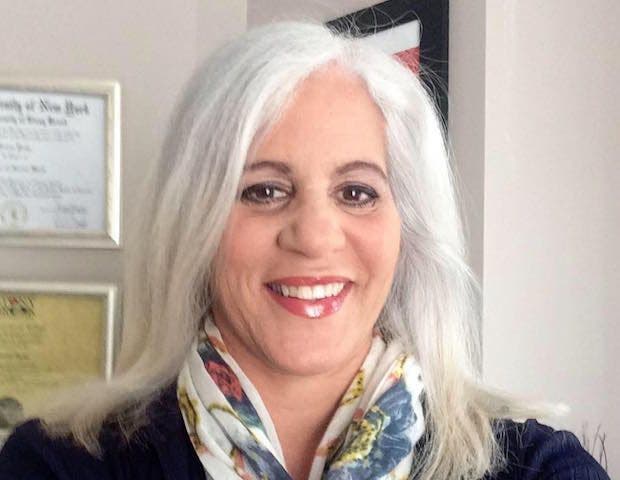
Joann Piche is a well-coiffed professional, a psychotherapist who lives in Aquebogue and has an office in Westhampton Beach. She's a well-respected, successful member of the community — and no one would ever guess, at first glance, that for seven years, she was caught in the nightmarish grip of fentanyl, a drug that's now outpacing heroin as the deadliest drug on Long Island.
Fentanyl, according to the National Institutes of Health, National Institute on Drug Abuse, is a "powerful synthetic opioid analgesic that is similar to morphine but is 50 to 100 times more potent." Fentanyl, often used for surgery, is typically used to treat patients with severe pain or to manage pain after surgery, or to treat patients with chronic pain.
The drug received a flurry of attention in 2016 when a toxicology report from the Midwest Medical Examiner's Office determined that Prince died from fentanyl toxicity.
Find out what's happening in Southamptonfor free with the latest updates from Patch.
New statistics on Long Island indicate that fentanyl has taken the lead over heroin in deaths: According to a New York Times report, fentanyl took the lives of at least 220 in 2016, according to medical examiners' records.
In Suffolk County, according to new statistics released on Jan. 1, of 240 total opioid deaths, 130 contained fentanyl, while deaths linked to heroin numbered 94. Deaths tied to a combination of heroin and fentanyl totaled 45, according to statistics provided by the Suffolk County Medical Examiner's Office.
Find out what's happening in Southamptonfor free with the latest updates from Patch.
According to Suffolk County Medical Examiner Dr. Michael J. Caplan, fentanyl has outpaced heroin as the drug most often found in fatal opioid overdoses in Suffolk County, Vanessa Baird-Streeter, assistant deputy county executive for public information in Suffolk County Executive Steve Bellone's office, told Patch.
It's not the first time Suffolk County has been in the spotlight for an escalating opioid crisis: Last April, Suffolk County led New York state in heroin overdose deaths.
One woman's battle with fentanyl
But for Piche, fentanyl statistics reflect a sad reality she fought against for seven long years.
For Piche, who was prescribed a fentanyl transdermal patch in 1998 for a chronic medical condition that requires pain management, the reliance upon the drug was never about getting high.
"I don't want to be misunderstood," she said. "The problem with the medication is that the withdrawal symptoms were agonizing and immediate. There was no 'high' involved for me. I was not a drug-seeking drug addict. I was prescribed this patch by a pain management physician."
In order to avoid the horror of withdrawal, Piche found herself carefully orchestrating her life so that she was scheduling her entire life around the drug, careful to be at her doctor's office exactly every 30 days as required, to receive her new prescription and make sure she had a new patch on before the old was removed.
"This medication is so potent and so addictive, even when you use it for the first time, your body experiences withdrawal immediately," she said. Withdrawal so excruciating that the symptoms were unbearable, she said, and included flu-like symptoms and vomiting.
And it was a dance with danger that she'd never even been warned to avoid.
"I was a young mother at the time," she said. "Nobody told me not to drive. Nobody told me anything about this medication; the transdermal patch was fairly very new at the time. No one ever said it was highly addictive. No one told me anything."
Her son, now 21, was only 3 or 4 years old when her long battle with fentanyl began, Piche said.
"I was sleeping all the time; it causes you to become even more debilitated," she said. "I was prescribed pain management medication in order to function and not be hospitalized, yet it was so potent that I was sleeping all the time and becoming more disabled because of it."
And even though she is a small woman, maybe 110 pounds at the time, she was able to take high dosages because she'd built up such a high tolerance to narcotics, she said.
Fentanyl, she said, "really changed my life; it took over."
After seven long years, Piche reached a point where she knew she had to wean herself off the medication. "It was really controlling my life. I had a moment of clarity, and I just said, 'I’m not living my life as fully as I would like to.'"
And so, she let go, weaning herself off fentanyl, going back to school and earning a master's degree in social work.
Piche was one of the lucky ones.
And today, she's set out to raise awareness, to show, firsthand, that those addicted to fentanyl can be anyone: professionals, moms, teens, neighbors, friends.
"If you see me, I am not what anyone would think could have been a drug-dependent person," she said.
Another classmate, she said, has a son who's in rehab; he became addicted to opioids after back surgery for a sports-related injury. Other entire groups of young people she's known on the East End, kids who grew up together and did drugs together, have died, victims in the war against opioids, she said.
Her experience has helped her immeasurably in dealing with clients. "One, I don't judge. Two, to look at me as a professional, you would never expect that I was drug dependent, but I was. Our society has such a limited belief of what a drug addict is, what they look like, where they live. And so today, if I can help one person, save one life, I want to share my story."
Experts weigh in
Fentanyl's rise in popularity isn't a surprise, said Jeffrey Reynolds, president and chief executive officer of the Family and Children's Association in Mineola.
"Fentanyl has become a major deal in Long Island and elsewhere, which frankly, isn't a shock. We all saw this coming a few years ago, and now many of the skyrocketing overdoses are attributable to drug combinations that include fentanyl," Reynolds said.
But he cautioned about focusing on the "new" drug to garner public attention.
"We've all got our eyes peeled for the next drug to come down the pipeline, but I worry that the emphasis on the drug du jour misses the fact the it's the disease of addiction that's killing folks, and that while we are all in the lookout for 'bad' batches of heroin, there's no such thing as 'good' or 'safe' heroin," Reynolds said.
And despite strides forward, including new tactics and legislation embraced by New York Gov. Andrew Cuomo to provide access to enhanced treatment to those struggling with opioid addiction, Reynolds said the war is far from over.
"While we have made some progress in the last year not two, the reality of the work still yet to be done hit me last week when a staffer at St. Charles Hospital in Port Jefferson told me that they had 27 patients for 10 detox beds," Reynolds said. "That's not treatment on demand — and until we achieve that reality, we aren't doing everything we can to end the crisis. "
Fentanyl's allure lies in its potency, Reynolds said.
"The drug has become so popular precisely because it is so powerful. It's showing up in heroin but also in counterfeit Percocet, OxyContin and Vicodin," said Reynolds. "Heroin dealers will add some to batches as they look for a steady stream of customers in search of the most potent heroin. Of course, by the time the heroin travels through hundreds of hands, nobody can be sure what or how much of anything has been added to that bag."
He added, "There are literally thousands of heavily addicted folks in our region searching for the best and most cost-effective solution they can find, and the stakes continually get higher."
Other experts agree that shining the light of awareness only on the popular new drug of the day can be disastrous.
Kym Laube, executive director of Human Growth and Understanding, or HUGS, an organization focused on providing kids with healthy alternatives, weighed in on fentanyl.
Both Laube and Reynolds sit on a statewide task force to combat heroin convened by Cuomo.
"HUGS, along with other educators and experts, has continued to worry about the singular focus on one substance, as we know the reality of the dangers that presents," Laube said.
"Fentanyl is deadly and dangerous when used non-medically and we are hearing of more overdoses." However, she added, "I caution that if our focus remains on the singular substance we will continue to remain in crisis. We thought heroin was the worst, now it's fentanyl — leaving one to ask, 'What is next?'"
Instead, Laube feels the focus must be on fighting back against addiction itself.
"If we do not change the culture of addiction, beginning with alcohol and especially underage drinking, we will continue to have the same results, and sadly, continue to lose our loved ones," she said.
Get more local news delivered straight to your inbox. Sign up for free Patch newsletters and alerts.