Health & Fitness
Putnam Coronavirus: Highest Positivity Rate In Hudson Region
The county is working to increase access to testing for residents, said County Executive MaryEllen Odell.


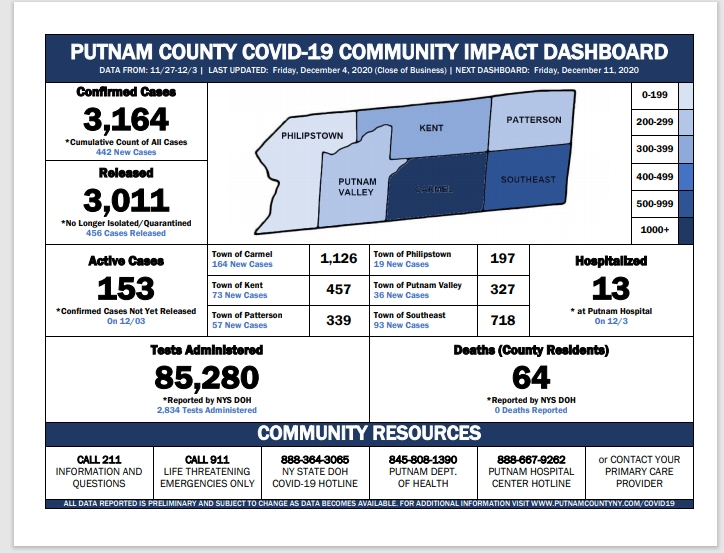
PUTNAM COUNTY, NY — Putnam County continues to see a spike in coronavirus cases.
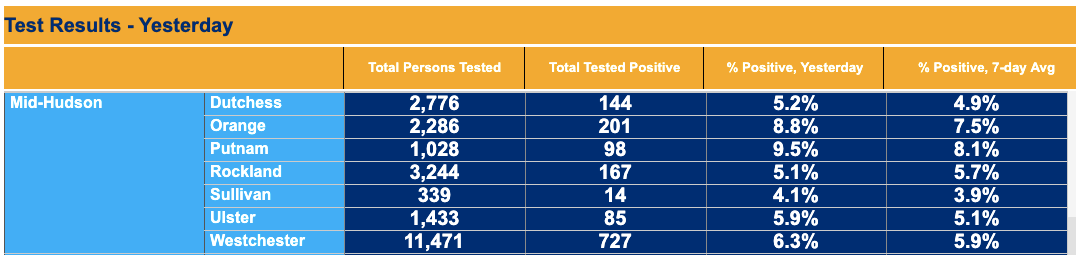
There were 153 active cases in the county as of Dec. 4. On Sunday, the county's rate of positive test results was higher by far than most others in the Hudson region.
The county is working to increase access to testing for residents, said County Executive MaryEllen Odell. For 2021, the health department has already created a vaccine implementation plan that will follow New York State’s tiered approach to vaccination.
Find out what's happening in Southeast-Brewsterfor free with the latest updates from Patch.
“Everyone seems to agree that vaccine development has worked at amazing speed,” said Dr. Nesheiwat. “We are expecting that they will become widely available sometime in the first half of the new year. We need to remain as strong and cautious as possible until then."
Putnam County officials sent out an advisory Dec. 4 to help residents figure out whether to deal with a case of COVID-19, the disease caused by the virus, at home or in the hospital.
Find out what's happening in Southeast-Brewsterfor free with the latest updates from Patch.
"The holiday season is a special time for family and friends," Odell said. "We all want to enjoy this special time while remaining safe and healthy. Knowing when—and how—to treat yourself at home safely is an important first step."
COVID symptoms can occur 2 to 14 days after being exposed. They include fever and chills; sore throat, cough and fatigue; and muscle or body aches. A person can have nasal congestion or a runny nose as well. Other symptoms of mild COVID can include diarrhea, nausea and vomiting, and a new loss of taste or smell.
"Many mild COVID-like symptoms are similar to the flu and can be easily treated at home," Health Commissioner Michael J. Nesheiwat, MD said. "All of these can be treated with over-the-counter medicines. Acetaminophen for example is very effective for fever or body aches. The ill person should also take care to stay hydrated and get extra rest."
What's not as easy easy is separating the sick person from others in the home to avoid spreading any illness.
"This means making the sick person comfortable in a different room if possible. If not, a mask and at least six feet of distance are very important," he said.
Monitoring a person’s condition is also crucial to know if their condition worsens. A thermometer should be used several times a day, and a pulse oximeter, available at drugstores, is also a good idea. This small device fits over the tip of a finger and measures the oxygen level in a person’s blood.
Signs that demand immediate emergency attention include persistent pain or pressure in the chest, bluish lips or face, inability to wake or stay awake, and new confusion. These are signs of serious illness and a call to 911 is necessary. Warn the dispatcher if you are confirmed or suspected to have COVID.
Residents should also be aware that the disease doesn't always run its course quickly.
"People coping with or recovering from COVID-19 should pay attention their respiratory strength — for those able to treat their symptoms at home, daily observation of personal breathing patterns such as rhythm, rate, and quality can help to determine when or if to seek medical care. Those discharged home from a hospital may have an incentive spirometer to use as part of their pulmonary rehabilitation," Dr. Nesheiwat said.
Dr. Nesheiwat also recommended symptomatic individuals stay in communication with their healthcare provider. “Any shortness of breath or difficulty breathing means immediate emergency treatment is necessary."
Get more local news delivered straight to your inbox. Sign up for free Patch newsletters and alerts.