Community Corner
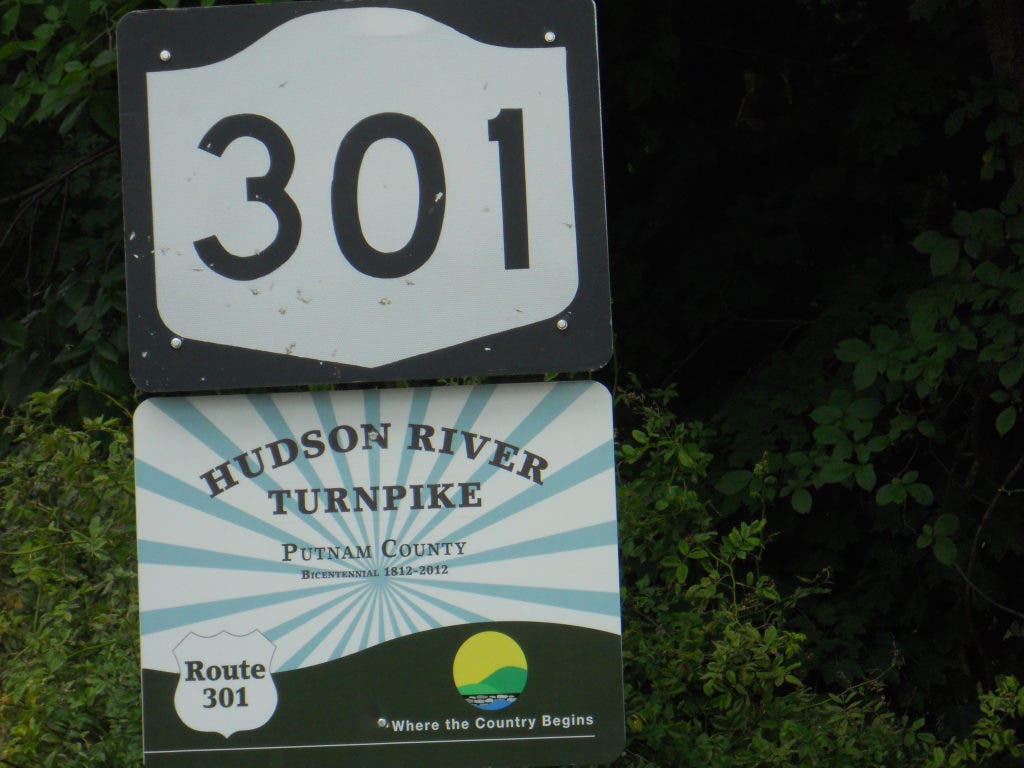
Renaming Route 301: Cost, History Behind New Hudson River Turnpike
Five road signs, each priced at $105, note the change.


Following a , Patch has connected with officials for more details.
Elected leaders celebrated the renaming of the roadway, which runs about 17 miles east and west across Putnam County, last month. County Executive MaryEllen Odell first announced the plans during her State of the County address earlier this year. Legislators approved the proposal, which coincided with Bicentennial celebrations.
Here are some of the specifics provided by Odell, County Historian Denis Castelli and Director of Tourism Libby Pataki:
Find out what's happening in Southeast-Brewsterfor free with the latest updates from Patch.
- The purpose of the renaming is to increase tourism, "on both sides of the county and in-between, simply by making folks aware of what is within 20 miles of where they live or work," Castelli said in an email. "Our people and our history (including architecture, open space and parks) are the only marketable assets in Putnam County. We are not drawing people to our shops and stores with an amusement park or a university or a national monument. If we want folks to come from outside the county to spend money inside our county (and we do), then the first step is providing reasons to visit. Promoting tourism is essential to that goal."
- Five signs—each priced at $105—announcing the new name line the roadway. The old name is on the signs, too.
- Over the years, different areas of Route 301 were known as different turnpikes. According to Pataki, it "was known as the Cold Spring Turnpike, until it reached the intersection at Kent Cliffs. There it took a sharp left and went North and was known as the Dutchess Turnpike. If one headed straight however, it became known as the Philipstown Turnpike and headed into Ludingtonville, due North of Carmel. A sharp right would have taken you South into Carmel, the County Seat starting in 1812 at the time of Putnam County’s breaking away from Dutchess." It was a "paying toll road," she said, "where a pike was laid across the road. People paid their toll and the pike was rotated to allow passage, hence the term turnpike. There were such stops wherever private roads had been built."
Find out what's happening in Southeast-Brewsterfor free with the latest updates from Patch.
Get more local news delivered straight to your inbox. Sign up for free Patch newsletters and alerts.