Health & Fitness
State Addressing Toxic Algae In Local Lakes
HABs grow in waterbodies surrounded by houses, on-site septic systems and other nutrient inputs. They poison the water.


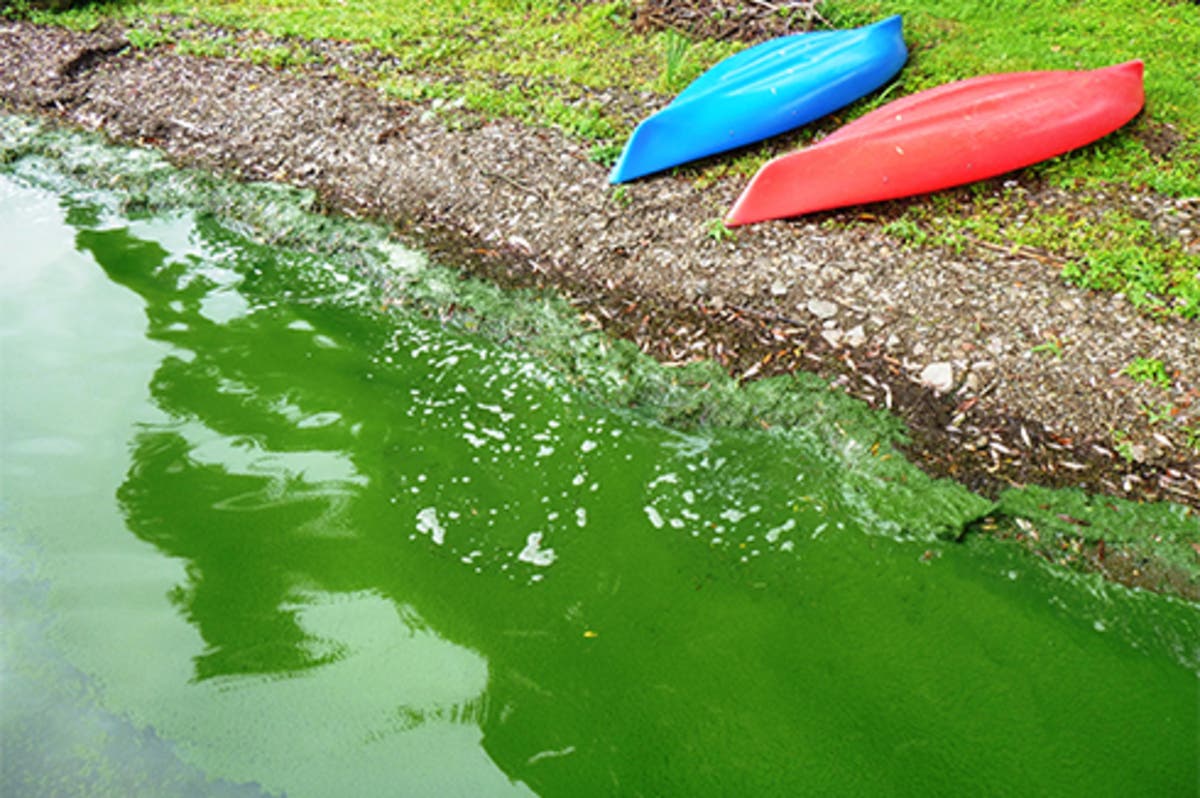
NEW PALTZ, NY — New York state officials kicked off the first of four summits Tuesday on how to protect vulnerable lakes and waterbodies — including in Putnam County and Orange County — from harmful algal blooms, or "HABs." The increasing frequency and duration of HABs threaten drinking water quality and the recreational use of lakes.
It's an increasing threat.
In 2015, DOH documented an estimated 35 HAB-associated illness cases in 16 New York counties, all associated with exposure during recreational activities like swimming and boating. In 2016, drinking water for more than 40,000 people in Cayuga County was affected when HABs-related toxins were detected in finished drinking water for the first time. In 2017, more than 100 beaches were closed for at least part of the summer due to HABs, and Skaneateles Lake, the source of unfiltered drinking water for several communities including the city of Syracuse, was threatened by algal blooms for the first time.
Find out what's happening in Southeast-Brewsterfor free with the latest updates from Patch.
HABs occurrence has been linked to phosphorus and other nutrient inputs and is exacerbated by heavy rain events and warming waters related to climate change.
The Hudson Valley Summit in New Paltz was part of the $65 million four-point initiative unveiled in Gov. Andrew M. Cuomo's 2018 State of the State to aggressively combat these algal blooms.
Find out what's happening in Southeast-Brewsterfor free with the latest updates from Patch.
"Protecting New York's water quality for future generations is our top priority, and we are working with local communities to address the growing threat of harmful algal blooms," Cuomo said in an announcement about the event. "This summit brings together experts from across the country, the state and the Hudson Valley community to develop new and innovative strategies to safeguard our water for future generations."
The Hudson Valley summit was to guide the development of four action plans to reduce harmful algal blooms in the following waterbodies: Lake Carmel, and Palmer and Putnam lakes in Putnam County, as well as the Monhagen Brook watershed, including the five reservoirs serving the Middletown area in Orange County.
These waterbodies are typical of small lakes that support recreation and provide drinking water, state officials said. Lessons from these lakes will be applied to other water bodies characterized by surrounding residential development, the prevalence of on-site septic systems, upland agricultural use, and other nutrient inputs—a common set of characteristics across the Hudson Valley.
Putnam Lake is a 226-acre lake in the town of Patterson, Putnam County. Putnam Lake has shown elevated nutrient levels typical of other New York lakes that exhibit frequent HABs. The lake has suffered more than 30 weeks of documented HAB outbreaks since 2012. It is part of the New York City watershed.
Lake Carmel, a 187-acre lake located in the town of Kent, Putnam County, has shown elevated algal levels, typical of other lakes in the Lower Hudson with high phosphorus and nitrogen levels. Lake Carmel suffered 18 weeks of HAB outbreaks, resulting in more than 30 days of beach closures in 2017. It is part of the New York City watershed.
Palmer Lake is a 14-acre lake in the towns of Kent and Carmel, Putnam County. Palmer Lake has shown elevated nutrient and algae levels, although most of these blooms are not comprised of cyanobacteria, but instead are filamentous algae blooms. Palmer Lake suffered its first HAB outbreak in 2017, despite high nutrient and algae levels. It is also part of the New York City watershed.
The Monhagen Reservoir, which serves as the drinking water supply for the city of Middletown in Orange County, has suffered from HABs. Its feeder lakes have suffered periodic HAB outbreaks resulting in the need for creative diversions of water from unimpacted upstream reservoirs, use of algacides, and other strategies to deliver safe drinking water.
Experts attending the Hudson Valley Summit:
- Jennifer Graham, Research Hydrologist, USGS Kansas Water Science Center
- Harold Walker, Co-Director, SUNY Stony Brook Center for Clean Water Technology
- Dave Matthews, Upstate Freshwater Institute
- Jillian Decker, SUNY Rockland
- Beth Ahner, Senior Associate Dean, Cornell College of Agriculture and Life Sciences
- Fran Dunwell, Hudson River Estuary Program
- Scott Kishbaugh, New York State Department of Environmental Conservation
- Bob Capowski, New York State Department of Environmental Conservation
- Lloyd Wilson, New York State Department of Health
Orange County Executive Steven M. Neuhaus said, "Clean water is essential to all our health. I look forward to continuing to work with Governor Cuomo to improve water quality in Orange County and across New York."
Putnam County Executive MaryEllen Odell said, "We are fortunate to have such a sprawling array of waterbodies here in New York. They provide clean drinking water, recreational opportunities, and some of the most beautiful scenery in the world, which is why the threat of these harmful algal blooms is so grave. I support the Governor's initiative to combat this alarming natural intrusion and am hopeful that we have found the most efficient solution to reduce this hazard and ensure clean and safe water for the affected communities."
Want to learn more?
A new DEC Harmful Algal Bloom brochure and Harmful Algal Bloom Program Guide are now available.
Upcoming HABs Summits
Twelve lakes vulnerable to HABs and which represent a wide range of conditions and affected uses were prioritized for this comprehensive planning process in the first year of this new initiative. Lessons learned from studying the twelve priority lakes will be applied to waterbodies across the state.
At the HABs summits, nation-leading experts will work with local steering committees to begin development of tailored action plans to address the causes of algal blooms in the twelve priority waterbodies across the state. The action plans developed for each waterbody will be used to guide the development and implementation of priority projects, including new monitoring and treatment technologies. The action plans will be complete by the end of May and the lessons learned through these action plans will be applied to other impacted waterbodies. Each of the four summits include an evening session that is open to the public where background information about harmful algal blooms will be provided. The sessions will include talks by experts, a panel discussion and an opportunity for local residents to share recommendations and ideas.
The three remaining summits are scheduled for:
Central New York
Tuesday, March 6 from 6 p.m. - 8 p.m.
SUNY ESF Gateway Center Building, 1 Forestry Drive, Syracuse, NY 13210
Free parking available in all ESF designated lots
North Country
Tuesday, March 20 from 6 p.m. - 8 p.m.
Best Western Ticonderoga, 260 Burgoyne Road, Ticonderoga, NY 12883
Western New York
Monday, March 26 from 6 p.m. - 8 p.m.
R. Thomas Flynn Campus Center, SUNY Monroe Community College, the Forum, 1000 East Henrietta Road, Rochester, New York 14623
Free parking in campus lots N and M
The sessions will also be available live online. Please visit Livestream to learn the many ways in which these events can be watched in real time including a desktop browser, mobile browser, free livestream mobile app, and others.
As part of the 2018 State of the State, the governor directed the state's Water Quality Rapid Response Team, co-chaired by Department of Environmental Conservation Commissioner Basil Seggos and Department of Health Commissioner Howard Zucker in partnership with the New York State Department of Agriculture and Markets, to convene four regional Harmful Algal Blooms summits. The summits bring together national and state experts, including scientists from Kansas, Ohio, Tennessee and Vermont, as well as SUNY College of Environmental Science and Forestry, SUNY Stony Brook, Cornell University, DEC, DOH, the New York State Soil and Water Conservation Committee, and local stakeholders.
The Harmful Algal Blooms program builds on the State's $2.5 billion Clean Water Infrastructure Act investments in clean water infrastructure and water quality protection throughout New York State. The Harmful Algal Blooms initiative will be supported with funds from both the $2.5 billion Clean Water Infrastructure Act and the $300 million Environmental Protection Fund. Through the Governor's leadership, New York has developed the most comprehensive Harmful Algal Blooms outreach and monitoring programs in the country, led by DEC sampling of ambient waters across the state and DOH sampling at regulated beaches and public water systems.
AVOID it!
Because it is hard to tell a HAB from non-harmful algal blooms, it is best to avoid swimming, boating, otherwise recreating in, or drinking water with a bloom.
Before you go in the water, find out what waterbodies have blooms or have had them in the past. DEC maintains a HABs Notifications page of waterbodies that currently have blooms. Please note that if a waterbody is not listed, it does not mean that it does not have a bloom. It may have one that was not reported. Find out what waterbodies have had blooms in the past on the HABs Archive page.
- People, pets and livestock should avoid contact with any floating mats, scums, or discolored water. Colors can include shades of green, blue-green, yellow, brown or red.
- Never drink, prepare food, cook or make ice with untreated surface water, whether or not algae blooms are present. In addition to toxins, untreated surface water may contain bacteria, parasites or viruses that could cause illness if consumed.
- People not on public water supplies should not drink surface water during an algal bloom, even if it is treated, because in-home treatments such as boiling, disinfecting water with chlorine or ultraviolet (UV), and water filtration units do not protect people from HABs toxins.
If contact occurs:
- Rinse thoroughly with clean water to remove algae
- Stop using water and seek medical attention immediately if symptoms such as vomiting, nausea, diarrhea, skin, eye or throat irritation, allergic reactions or breathing difficulties occur after drinking or having contact with blooms or untreated surface water.
Be prepared:
Before you go in the water, find out what waterbodies have blooms or have had them in the past. DEC's HABs Notifications page of waterbodies that currently have blooms. Please note that if a waterbody is not listed, it does not mean that it does not have a bloom. It may have one that was not reported. You can find out what waterbodies have had blooms in the past on the HABs Archive page.
REPORT it!
- HABs may have the appearance of pea soup. If you suspect that you have seen a HAB, please report the bloom to the DEC. Fill out and submit a Suspicious Algal Bloom Report Form (PDF, 764 KB). Email the completed form and, if possible, attach digital photos (close-up and landscape to show extent and location) of the suspected bloom to HABsInfo@dec.ny.gov.
- Please report any health symptoms to NYS Health Department at harmfulalgae@health.ny.gov and your local health department (link leaves DEC website).
PHOTO: It can be hard to tell a HAB from other non-toxic algal blooms and sometimes several types of algae can be present at one time. DEC recommends avoiding contact with any floating mats, scums, or discolored water. This kind of HABs may make the water look bright green or like pea soup./ DEC
Get more local news delivered straight to your inbox. Sign up for free Patch newsletters and alerts.