Politics & Government
Toxic Algae Close Putnam Beaches, Create Political Controversy
County officials who made the beach at Vets Park open to Kent residents expand that to all county residents in affected lake communities.


PUTNAM COUNTY, NY — Putnam County officials are making the beach at Veterans Park open to all county residents in lake communities plagued by toxic algae. The move comes after a controversy between Putnam County Executive MaryEllen Odell and Kent Town Supervisor Maureen Fleming, who is challenging Odell in the November election.
On July 24, Odell announced that the county would open the beach at Veterans Park without charge for residents of Lake Carmel. She followed that up four days later by offering the same opportunity to Kent residents with Lake Tonetta permits.
Fleming accused Odell of using lake access as a campaign stunt.
Find out what's happening in Southeast-Brewsterfor free with the latest updates from Patch.
"At the time of the [first] announcement Lake Carmel beaches were open and algae-free," Fleming said. "Blue-green algae has been a County-wide issue for years, and all of our towns struggle with it. The County has done precious little to assist...This is nothing but another blatant example of Odell’s constant efforts to divide our county. All Putnam County residents deserve equal treatment. I call on Odell to open, at no charge, the beach at Veterans Park to any Putnam County resident who has their beach closed. Residents can call the County Executive at (845) 808-1001 and ask her to open the Veteran’s Park for you, too."
On Aug. 1, Odell did just that.
Find out what's happening in Southeast-Brewsterfor free with the latest updates from Patch.
She announced immediate steps to open the Putnam County beach in Veterans Memorial Park on Gypsy Trail Road in Kent free of charge to those residents living in lake communities where beaches are closed due to toxic algae.
“We wanted to do something right now for our community members who are dealing with these algal blooms on a daily basis,” Odell said in the announcement. “This is a difficult situation. The blooms pose a serious health problem. Swimming, and even boating, can put you at risk.”
Funding is coming from New York State to research solutions for the long term, Odell said.
“Our public county beach at Veterans Memorial Park has fortunately remained unaffected by the blue-green algal blooms that have plagued many other Putnam beaches,” Christopher Ruthven, deputy commissioner of parks and recreation for Putnam County, said. “We’re open from 10 a.m. to 7:30 p.m. until Labor Day, and for residents affected by the harmful algal blooms in their community lakes, the usual $8 fee for a day pass is being waived.”
The increasing number of harmful algal blooms (HABs) in Putnam and around New York State is not completely understood, county officials said.
Prevention efforts focus on ways to control the level of nutrients the algae receive. These include promoting efficient septic systems operations, reducing plant fertilizer use, and managing storm water.
Staff at the Putnam County Department of Health have been busier than ever collecting and sending lake water samples for testing.
“We are working closely with town and beach personnel,” said Michael Nesheiwat, MD, interim commissioner of health. “They are well-informed and able to quickly recognize these harmful algal blooms. When there is an overabundance, or bloom, of this cyanobacteria, the onsite personnel are able to shut down the beaches directly without a confirmatory visit by the health department. This is important as blooms can present a serious health hazard and these microscopic organisms are toxic to humans and animals if swallowed.
“Needless to say, we are grateful to the County Executive who has stepped in to waive the park fee for residents in the affected communities."
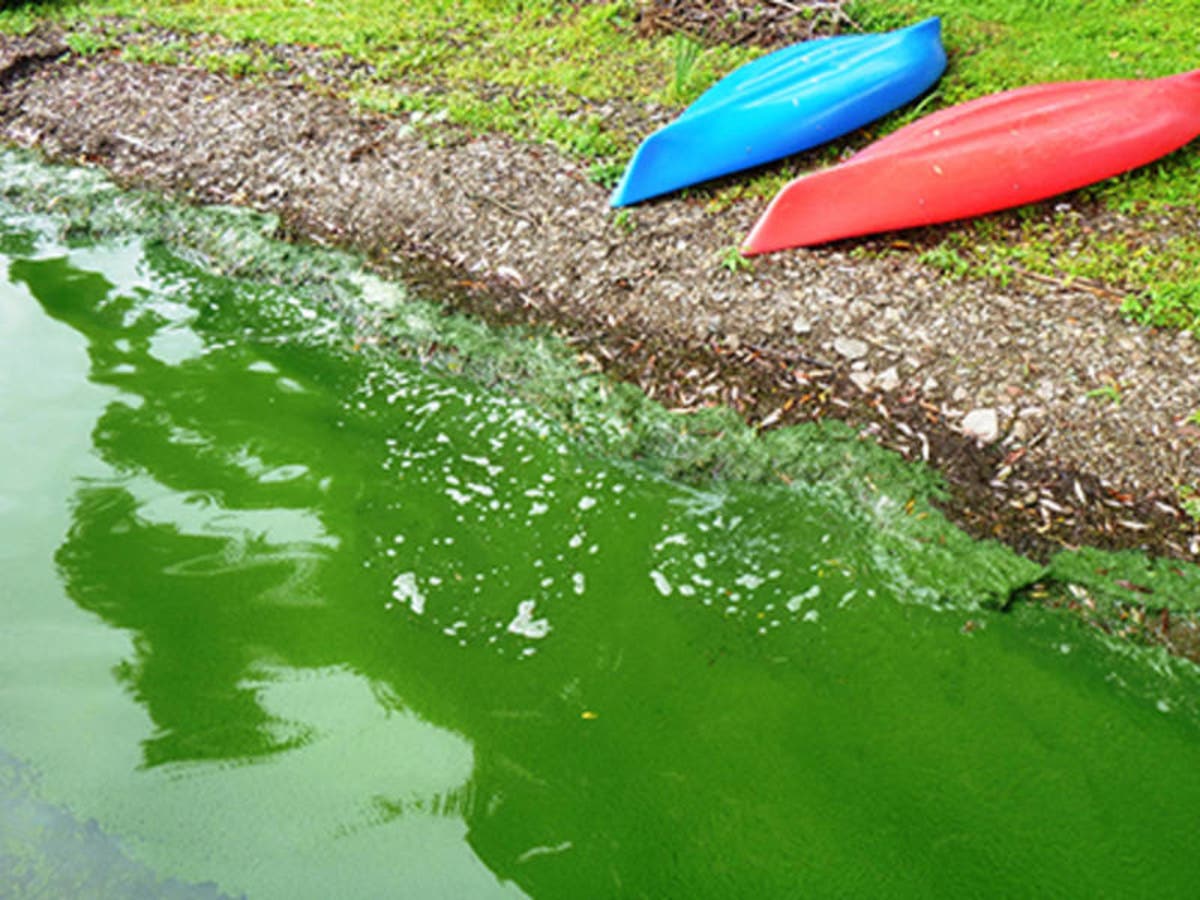
Toxic bacteria are naturally present in low numbers in lakes and streams. However, in warm, shallow, undisturbed surface water that gets a lot of sunlight, the bacteria can grow quickly and easily, creating a bloom. When this happens, floating scums on the water surface may appear, along with discolored water covering all or portions of a lake.
At high levels, ingestion of that bacteria may cause nausea, diarrhea and vomiting, along with irritation of the skin, eyes, nose, throat, and respiratory tract.
The Putnam County Department of Health continues to monitor the county’s 32 permitted bathing beaches, while also responding to calls from town, village and summer camp personnel. Blue-green algae can range in color from green, blue, brown, yellow, grey, or even red. Contact should be avoided with any discolored water, with or without a floating covering or unpleasant odor. When the water clears, either naturally or by treatment, follow-up water testing must be conducted. Toxins can still be present even after the bloom looks like it has passed.
“After a satisfactory result on a water test, town and beach personnel can re-open the beach,” said associate public health sanitarian Shawn Rogan. “And we work closely with the towns to reopen as soon as possible. The problem we are seeing more and more of is that the algae can ‘re-bloom’ shortly thereafter, making it necessary to close the beach once again.”
Some towns choose to apply an algaecide, but they have the same precautions as any pesticide. Treatment methods, if any, are strictly a town decision, and application of an algaecide requires approval by the Department of Environmental Conservation.
SEE ALSO: State Addressing Toxic Algae In Local Lakes
PHOTO: It can be hard to tell a harmful algae bloom from other non-toxic algal blooms and sometimes several types of algae can be present at one time. DEC recommends avoiding contact with any floating mats, scums, or discolored water. This kind of HAB may make the water look bright green or like pea soup./ New York Department of Environmental Conservation
Get more local news delivered straight to your inbox. Sign up for free Patch newsletters and alerts.