Health & Fitness
Port Jefferson Man Back On Track After 'Life-Saving' Dual Cardiac Surgeries At Stony Brook Hospital
Humberto Cordero's aneurysm was discovered when he felt discomfort following a car crash, Stony Brook Medicine officials say.


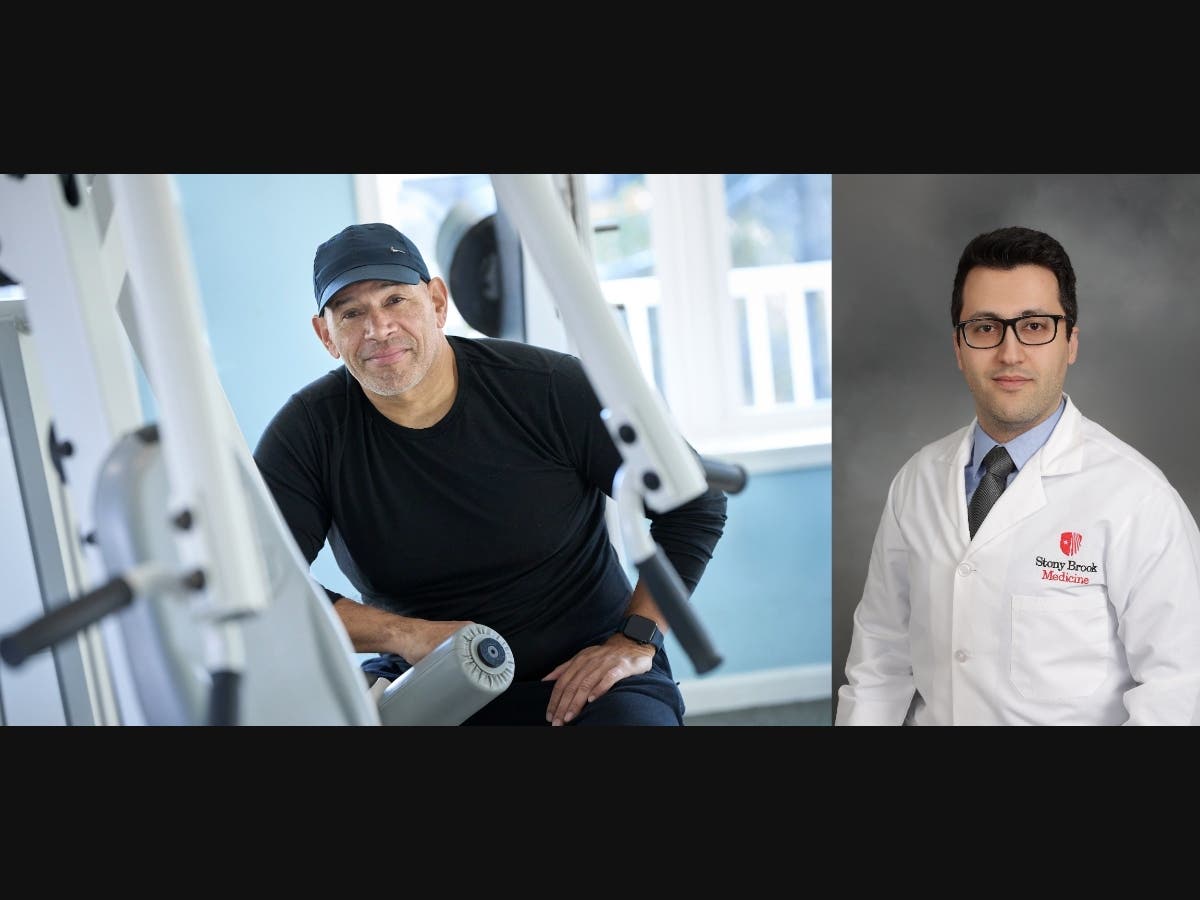
STONY BROOK, NY — A Port Jefferson man is back on track after life-saving dual heart surgeries at Stony Brook University Hospital, Stony Brook Medicine officials announced in a news release on Friday.
Humberto Cordero, 52, was physically-active, and never thought he would be at risk of a life-threatening aortic root aneurysm, a widening of the aorta, which is the main artery that carries blood away from the heart to the rest of the body, officials said.
Cordero had no clogged arteries, no symptoms, and no pain — nothing prior to a minor fender-bender on June 22, 2025, according to officials.
Find out what's happening in Three Villagefor free with the latest updates from Patch.
After that, he began feeling a bit of chest discomfort, and he and his fiancée, Monique, decided to go to Stony Brook as a precaution, officials said.
Extensive testing found that he was living with an aneurysm larger than five centimeters in diameter, which is about two inches, and he needed surgery, according to officials.
Find out what's happening in Three Villagefor free with the latest updates from Patch.
Cordero received the dual surgery at Stony Brook on Aug. 8, 2025, including a valve-sparing aortic root replacement, or VSARR, and an aortic valve repair, which are technically challenging, especially when combined, officials said.
Cordero went home about one week after surgery, according to officials.
Cordero said he is thankful he was in such good hands and has a new appreciation for life, as he has survived what could have been a fatal event.
He takes his experience in stride, saying that his takeaway from the "unexpected heart health journey is that even if you are super fit, have no symptoms, and no family history of heart disease, just make it a point to have vascular and heart health screening as a routine wellness measure, because you just never know.
"And you may not be as lucky as I was to have a fender-bender ...," quipped Cordero, who is preparing to celebrate his 53rd birthday on April 20 and the arrival of a grandchild in the fall.
Aortic root aneurysms cause close to 10,000 deaths in the United States, officials said.
Many people who survive the diagnosis never know they have one until they experience sudden pain, according to officials.
When an aneurysm gets to a certain size, it needs to be cut out and replaced, officials said.
The aortic root is very close to one of the heart valves, the aortic valve, and for long-term health benefits, especially for young, active people like Cordero, the importance of preserving the native aortic valve, which keeps blood flowing in the correct direction, was a key priority, according to officials.
Cordero's surgery involved extensive preoperative planning with a team of cardiac imaging specialists, as well as real-time measurements during the procedure itself, according to officials.
Stony Brook's surgical team used a remodeling technique to replace the enlarged section of the aortic root, where the aorta and heart connect, and what added to the complexity of the procedure was that Cordero’s aortic valve was also leaking before the surgery, which made it necessary to perform the aortic valve repair, officials said.
Stony Brook Heart Institute cardiothoracic surgeon, Dr. Maroun Yammine, described the procedure as “reconstructive or plastic surgery of the aortic valve.”
“The main benefit of the dual procedures — valve-sparing aortic root replacement and aortic valve repair — is that it eliminated the risk of having a life-threatening event due to the large aneurysm and allowed the patient to keep their own natural aortic valve," he said. "Reshaping and repairing the valve has tremendous benefit."
"Especially for someone who, at just 52, is as young and active as Mr. Cordero," he added.
Compared to a metallic, or artificial mechanical valve, the patient does not need to commit to lifelong anticoagulation medications known as blood thinners, and compared to a bioprosthetic valve, which is made from animal tissue, the natural valve "will potentially last far longer,” Yammine explained.
Get more local news delivered straight to your inbox. Sign up for free Patch newsletters and alerts.