Neighbor News
Preserving Our Shared Heritage
Community archiving event at local library brings together historical societies and museums
More Than a Mission:
Local Historical Societies Unite for Community Archiving Event
On Saturday, March 7, more than 60 volunteers gathered at the Emma S. Clark Memorial Library with a shared purpose: to preserve the past by actively engaging with it.
Find out what's happening in Three Villagefor free with the latest updates from Patch.
The event, part of a year-long program through Assemblywoman Rebecca Kassay’s Monthly Missions, brought together historical organizations from across the district in an unprecedented collaboration.
“Through my office’s Monthly Mission Series, we will continue creating opportunities for people to learn, contribute, and connect across organizations, interests, and generations in ways that strengthen and bring our community together,” remarked Assemblywoman Kassay, who represents New York’s 4th District on Long Island.
Participating partners included Three Village Historical Society & Museum (Setauket), Old Field Farm, Cumsewogue Historical Society (Terryville), Davis Town Meeting House (Coram), and Drowned Meadow Cottage, alongside the Port Jefferson Town Historian. The initiative was supported by the Long Island Library Resources Council (LILRC).
Find out what's happening in Three Villagefor free with the latest updates from Patch.
Getting Hands on History
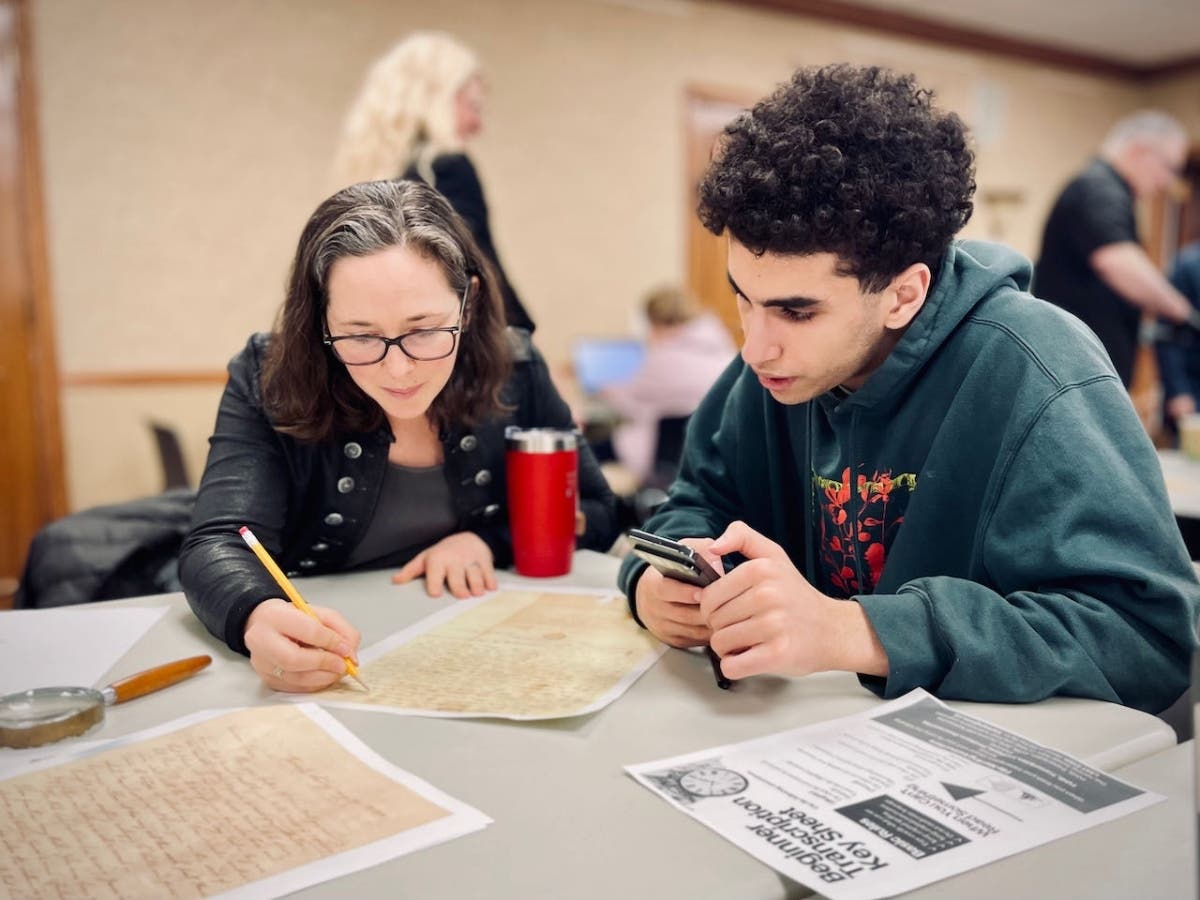
Throughout the day, volunteers transcribed centuries-old handwritten letters, carefully placed fragile photographs into archival sleeves, and learned proper document-handling techniques from professional archivists and historians.
The idea for the event was sparked last year, in a lead-up to the nation’s semiquincentennial. Kassay’s Monthly Mission initiative has consistently focused on civic engagement, but March’s emphasis on local archives strikes a timely chord.
“Seeing so many incredible historical organizations come together alongside neighbors of all ages made the event a true success, collaboratively transcribing dozens of letters and documents — many being read for the first time in over a century, freshly bringing the excitement and heartbreak of the past to life,” Kassay continued. “Efforts like this remind us that preserving history isn’t just about protecting the past: it’s about ensuring future generations can understand how the past helped shape the community and country we share.”
Collaboration Over Competition
For many participating organizations, the day represented something rare: historical societies working side by side.
“It’s unusual — and powerful — to see so many organizations collaborating instead of competing,” said Rob Von Bernewitz, a volunteer docent at both Three Village Historical Society and Davis Town Meeting House. “Supporting one another’s work is essential. The Revolution was a collective responsibility, and preserving our shared heritage is too.”
Bridging Generations and Technology
The event also highlighted an evolving reality in preservation: the integration of technology with traditional archival skills.
Holden Cone, a 10th grader at Ward Melville High School, transcribed two historic letters during the session.
“It was intriguing to learn about the community’s past firsthand,” he said. “Reading cursive takes patience — you really have to go slowly. I used AI to generate a first draft of the transcription, but then I went back and reviewed it carefully for context and mistakes. It still needs a human eye.”
Chris Ryon, Port Jefferson Town Historian, echoed that sentiment.
“I love the multi-generational approach to today’s event,” said Ryon. “Technology absolutely has a place in historic preservation. AI can do the heavy lifting - especially reading old script that many young people aren’t trained to read - but it always needs review.”
The Future of Archives
For Kayleigh Smith, Research & Collections Archivist at Three Village Historical Society, the day represented a model for the future.
“Archives shouldn’t feel closed off or intimidating,” she said. “They should be welcoming spaces where people can explore, ask questions, and discover the stories that make up their community. When we invite people to transcribe letters or handle documents properly, we’re not just preserving history - we’re making it accessible.”
By the end of the afternoon, dozens of documents had been transcribed, hundreds of photographs properly housed, and more than 60 residents had stepped into the role of historical caretakers.
Assemblywoman Kassay's closing thoughts reflected the impact of the day: “Efforts like this remind us that preserving history isn’t just about protecting the past: it’s about ensuring future generations can understand how the past helped shape the community and country we share.”