Upper East Side|Local Event
Founders of Fast-Growing Brooklyn Dance Studio Rikud Launch Toprock, a New Philanthropic Institution

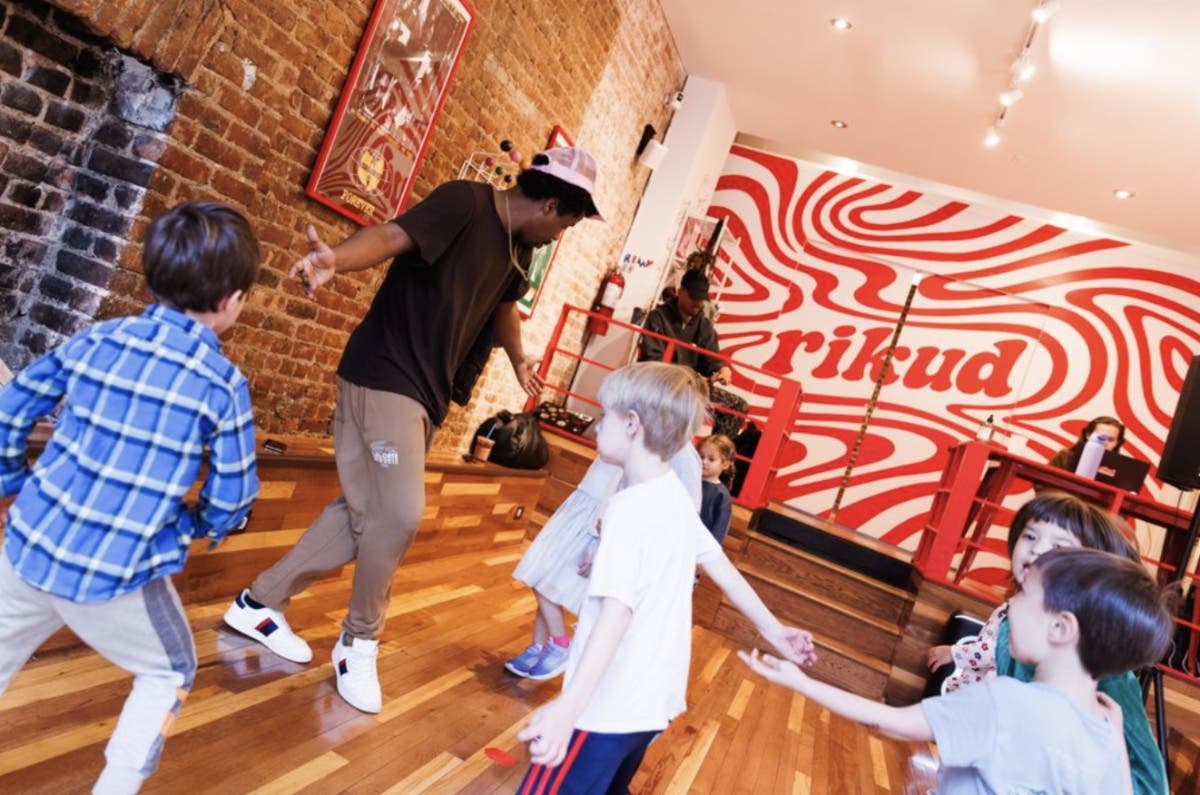
Caila Moed and Andrew “Dr. Ew” Carter, co-founders of the fast-growing Brooklyn dance school Rikud Studio, announced today the launch of Toprock, a new nonprofit grantmaking and programmatic institution dedicated to preserving, advancing, and investing in street, club, and social dance traditions.
Toprock builds on the founders’ success challenging conventional dance education through Rikud Studio, which they established to prove that street, club, and social dance traditions could sustain an entire institution dedicated to their foundations, histories, and practice. With its mantra of “No Mirrors, No Ballet, No Recitals,” Rikud offers progressive instruction in breaking, Hip-Hop, and house, from Babywearing Hip-House and Littles through teen and adult programs. Enrollment has tripled since launch, its fall series is nearly sold out, and the studio has served more than 1,200 students in its first year.
Toprock grew out of initiatives Moed and Carter independently financed and produced to uphold Rikud’s central philosophy: dance education should prepare people to dance in real life, not for recitals. That commitment led them to create opportunities for students to participate in the communities and cultural traditions they were studying.
Moed and Carter began producing battles, workshops, and performances on Vanderbilt Avenue’s Open Streets; family dance parties with legendary father-son DJ duo Saint James Joy; and weekly open sessions where students and community members could put their learning into practice. They also transformed a traditional summer dance camp into a five-elements-of-Hip-Hop program, introducing more than 100 students to DJing, MCing, breaking, graffiti, and knowledge. The program sold out and generated a waitlist.
As these initiatives grew, the founders recognized that their ambitions extended beyond the walls of a dance studio. They believed they could not continue expanding and innovating in dance education without investing in the artists, histories, teaching methods, and communities that make it possible. New York City’s street, club, and social dance traditions have shaped popular culture for generations, yet the infrastructure supporting their continued growth warrants far greater investment.
Their work with teaching artists revealed another opportunity. After helping one artist transition into an administrative role, they recognized the potential to support established practitioners pursuing careers in education, leadership, and arts administration beyond performing and teaching.