Politics & Government
Election Q&A: Meet NY-12 Candidate Laura Dunn
Patch posed several questions to candidate Laura Dunn ahead of the NY-12 election this June. Here are her replies.


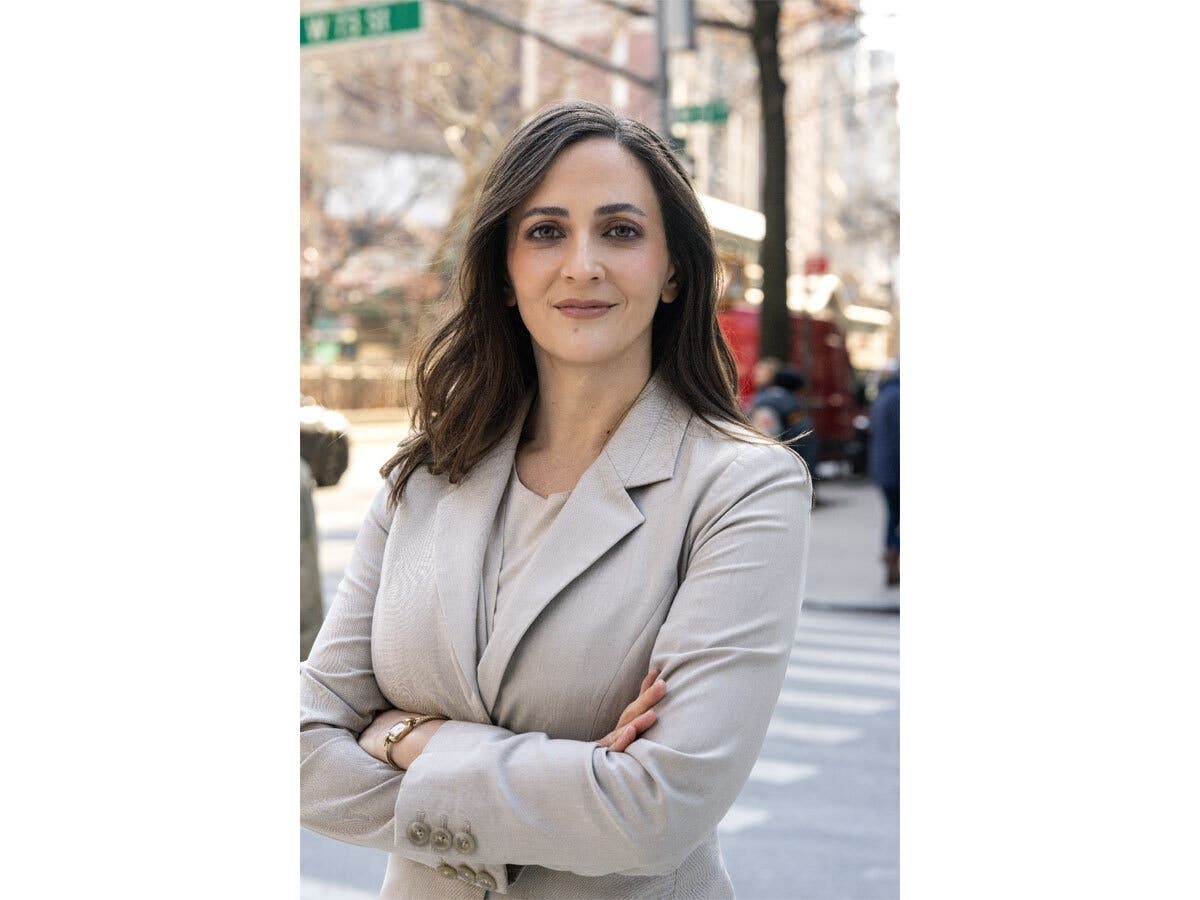
UPPER EAST SIDE, NY — Democratic candidate Laura Dunn is running for Congress in District 12 in New York City's primary election on Tuesday, June 23.
Dunn will face off against fellow Democratic candidates for Jerry Nadler's seat, including Assemblymember Alex Bores, Assemblymember Micah Lasher, Jack Schlossberg, George Conway, Nina Schwalbe and Chris Diep.
NY-12 includes the Upper East Side, Upper West Side, Midtown, Hell’s Kitchen, Central Park, Union Square, Chelsea and Stuyvesant Town.
Find out what's happening in Upper East Sidefor free with the latest updates from Patch.
Ahead of the election, Patch posed several questions to Dunn about her platform, priorities, experience, and district. See her replies below.
EDITOR'S NOTE: The following article contains information about one of several candidates who have announced their campaigns for NY-12 in the 2026 primary election. Patch has contacted the other candidates with the same questions and will post replies as they are received. None of what Dunn said during this interview has been fact-checked.
Find out what's happening in Upper East Sidefor free with the latest updates from Patch.
PATCH: What neighborhood are you from?
DUNN: Hell’s Kitchen
PATCH: What languages do you speak?
DUNN: English
PATCH: What’s your professional and educational background?
DUNN: I am an award-winning civil rights attorney, former public school teacher, and nationally recognized advocate who has spent my career fighting for accountability and justice. After graduating from the University of Maryland Francis King Carey School of Law, I became licensed to practice law in New York, Maryland, Virginia, and the District of Columbia, and was admitted to practice before the Supreme Court of the United States. During the Obama Administration, I helped advance the reauthorization of the Violence Against Women Act (VAWA), later served on a federal rulemaking committee, and worked with the Biden Administration to expand Title IX protections for survivors. I also served as an expert witness in the trial that convicted Jerry Sandusky. My work has been recognized by the U.S. Department of Justice Special Courage Award and selection as a TED Fellow, honors that reflect my commitment to protecting civil rights, accountability, and justice.
PATCH: Renter or owner?
DUNN: Renter
PATCH: The cost of living in NYC is going up. What’s your plan to make New York City more affordable?
DUNN: The way I see it, affordability starts with accountability. For decades, politicians have been making decisions that benefit insiders, billionaires, and special interests while ordinary people are left wondering why their rent, groceries, and utility bills keep going up.
One of the first things I would do is ban insider trading by members of Congress and their families. The people writing our laws should not be allowed to profit from confidential information while the rest of us pay higher prices. When politicians and their donors are focused on manipulating markets and protecting their investments, it is everyday Americans who end up footing the bill.
Housing is another major affordability issue. I support matching federal housing dollars to state and local investments to increase the supply of affordable housing. We need more pathways to homeownership for first-time buyers and working families who have been priced out of the market. We also need to stop policies that allow private equity firms and large investors to buy up entire blocks of housing and treat homes like financial assets instead of places for people to live. Housing should be a pathway to stability, not a commodity used to drive up profits.
I also support increasing taxes on annual income over $1 million and using that revenue to invest in the things that make life more affordable for working people. That means lowering healthcare costs, strengthening services that help seniors age with dignity, supporting caregivers, and expanding programs that help first-time homebuyers achieve homeownership. When the wealthiest Americans contribute a little more, we can make targeted investments that help more families build stability and opportunity without placing a greater burden on the middle class.
I also believe affordability means making sure people can age with dignity. Seniors should not have to choose between paying for housing, healthcare, food, or prescription medication after a lifetime of work. We need to protect Social Security, lower healthcare costs, and support caregivers so people can remain in their communities as they age.
And we cannot ignore the wage gap. When women are paid less for the same work, families have less money for rent, childcare, healthcare, and retirement. Closing that gap is one of the most direct ways to improve affordability for millions of Americans.
At its core, my affordability agenda is simple: make government work for the people paying the bills, not the people writing the biggest checks. When we reduce corruption and put the public interest first, affordability follows.
PATCH: What is your position on bike lane expansion and street redesigns?
DUNN: I support bike lane expansion and street redesigns when they are driven by safety, accessibility, and data—not ideology. My focus is not on choosing between cyclists, pedestrians, drivers, or transit riders. My focus is making sure everyone gets home safely.
That's why I supported Priscilla's Law. The death of Priscilla Loke highlighted the need for greater accountability and safety standards as e-bikes and other forms of micromobility become more common on our streets. Public safety has to be the priority, whether the danger comes from a car, an e-bike, or an unsafe intersection.
I also support the goals of Vision Zero and the NYC Streets Plan because they are rooted in reducing injuries and traffic fatalities. That includes safer intersections, traffic-calming measures, improved lighting, expanded pedestrian space, accessibility improvements for people with disabilities, safer bus corridors, and protected bike lanes where the data shows they improve safety. I also support measures like Sammy's Law, which gives New York City greater flexibility to reduce vehicle speeds in areas where speeding poses a danger to pedestrians.
At the same time, New York City is unique. Parking, deliveries, public transit, emergency vehicle access, and traffic flow are real concerns that affect millions of people every day. Street redesigns should take those realities into account. That means looking at the data, listening to communities, and measuring outcomes rather than assuming every solution works everywhere.
My approach is simple: if a redesign reduces crashes, prevents injuries, and improves safety, we should pursue it. If it creates unintended problems, we should adjust it. Public safety should drive these decisions, not politics. Every New Yorker—whether they walk, bike, drive, use a wheelchair, ride the bus, or take the subway—deserves streets that are safe, accessible, and designed to serve everyone.
PATCH: List two ways you plan to make New York safer.
DUNN: My approach to public safety starts with prevention and accountability. As a former teacher who experienced an active shooter situation and a civil rights attorney who has spent my career advocating for survivors, I know that the best public safety policies stop harm before it happens.
That means reducing gun violence through universal background checks, red flag laws, safe storage requirements, and investments in violence prevention programs. It means supporting mental health services and crisis intervention so people can get help before they reach a point of crisis. It also means creating safer streets through Vision Zero, the NYC Streets Plan, safer intersections, traffic-calming measures, and accountability standards like Priscilla's Law.
Public safety also requires trust in our institutions. People are safer when civil rights are protected, the government is accountable, and the law is applied equally regardless of wealth, status, or political power.
At its core, public safety is about preventing harm, not simply reacting after it occurs. When we invest in prevention, accountability, and strong communities, we create a safer New York for everyone.
PATCH: What are your thoughts on the buffer zone bills sparked by protests in the borough?
DUNN: As a civil rights attorney, I am a strong believer in the First Amendment and the right to free speech and peaceful protest. Those rights are fundamental to our democracy and should not be restricted lightly.
At the same time, people have the right to worship safely and women have the right to access reproductive healthcare without fear of violence, intimidation, or harassment. We have seen a troubling rise in antisemitic and Islamophobic violence around houses of worship, as well as threats and intimidation directed at patients and providers at reproductive health clinics. Those concerns are real and deserve serious attention.
My preference is to start with increased security measures, better coordination with law enforcement, and preventative strategies that protect public safety while preserving constitutional rights. We already have laws that prohibit harassment, violence, threats, and blocking entrances, and courts have repeatedly scrutinized overly broad buffer zone laws because of their impact on free speech.
That said, I am open to narrowly tailored buffer zones that are reasonable in scope and designed to address legitimate safety concerns without preventing peaceful protest. We do not have to choose between public safety and the First Amendment. People should be able to worship safely, women should be able to exercise reproductive choice without fear, and peaceful demonstrators should be able to exercise their constitutional right to free speech. A successful policy protects all three.
PATCH: What type of relationship will you have with the Trump administration?
DUNN: I've spent my entire life finding common ground with people who don't share my politics. I grew up in a politically divided household, and throughout my career I've worked with Republicans, Democrats, independents, survivors, advocates, and policymakers from every background imaginable. When I helped advance the reauthorization of the Violence Against Women Act, it required building bipartisan support and bringing people together around a common goal. That's how good policy gets made.
So the question isn't whether I can work with Republicans. I've done that my entire career.
The question is whether I will compromise my values to accommodate corruption. The answer is no.
I have sued the Trump Administration before, challenging Betsy DeVos and the Department of Education for rolling back Title IX protections for survivors. I believe Donald Trump should be impeached, and I believe members of his administration who have violated the law should be investigated, removed from office, and prosecuted where appropriate. In my view, this administration represents a level of corruption and self-dealing unlike anything we have seen in modern American history.
That doesn't mean I won't work across the aisle. If there is an opportunity to deliver funding, resources, or tangible results for the people of NY-12, I will work with anyone willing to help solve those problems. But working together requires good-faith governance. It does not mean bending to the will of an administration that I believe is harming the country.
My responsibility is not to Donald Trump. My responsibility is to the people I am elected to serve: the families struggling with affordability, the immigrants living in fear of detention without due process, the LGBTQ community facing attacks on their civil rights, women whose freedoms are being rolled back, communities facing discrimination, and children who deserve protection from abuse and exploitation.
Recently, the Chair of the Republican National Committee shared a video of me discussing impeachment and accountability as a warning to his followers. My response is simple: believe me. I meant every word. I am running for Congress because I believe accountability is missing from Washington, and without accountability there can be no affordability, no trust in government, and no functioning democracy.
I can work with anyone when it helps the people I'm fighting for. I've done it my entire career. But I will never abandon those people, compromise my principles, or look the other way in the face of corruption. Congress doesn't need more politicians willing to go along to get along. It needs people willing to bring courage back to the institution and restore the moral center of our government.
PATCH: It’s a large field: what sets you apart from the other candidates?
DUNN: What sets me apart is simple: I’ve already done the job people send members of Congress to do. I’ve written laws, built coalitions, and helped pass federal legislation that improves people’s lives.
Before becoming a civil rights attorney, I was a public school teacher and proud union member—the only candidate in this race who has been one. I know what it means to live on a paycheck, worry about rent, healthcare costs, and whether homeownership is still within reach because those concerns are my concerns too.
I am the only candidate in this race who has drafted and helped pass federal legislation that many of you—and your children—benefit from today. Before becoming a civil rights attorney, I was a public school teacher and a proud union member. No other candidate in this race has been a union member.
The laws I helped pass required bipartisan support. I had to persuade people who didn’t already agree with me, build consensus, and find a path forward. That’s how Congress works when it’s functioning properly, and it’s why I know how to navigate Washington and deliver results. I have opponents who are elected officials and have passed legislation with Democratic majorities. That isn't how Washington works.
I am also the only candidate who has made accountability the centerpiece of this campaign from day one. I am the only candidate calling for enforceable ethics standards for the Supreme Court, including impeaching and removing justices who violate them. As an attorney admitted to practice before the Supreme Court, I understand how much power nine unelected people have over reproductive freedom, LGBTQ rights, voting rights, and protections against discrimination. Protecting those rights starts with ensuring the Court is free from corruption.
We should also be honest about the money in this race. I am not backed by billionaires, AI PACs, crypto PACs, and wealthy political networks. When powerful interests invest in politicians, they expect access, influence, and outcomes. That investment is not you.
I am the only middle-class candidate in this race. I am not independently wealthy. I do not come from family money. I am a queer woman of Latina heritage and a survivor who has spent my career using the law to fight for people who didn't have power. I am not part of the political establishment, and I am the most progressive candidate in this race. I am comfortable with that. Politics as usual has failed too many people and left too many vulnerable communities behind.
What has given me the greatest hope and joy throughout this campaign has been the people of NY-12. This campaign has been an example of what can happen when someone refuses to cut and run because things become difficult. Time and again, my lack of insider connections has been treated as a test of whether I deserve to be here. I reject that idea because I believe you deserve a voice. I believe you deserve the future you want. I believe your dreams are viable and your hopes are worth fighting for, whether or not you are politically connected or wealthy. I know that because I know it is true for me. This campaign has been a six-month demonstration that ordinary people can step forward, persevere, and build something meaningful together. That belief—and the people who share it—is what continues to inspire me every day.
PATCH: What local experience most shaped your politics?
DUNN: There have been many but one recent local experience that helped shape my political outlook was volunteering on Zohran Mamdani's mayoral campaign. I already shared many of his policy priorities, but what stood out to me was seeing a public conversation centered on ideas that many people had long been told were unrealistic or unattainable.
Programs like universal pre-K are reminders that policy change often happens because someone is willing to challenge assumptions about what the government can accomplish. Seeing those conversations unfold reinforced my belief that many debates are not simply about policy design, but about whether leaders are willing to invest the time, coalition-building, and persistence required to pursue ambitious goals.
That experience also resonated with my own work at the federal level. When I was helping advance the reauthorization of the Violence Against Women Act, there were many moments when people said the obstacles were too great, the politics were too difficult, or that the necessary support simply wasn't there. Yet I built the coalitions, found common ground where I could, and ultimately helped move the legislation forward. The U.S. Department of Justice later honored my work with the Special Courage Award, an honor that reflected not just the outcome, but the persistence required to achieve it. Seeing New Yorkers rally behind a vision they believed in despite skepticism and doubt reminded me of something I have experienced throughout my career: meaningful change often begins when people are willing to be courageous enough to pursue it. Mayor Mamdani's victory, and the people who chose to support him, reminded me of the bravery, optimism, and humanity that can sometimes feel missing from politics.
For questions, email Miranda.Levingston@Patch.com.
Get more local news delivered straight to your inbox. Sign up for free Patch newsletters and alerts.