Politics & Government
Manhattan Borough President Race: Where The Candidates Stand
Patch asked the candidates in Manhattan's competitive Borough President to respond to three key issues. Here's where they stand.


NEW YORK, NY — With just two weeks to go until the June 22 primary elections, many New Yorkers may just be tuning in to some of the city's most competitive races — including the one for Manhattan Borough President, where seven Democrats are running to succeed term-limited Gale Brewer.
While partly ceremonial, borough presidents' duties include issuing recommendations on land use proposals that can influence their fate. They also control a sizable budget that they can use to fund local projects.
To help clarify their positions, Patch reached out to each candidate and asked them to respond to three key issues facing the borough: their positions on three contested developments, how they'd push for affordable housing, and what projects they would fund.
Find out what's happening in Upper East Sidefor free with the latest updates from Patch.
Here are the answers from Lindsey Boylan, Elizabeth Caputo, Brad Hoylman, Ben Kallos and Mark Levine. (Kimberly Watkins did not respond.)
What’s one policy you’d push for to make housing more affordable in Manhattan?
Boylan said she would strongly enforce laws that prohibit discrimination against housing vouchers, saying that better subsidy laws would help both renters and landlords, who would have a way besides litigation to negotiate with tenants.
Find out what's happening in Upper East Sidefor free with the latest updates from Patch.
Hoylman pointed to his proposal of a Manhattan Tenants Union in which the Borough President's office would enable renters who share a landlord to swap information and bargain together.
Caputo wants to convert unused office buildings into residential units, while Levine wishes to require all residential developments on city-owned land to be 100 percent affordable.
Kallos said he would expand his previous work on rezoning, which has included halting the progression of "Billionaire's Row" and pushing to require any buildings above 210 feet to include affordable housing.
As Borough President, would you recommend approving or disapproving the following ULURP applications: SoHo/NoHo rezoning, the New York Blood Center tower, and the 250 Water Street seaport project?
Hoylman said he opposes all three of the hotly contested developments "as currently formulated," adding that he would evaluate them based on whether the community has been properly consulted.
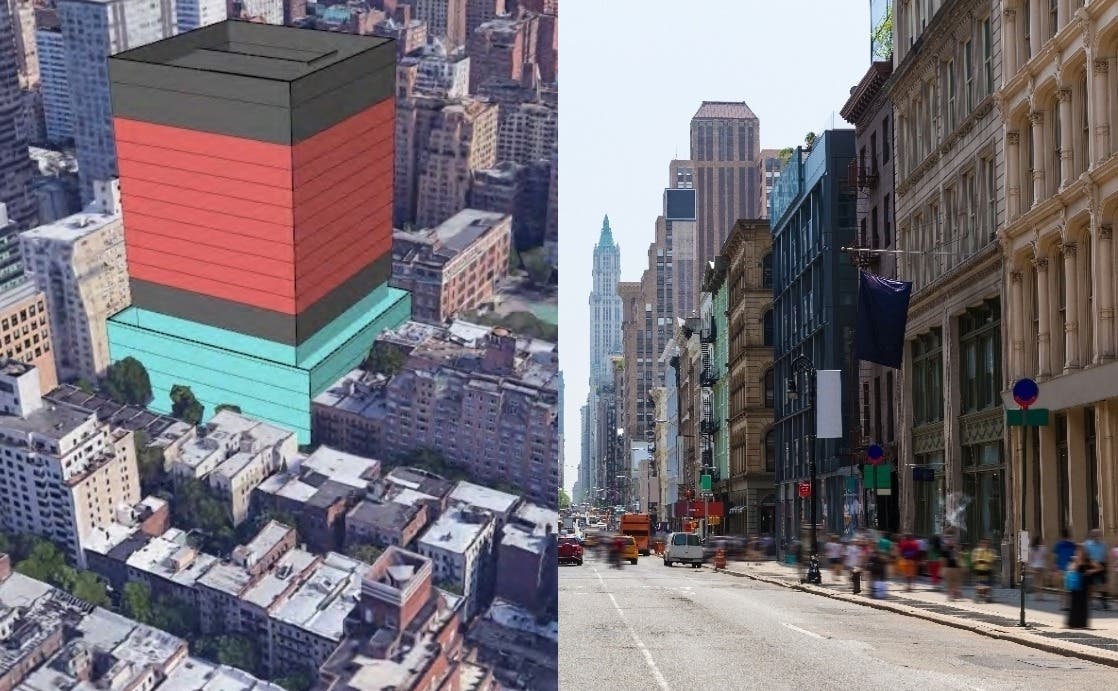
Boylan also opposes all three as they stand, though she said she would back the SoHo/NoHo and 250 Water St. projects if they were revised with community input.
Kallos noted that he has supported protests against the Blood Center project and urged the nonprofit to build on a different site, but has not taken a formal position. He criticized the city's SoHo/NoHo plan for threatening to displace existing affordable housing and said he supports an alternative plan backed by some in the community. Kallos did not take a stance on 250 Water St.
Levine pledged to evaluate each project once in office based on whether they maximize affordable housing, protect landmarked buildings, discourage chain retail, avoid out-of-scale development and minimize shadow impacts on parks.
Caputo said the SoHo and Water Street projects should proceed, with "maximum" community input, though she called them imperfect. She criticized the Blood Center tower as "deeply problematic" for its mid-block location and suggested it should be built elsewhere, without zoning changes.
In your first year, what would be your top funding priority through your discretionary budget?
Levine said he would fund projects to support the city's pandemic recovery, including HVAC systems in senior centers and arts spaces, and spending on schools and healthcare equity programs.
Kallos would buy a laptop for every student who needs one — if his pending bill on that subject does not pass the Council — and also pledged to fund programs for seniors, children, public housing, libraries, parks and nonprofits.
Boylan wants to fund "programs that help reclaim our streets," which she said would help Manhattan's economy and also reduce violence.
Hoylman proposed universal dyslexia testing in all public schools, inspired by his own daughter whose dyslexia diagnosis was not diagnosed until age nine. It would cost 99 cents per child and take less than 10 minutes per test, Hoylman said.
Caputo would spend on programs to "[make] sure our children return to school full time," and have support to minimize learning loss.
In the coming days, Patch will publish individual profiles of each candidate including their full answers to these five questions, plus others.
The city primary election will be held on June 22, with early voting from June 12–20. Find your polling place here.
Get more local news delivered straight to your inbox. Sign up for free Patch newsletters and alerts.