Community Corner
Harold Avenue Cemetery
The oldest cemetery in Wantagh is a centuries-old African American burial ground.

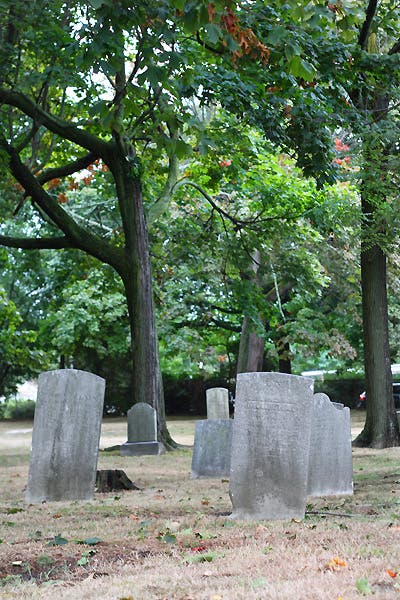


The Harold Avenue Cemetery, also known as the Jackson Cemetery, is located on Wantagh Avenue and is the home of 63 historic residents.
The cemetery, which is fenced in and sits next to serves as a final resting place for the ancestors of the historic Jackson family, which has sixth and eighth generation relatives who have called Nassau County home for over 100 years. There are also members of the Seaman and Althause families at the cemetery, which last month was by the Town of Hempstead as a landmark to protect a centuries-old African American burial ground.
The cemetery's roots can be traced to the early 1800s, when Thomas Jackson, a white Revolutionary War Veteran, sold 20 acres of land to freed African American Jeffrey Jackson in 1808. Thomas Jackson, who is buried in the cemetery, owned land located where the stands today and lived by the Jerusalem River. He was a brave man who served in the 4th line and the Second New York Regiment and also took part in the capture of Fort St. George and fought in the Battle of Long Island in 1776.
Find out what's happening in Wantagh-Seafordfor free with the latest updates from Patch.
Another soldier who was laid to rest in this historic Wantagh cemetery is General Jacob Seaman Jackson. He served as Brigadier General in the War of 1812 and is considered the most famous individual buried at the cemetery.
The last known recorded burial was of Jackson A. Seaman on January 20, 1921.
Find out what's happening in Wantagh-Seafordfor free with the latest updates from Patch.
Although the cemetery is surrounded by the hustle and bustle of one of the busiest streets in Wantagh, it has a stillness that is captivating. The trees guard the graves with sincerity while a peaceful aura elevates off the ground. It is surely a piece of history that brings light to the living.
People think cemeteries can be haunting and creepy, but not the Harold Avenue Cemetery. Maybe it is due to the amount of history that lies there and the stories it continues to tell. Or maybe because it is located next to a church. It could also be the beautiful lush greenery that surrounds the buried.
Whatever the reason may be, we should appreciate and respect the people who helped Wantagh grow. It is them who have made it all possible. Not only is history planted in the Earth but the tales of its true visionaries inspire us all to succeed for the years to come.