We are hearing so much about fall viruses, infectious disease, and bacteria. Today, healthy living requires daily pursuit of these threats to family health. And in places you might not even think about.
The kitchen is where children do their homework, family and friends gather together, and food is prepared. A healthy kitchen is critical to avoid the spread of germs yet there are places in this space that rarely get cleaned.
According to the Centers for Disease Control and Prevention (CDC), five to 20 percent of U.S. residents contract the flu each year and one out of every five outbreaks of food-borne illness is caused by food that people eat in their homes.
Wonder where unhealthy germs may be hiding in your kitchen? Here are the top five kitchen germ hideouts from the cleaning experts at Maid Brigade of North Shore Nassau and North Shore Suffolk Counties. And, our favorite natural cleaners to get out the grime.
Top Five Kitchen Germ Hideouts
1. Refrigerator Ice and Water Dispensers
Water and ice dispensers are moist areas that breed mold, yeast, and where germs can easily be transferred from one family member with a cold or flu to another via a drinking glass. Clean several times per week or even daily during flu season with a natural vinegar and water solution.
2. Meat and Vegetable Drawers
Hot spots for salmonella and listeria, many people mix the use of these drawers potentially contaminating new unwrapped items with raw meat juice or mold from deteriorating fruits and vegetables. Remove the bins and clean with a hydrogen peroxide solution to kill lingering bacteria.
3. Light Switches, Cabinet Hardware, and Door Knobs
Not exactly hidden but often overlooked, everyone in the family touches them and often while preparing food or before eating. Wipe with a vinegar and water solution daily, particularly during cold and flu season. And remind everyone in the family to wash their hands thoroughly when they get home from school, work, and especially before eating.
4. Spatulas
Mold, yeast, and E. coli lurk on spatulas. If your spatula scraper and handle can be separated, be sure to clean both pieces to get rid of old food and potential bacteria found on the inside of the spatula and on the end of the handle.
5. Microwave
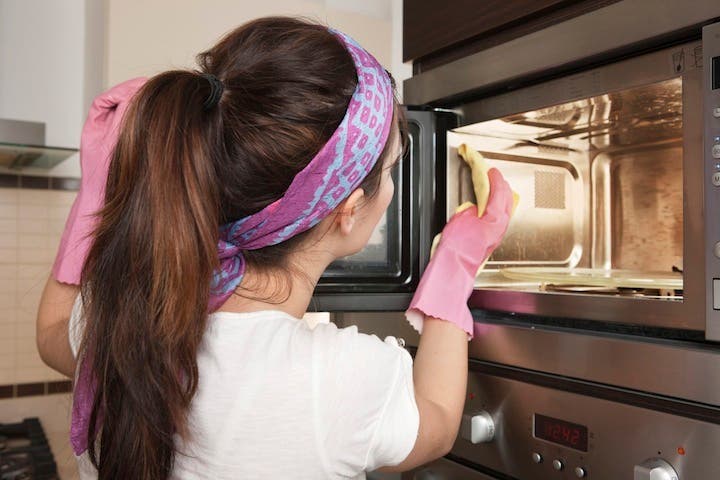
All that splatter! When food splatter is allowed to linger it can breed bacteria and mold, which can contaminate foods that are cooked later in the microwave. Clean by placing a bowl of water and lemon wedges in the microwave and heat for one minute. Remove the bowl and wipe the inside walls of the microwave with a damp microfiber cloth.
Top Three Natural Cleaning Ingredients
1. Vinegar
Vinegar is an acidic solution that kills germs, viruses, and microbes. For a great sanitizer, mix 1 cup water, ½ cup apple cider or white vinegar, and a few drops of citrus essential oil in a spray bottle. Spray. Wipe clean with a microfiber cloth.
2. Hydrogen Peroxide
Combined with vinegar, hydrogen peroxide is a wonderful bacteria killer and an effective overall cleaner. Use hydrogen peroxide alone, with vinegar, or mix with equal parts of warm water to banish salmonella, E. coli and shigella on countertops, cutting boards, and appliances.
3. Tea Tree Oil
This essential oil kills antibiotic-resistant bacteria such as shigella, salmonella and E. coli on all surfaces. For a powerful cleaner, mix 2 cups warm water, 2 tablespoons white vinegar, 1/2 teaspoon liquid castile soap, and 15 drops of tea tree oil. Pour into spray bottle. Spray and wipe clean.
For more green cleaning and healthy lifestyle tips, check out the Maid Brigade blog at www.maidbrigade.com/blog or download the Maid Brigade Green Cleaning GO TO Guide at www.maidbrigade.com/green-house-cleaning/green-go-to-guide.