Politics & Government
Nassau Residents Urge Passage of Sex Offender Bill
Proposed legislation would change how predator-free zones are measured.




How and where to House convicted sex offenders has increasingly become a problem on Long Island, and many communities have been in the spotlight after they passed predator-free zones with such wide radiuses where that convicted offenders are forced into small areas, often in camps. Many more live homeless on the streets.
While Suffolk County has dealt with the issue by building trailer homes for the offenders, Nassau doesn't have the space to build them, thus causing more offenders to live where they can, unmonitored and unchecked. Some of the offenders are housed in hotels through the Nassau County Department of Social Services, but this too can lead to drawbacks.
Jericho resident Mark Aaron and wife, Margaret, brought the matter of homeless sex offenders up at the's Dec. 20 meeting. According to the Aarons, as of Oct. 27, nine registered sex offenders were living in three Jericho hotels. Two of the hotels are within 500 feet of a local park, which is a violation of current Nassau County law.
"We were informed that according to their interpretation of the law, which is that measurements are based on navigable or walking distance and not on a direct radius or straight line, they were not violating the law and there was nothing they could do to help us," Aaron said of repeated calls made to the.
County Executive Ed Mangano hosted a public forum that led to a change in policy so that enforcement of the statute was measured by a straight line.
"It does not go far enough," Aaron said, requesting that legislation to monitor homeless sex offenders, sponsored by Minority Leader Diane Yatauro (D-Glen Cove), be placed on the calendar for a vote.
"This is a matter of public safety and the safety of our children who live and play in our community," Aaron said.
Yatauro's legislation includes a mandate that the Nassau County Police Department is the only agency responsible for enforcement of the mandate and increases fines for hotels and motels if they fail to post sex offender notifications.
Aaron said that his wife on Dec. 7 checked the sex offender registry website and discovered a notice that an offender might have been placed in one of the Jericho hotels. He then described "being passed" from one county agency to the next.
"No one was willing to verify whether in fact the sex offender had been placed in one of these hotels," he said.
When a sex offender is housed in a hotel, the hotel is required to place a sign stating that an offender is staying on the premises.
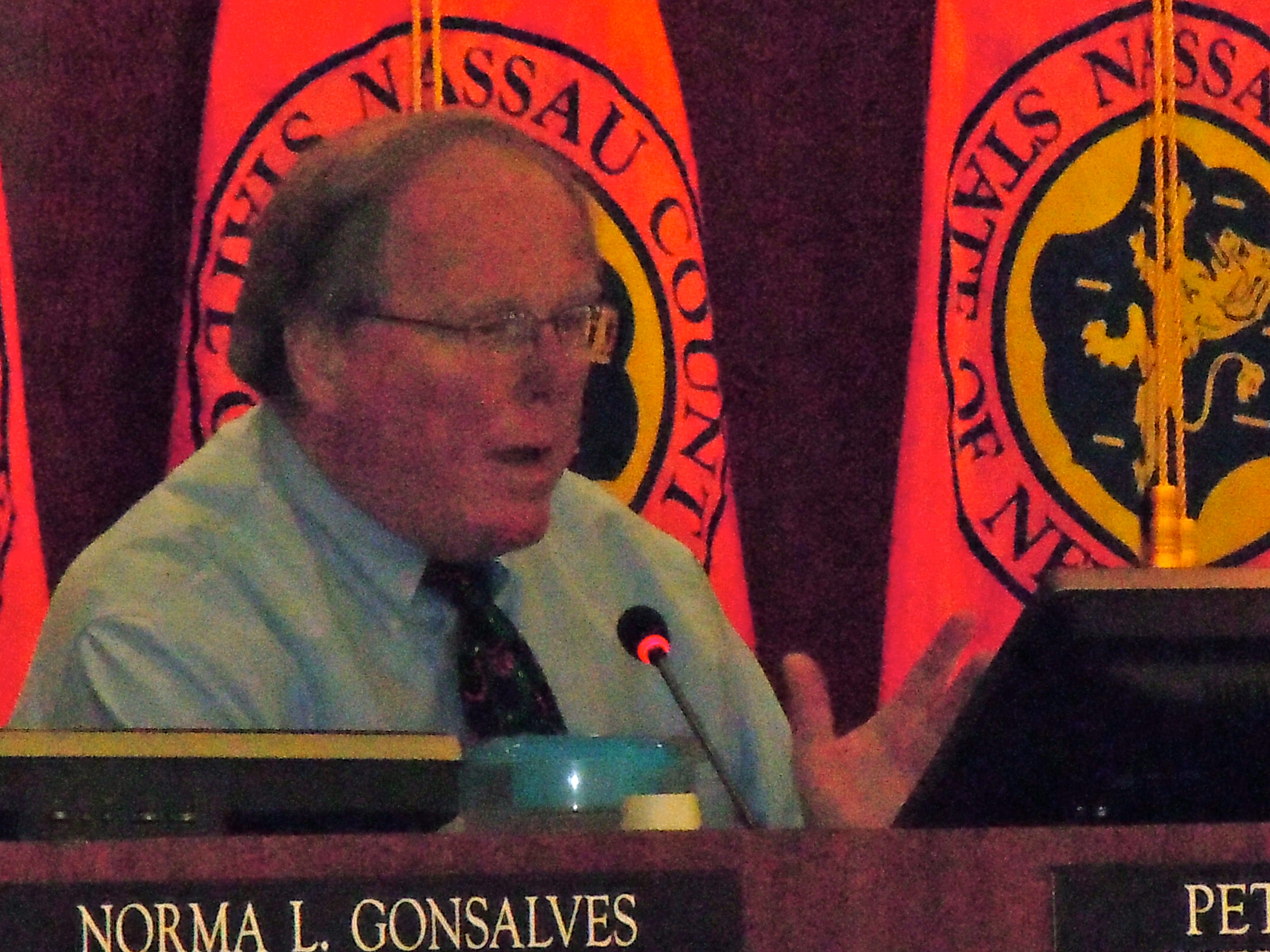
"It's my understanding that it's not being enforced," said Presiding Officer Peter Schmitt (R-Massapequa). "We're talking with the county attorney, we're talking with various entities, we do not want to do something that is going to bring some outside entity, such as the ACLU, down around our neck and undo everything that has been done thus far."
Schmitt added that he was trying to get the current law to become "an enforceable law" through amendments.
"We're going to get that criticism no matter what," Legis. David Denenberg (D-Merrick) said of the ACLU scenario. "Let's make it clear in the legislation that the measurement is straight line."
Get more local news delivered straight to your inbox. Sign up for free Patch newsletters and alerts.