Community Corner
Shoo Fly! Town Increasing Traps For Biting Bugs
The town hopes to catch more than 150,000 of the bloodsucking pests every day.


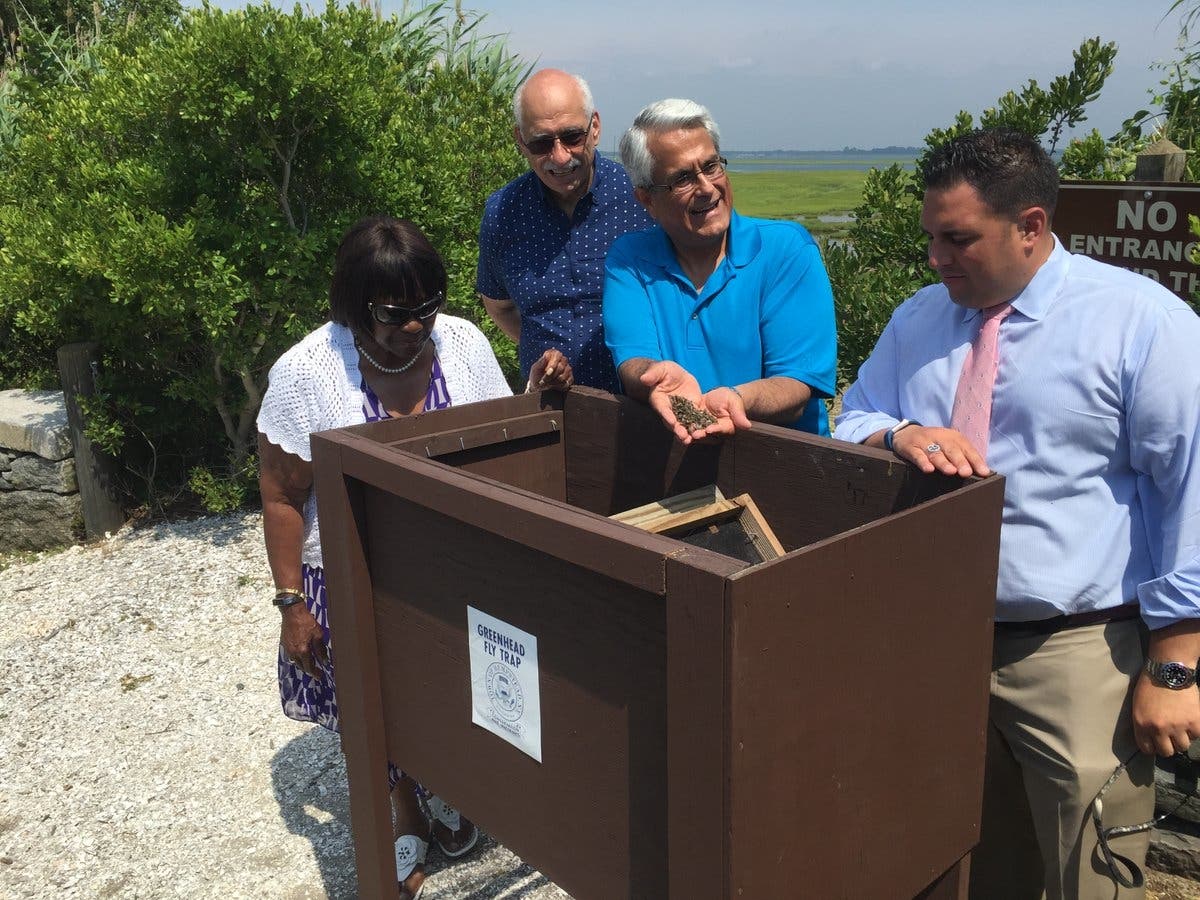
The only thing that can sour a day at the beach faster than rain are swarms of big, biting greenhead flies. The bloodsuckers are well-known to beach goers on the South Shore, and this year has seen an increase in their numbers. In an effort to fight back, the Town of Hempstead is deploying new fly boxes to trap and kill thousands of the bugs every day.
The town is deploying 25 new fly boxes, also known as fly traps or fly cages, which are each capable of catching 2,500 flies per day. With the 35 fly boxes the town already has, it means that 150,000 flies can be caught every day.
"I pride myself on thinking 'outside the box' when it comes to developing solutions to issues that confront our government," said Hempstead Town Supervisor Anthony Santino. "When it came to dealing with the problems presented by hordes of large, green, biting flies, however, we actually had to think 'inside the box' to help provide relief for residents."
Find out what's happening in Wantagh-Seafordfor free with the latest updates from Patch.
While the exact science behind the attraction the flytraps hold for greenheads (sometimes called horse flies) is a subject of debate, it is known that the flies are attracted to heat and dark colors. The dark-colored boxes absorb sunlight, becoming very hot, and the insects enter the boxes, which are suspended on stilts, from below. Once entering the trap’s internal screens, the flies are unable to escape and they dehydrate.

The female greenhead fly lays approximately 200 eggs at a time. After producing eggs, the female greenhead fly requires a fresh supply of blood to be able to produce another batch of eggs. Unfortunately, the period when the greenhead flies are most active coincides with the popular beach and fishing season. Mid-July through early August is the peak period of activity for the greenhead, resulting in a high volume of bites.
Find out what's happening in Wantagh-Seafordfor free with the latest updates from Patch.
Because of their size, greenhead flies are relatively resistant to insecticide. In fact, insecticide generally eradicates the weaker flies, leaving behind a strong stock of "super greenheads." The amount of insecticide required to kill greenheads would have undesirable effects on the environment and be incompatible with Santino’s environmentally conscious approach to pest control. The fly traps are completely environmentally friendly and are produced at a cost of approximately $100 each, including labor and materials.
"Sometimes you have to think inside the box, especially when it comes to catching big, blood-sucking greenhead flies," Santino said. "By deploying more fly boxes to catch these summertime pests, we can make outdoor summer activities more enjoyable for south shore residents, boaters and beachgoers."
Photo: Town of Hempstead
Get more local news delivered straight to your inbox. Sign up for free Patch newsletters and alerts.