Neighbor News
What If the Dominican Man You Think You Know Is Mostly a Character Someone Else Taught You to Recognize?
A first novel born from a simple question: Can literature help us understand Dominican men without reducing them to a stereotype?

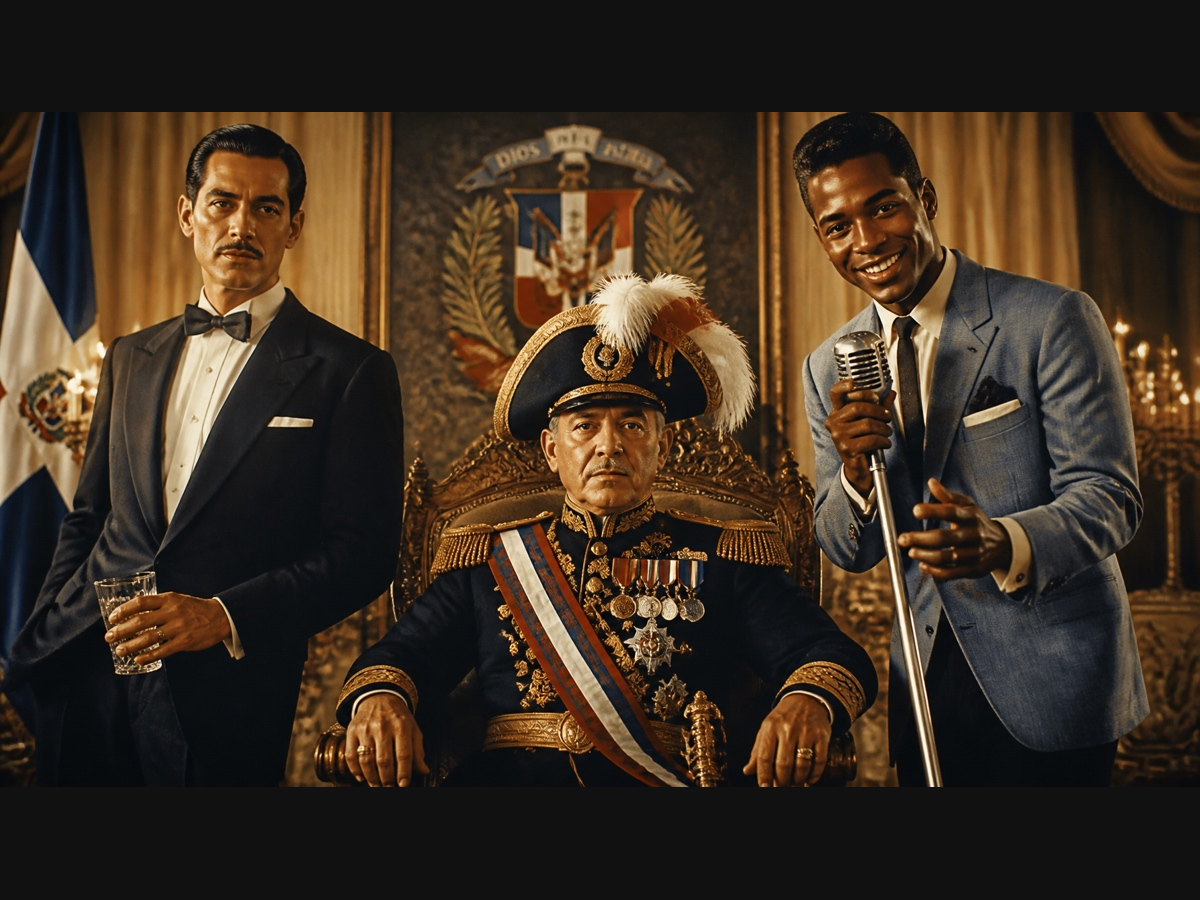
The Name He Never Gave is the first novel by Jose Franco, the writer behind StoopJuice.com, a collection of books and essays offered free to anyone curious enough to read them.
Interestingly, Franco didn't set out to become a novelist.
The idea began with a conversation across generations.
Find out what's happening in Washington Heights-Inwoodfor free with the latest updates from Patch.
A 24-year-old daughter of one of Franco's college friends—a Dominican economics professor—had downloaded Franco's free e-book, The Blindside of Well-Meaning Economics, and listened to it using a PDF reader. Afterward, she told him she wished something existed that could help her better understand Dominican men from New York—particularly the ones she might encounter while dating.
It's a deceptively complicated request.
Find out what's happening in Washington Heights-Inwoodfor free with the latest updates from Patch.
Because what exactly would such a book explain?
Dominican men?
New York men?
Dominican-American men?
Men raised by immigrants?
Men raised in the Bronx?
College-educated men?
Working-class men?
Men born in one decade rather than another?
Or simply individual human beings carrying combinations of all those things?
That question became the seed of The Name He Never Gave.
The result is not a dating manual, sociological study, defense of Dominican masculinity, or attempt to create the definitive Dominican-American male experience.
Such a definitive experience does not exist.
That may be precisely the point.
American literature has sometimes rendered the Dominican male through a familiar vocabulary: machismo, swagger, sex, infidelity, immigration, poverty, violence, assimilation. Those things can certainly belong to real lives. But recurring truths can eventually harden into expected characteristics, and expected characteristics can quietly become stereotypes—even when presented as authenticity.
Franco wonders what remains outside that frame.
What about the Dominican boy who reads?
The one who thinks too much?
The one who is simultaneously attracted to and suspicious of traditional masculinity?
The one who can be selfish, tender, vain, frightened, intellectually curious, sexually confused, loyal, dishonest, ambitious, insecure, ridiculous, loving—and occasionally an absolute ass?
Why must any of those qualities become evidence about Dominican men rather than evidence about one complicated human being?
That distinction sits near the center of The Name He Never Gave.
Its protagonist remains unnamed, and the choice gradually becomes more than a literary device. A name gives us somewhere convenient to deposit judgment.
That's him.
Without one, another possibility becomes harder to avoid:
How much of him is me?
Readers familiar with Junot Díaz may recognize some cultural and geographic terrain, but Franco is traveling somewhere deliberately different. The Name He Never Gave doesn't need to correct Díaz, sanitize his characters, or manufacture a more respectable Dominican man in response.
The more interesting question is why we ever expected one writer—or one recurring literary archetype—to contain Dominican masculinity in the first place.
How much of what we call "Dominican" is actually Dominican?
How much is New York?
How much is class?
How much is masculinity?
How much is immigration?
How much is family?
How much is the particular decade in which somebody happened to become seventeen?
And how much is simply one flawed human being making choices and later constructing explanations for them?
For college-educated Dominican-American men, those questions may feel particularly familiar. Many have spent their lives moving between languages, neighborhoods, social classes, family expectations, universities and professional environments—occasionally encountering sophisticated literature about people who supposedly resemble them while thinking:
Yes. But not quite me.
The novel may be equally interesting for women who date Dominican men—but perhaps for the opposite reason from the one that originally inspired it.
This book will not teach you how to understand Dominican men.
It questions whether anyone should promise you that.
There is no decoder ring here. No list of cultural characteristics. No explanation beginning with, "Dominican men tend to..."
Instead, Franco offers something considerably messier:
interiority.
The novel asks readers to look behind behavior without automatically excusing it. To distinguish explanation from justification. To consider how pride can disguise insecurity, humor can function as armor, performance can gradually become identity, and a boy can spend decades becoming a man without ever being entirely certain what "being a man" was supposed to mean.
There are no saints here.
There shouldn't be.
There are also no ethnic villains.
There are people.
Perhaps the most subversive thing about Franco's first novel, then, isn't that it offers us a different definition of the Dominican man.
It refuses to define him at all.
And that brings the novel remarkably close to the question that inspired it.
A young Dominican-American woman wanted something that might help her better understand Dominican men from New York.
Franco's answer, intentionally or otherwise, became more complicated:
Don't begin by trying to understand Dominican men.
Try understanding the man standing in front of you.
Ask about his childhood. His mother. His father. His neighborhood. What frightened him at fourteen. What embarrassed him at seventeen. What he pretends doesn't hurt. What books he has read. What he thinks strength means. What he has inherited. What he has rejected. What he still hasn't figured out.
Then allow him the same privilege we routinely grant ourselves:
the privilege of being a contradiction.
And perhaps that is why the protagonist never receives the name we're waiting for.
Because after nationality, masculinity, education, neighborhood, reputation, family expectations and every convenient category have been stripped away, the question is no longer:
Who is this Dominican man?
It becomes:
Who is this human being?
And eventually, if we're reading carefully enough:
Who am I?
The Name He Never Gave is available to read or download free from Stoop Juice.
The book that unexpectedly helped inspire the novel, The Blindside of Well-Meaning Economics, is also available free from Stoop Juice.