Community Corner
New Response Plan For Whale Strandings Unveiled
A humpback whale that was euthanized after being stranded in Moriches Bay in 2016 had heartbroken residents demanding change.


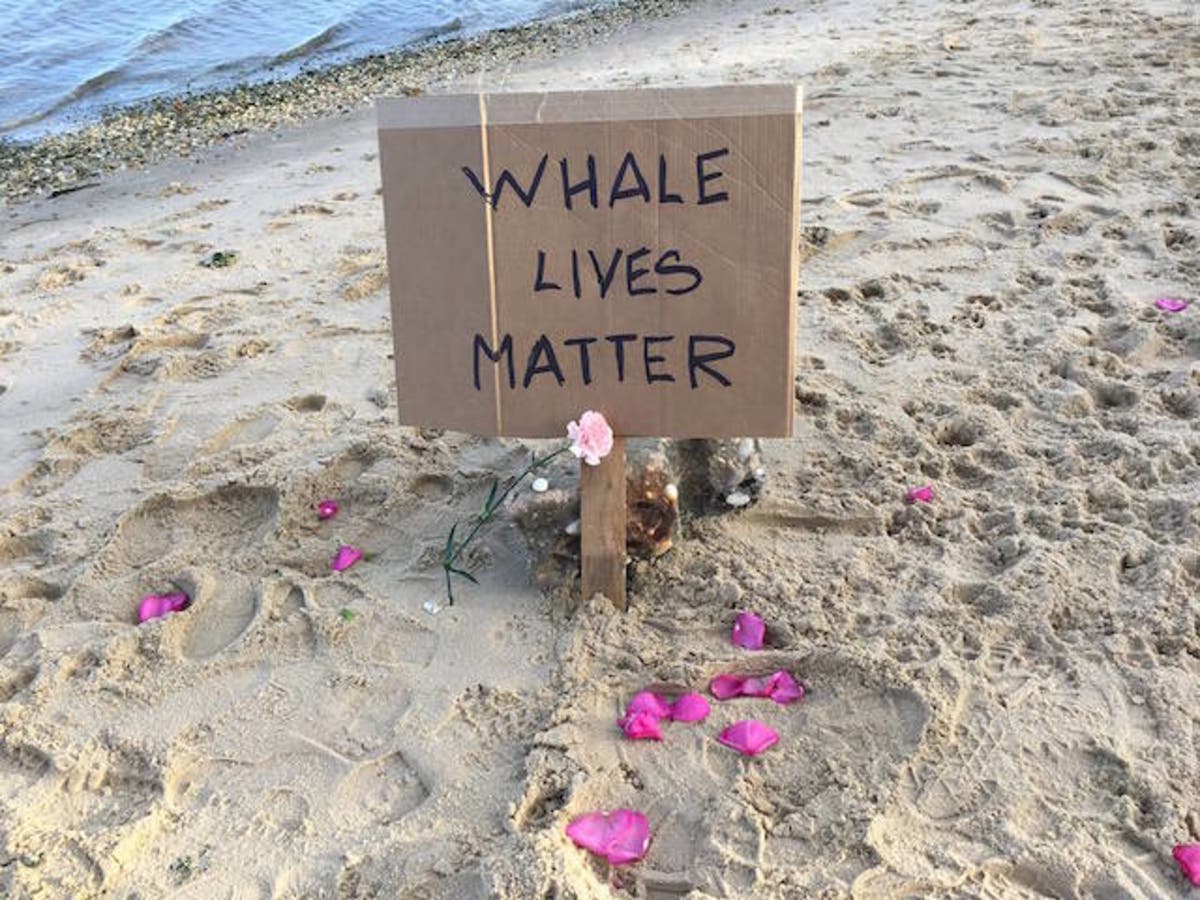
WESTHAMPTON BEACH, NY — It's a major step forward for stranded whales on Long Island.
The United States Coast Guard and National Oceanic and Atmospheric Administration’s National Marine Fisheries Service signed a memorandum of agreement Friday, establishing the framework and responsibilities for coordinated responses to large whale strandings in Long Island Sound and South Shore areas, a release said.
The waters around Long Island and Connecticut are inhabited by several large whale species protected under the Endangered Species Act and Marine Mammal Protection Act; the MOA outlines responsibilities for how NOAA Fisheries and Coast Guard Sector Long Island Sound will effectively respond to large whale strandings and implement the Long Island Sound Large Whale Response Plan, the release said.
Find out what's happening in Westhampton-Hampton Baysfor free with the latest updates from Patch.
The plan also identifies regional assets that may be requested by NOAA Fisheries or designated stranding responders during a stranding event.
“Over the last year and a half, we have developed new partnerships and strengthened existing ones to increase marine mammal stranding response capacity in Long Island Sound and surrounding areas,” said Capt. Kevin Reed, commander Coast Guard Sector Long Island Sound.
Find out what's happening in Westhampton-Hampton Baysfor free with the latest updates from Patch.
When a humpback whale stranded in Moriches Bay was euthanized in 2016, the community was outraged, demanding change.
“As a result of increasingly complex large whale stranding events, such as live strandings in Long Island Sound and New York waters, we recognized the need to formalize roles and responsibilities, proactively identify resources, and outline potential response actions for future whale strandings,” said Kimberly Damon-Randall, acting deputy regional administrator for NOAA Fisheries Greater Atlantic Region.
With the new MOA in place, the Coast Guard will be able to more quickly coordinate and respond effectively to any future large whale strandings in the New York area, the release said.
After the humpback whale was euthanized in 2016, hundreds gathered for a vigil — to mourn a whale that brought a community together as scores rallied desperately to try and save its life.
The whale had been stranded on a sandbar, and residents came together with equipment, manpower, funding and sheer force of will to try and help.
Despite an unprecedented public outpouring of pleas, begging officials to let volunteers help, humpback whales are an endangered species and no action was allowed to be taken until a NOAA came to assess the whale days later.
Livid residents say it was too little, too late: NOAA, they say, took too long and demanded new legislation to ensure a similar situation didn't unfold in the future, especially as the humpback whale population begins to have a more visible presence on Long Island and are likely to feed on bunker.
Emotions were running high at the vigil as heartbroken and disillusioned residents vented their sorrow and anger at how the whale's life ended.
The whale, officials have said, entered the bay during the time when a super moon caused extremely high tides; it was only feet from the channel that would have brought it to safety. And, others said, the whale was euthanized before the highest tide of the week.
Jim Dahlen Jr. described how he first spotted the whale while fishing off Remsenburg. and said he was disheartened with the fact that the whale was left for four days before the NOAA team arrived.
However, it was the amazing outpouring of the community, he said, that was an inspiration; he thanked all involved and told the crowd that together, Long Islanders could ensure it never happened again.
Mike Trovitch, who brought a barge to try and save the whale but wasn't allowed to proceed, said the outcome was "extremely disappointing. I had the right tools."
Federal laws were originally put in place to help endangered species, he said, but in that case, "they hurt, too."
NOAA representatives met with residents at the beach, and were onhand to answer questions before the vigil planned for the humpback whale that was euthanized after a huge public outpouring of individuals trying to save its life.
"We appreciate that so many people came to talk to us this morning," said Kate Brogan of NOAA Fisheries public affairs.
NOAA officials said that, from the "earliest hours of this stranding, experienced marine mammal responders were pursuing different options to to help free the whale, including an attempt with wave action from boats. Other methods were considered, but each presented the potential of causing significant damage to the animal, as we have seen in other strandings."
The statement continued, "We are committed to learning as much as we can from this stranding event."
Organizers of the Locals Only Facebook page, including Derek Wells, and others vowed to create permanent change.
A petition was created to send to elected officials, demanding change and a "Local Marine Mammal Contingency Plan."
The petition said the plan would give "local authorities or properly trained citizens to the right supersede the federal government and gain the legal right to provide needed rescue efforts when these federally protected mammals become stranded or beached within locally regulated waters."
Rescuers said they were onhand with the equipment, funding, manpower, boats, a helicopter, divers, a barge, and commitment to help the whale, but have alleged they were blocked. "These dedicated citizens were in place to begin a rescue attempt when the federal government told them to stand down and threatened fines and arrests," the petition said.
In addition, another petition was circulated that discussed the creation of a task force that would allow locals to immediately assess the situation and try to help in a similar situation.
NOAA Fisheries representatives said the decision to euthanize was made in the whale's best interests, "to end its suffering."
But Adrienne Esposito, executive director of the Citizens Campaign for the Environment, at the time demanded a "full investigation into Whalegate. We need a plan to make sure this never happens again. We failed this whale, and need to make sure doesn't happen again. Not on our watch."
Patch photo by Lisa Finn.
Get more local news delivered straight to your inbox. Sign up for free Patch newsletters and alerts.