Neighbor News
Percy Grainger Society: Spring Lectures 2018
3 Week Series Features Notable Grainger Experts

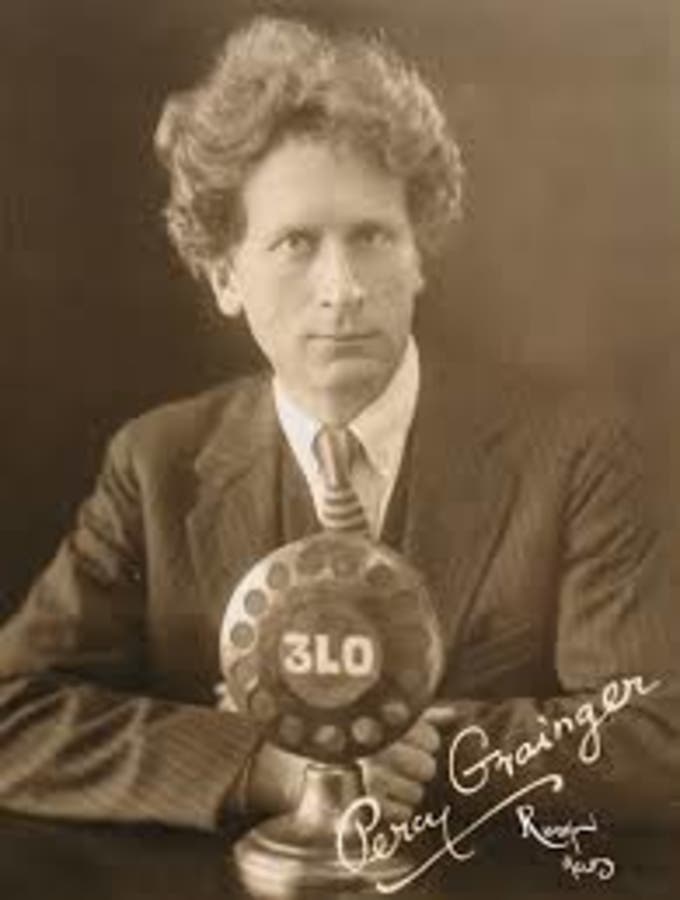
White Plains--The International Percy Grainger Society announces its 2018 Spring Lecture Series featuring three internationally acclaimed speakers whose work spans a variety of musical mediums and includes expertise on Grainger, his music and his life. The presenters, long-time members of the Grainger Society, include Mark N. Grant, Dana Paul Perna, and Barry Peter Ould.
Percy Aldridge Grainger (1882-1961) was an internationally known composer, arranger and pianist who made his home in White Plains, New York, from 1921 until his death in 1961. Grainger was heavily influenced by English folk music, which he arranged for keyboard instruments, chamber ensembles and both chorus and solo voice. He is probably best remembered for Country Gardens and for the orchestral work Molly on the Shore. Other well known orchestral works include Shepherd’s Hey and Mock Morris. In his chamber works, notably Hill Song No. 1 and Hill Song No. 2, he experimented with novel rhythmic and structural forms. He spent the last years of his life experimenting with “free music.”
“We are so pleased launch this series and invite musicians and the community alike to share a snapshot of Grainger’s life and work,” noted Barry Peter Ould, President of the International Percy Grainger Society and board member of Percy Grainger America. “He was a fascinating character, a true inspiration to musicians and anyone involved in the creative arts, really.”
Find out what's happening in White Plainsfor free with the latest updates from Patch.
Lectures commence at 4 pm on three consecutive Sundays: April 29, May 6 and May 13. The Grainger Home, located at 7 Cromwell Place in White Plains, NY, will be open from 2:00 - 5:00 pm on lecture days, with house tours available at 2 and 3 pm. Admission to each lecture is $10 online, $15 at the door and free to Grainger Society members. Tickets and membership information are available at: http://www.percygraingeramerica.org. Questions about the series can be directed to (914) 281-1610.
Topics, schedule and speakers include:
Find out what's happening in White Plainsfor free with the latest updates from Patch.
Percy Grainger: A Modern Leonardo?
Sunday, April 29 at 4 pm
Percy Grainger was multitalented and innovative — not only a composer and pianist but a musical folklorist, wind band arranger, polyglot, watercolorist, early music expert, clothing designer, prodigious letter writer, essayist and philosophical thinker. His popular works were bestsellers of the early twentieth-century music world, while his experiments in avant-garde music anticipated many artistic developments in the later twentieth century and beyond.
Presented by Mark N. Grant, Vice-President of the International Percy Grainger Society and a Board member since 1981. Mark is an accomplished composer, author and music commentator.
Percy Grainger and His Composer Colleagues
Sunday, May 3 at 4 pm
Percy Grainger was acquainted with many of the leading musicians and composers of his time, including Vaughan Williams, Edward Elgar, Richard Strauss, and Claude Debussy. In 1907, he met Frederick Delius, with whom he achieved an immediate rapport since the two musicians had similar ideas about composition and harmony and shared a dislike for the classical German masters. Both were inspired by folk music; Grainger gave Delius his setting of the folk song Brigg Fair, which Delius developed into his famous orchestral rhapsody, dedicated to Grainger. This program will explore these collegial relationships and others.
Dana Paul Perna is an American composer-musicologist at the forefront of endorsing the music of Percy Grainger through his works for orchestra, concert band and chorus.
Grainger, Grieg and Folksong
Sunday, May 13 at 4 pm
When Danish cellist Herman Sandby introduced Edvard Grieg to some of Percy Grainger’s folk-song arrangements, Grieg liked what he saw. Grieg sent Grainger an autographed photograph with a note complimenting him on his “splendid folk-song settings for mixed voices.” When they met several years later, Grainger played two of Grieg’s Norwegian Peasant Dances “in a dazzling manner,” according to the composer, who recorded in his diary: “Yes, he is brilliant, that’s for sure. I am happy about having gained a young friend such as he.” Grainger became a Grieg protégé and performed Grieg’s music for the rest of his life.
Presented by Barry Peter Ould, President of the International Percy Grainger Society as well as administrator and UK representative for the Grainger Estate. As a leading world authority on Grainger’s music, he has and continues to work on editing numerous Grainger works.
The Percy Grainger House is a significant local landmark associated with the life and work of Australian-born Percy Grainger (1882-1961): a composer, pianist, arranger, music world celebrity of his time and larger-than-life figure with an unusually fascinating personality. For forty years, from 1921 until his death in 1961, Grainger occupied the house at 7 Cromwell Place, using it as his home base for his world tours, practice studio (there are three pianos inside), and laboratory for his avant-garde musical compositions and experimental music machines. After Percy Grainger’s death in 1961, his widow Ella continued to live in the house until her passing in 1979.
This historic house, built in 1893, and added to the National Register of Historic Places in April of 1993, was originally the residence of David Cromwell, banker and prominent local citizen. Cromwell served as Westchester County Treasurer and Chief Officer of the then Village of White Plains. He was president of several local banks, most notably the Home Savings Bank. Cromwell built the two streets which connect Maple Avenue and East Post Road. Chester Avenue, parallel and to the east of Cromwell Place, built and deeded to White Plains in 1891, was named for his son John Chester Cromwell. Chester later lived in the house that still stands behind the Percy Grainger House.
Percy Grainger America, Inc., seeks to preserve and interpret Percy Grainger’s life and works, particularly as they pertain to the last forty years of his life in America. Through assisting the International Percy Grainger Society, Percy Grainger America interprets the Percy Grainger Home and Workspace, 7 Cromwell Place, in the context of his residency in White Plains, NY, from 1921 through 1961, and his wife, Ella’s remaining years there (until 1979) by serving as a cultural resource for a diverse audience of national and international visitors.