Health & Fitness
WBP: Rare Disease Research Hub in Westchester on the Horizon
July 18 Symposium At Iona College Brings Together Global Thought Leaders to Discuss Medical Possibilities, Potential Breakthroughs

Westchester, with its proximity to New York’s premier medical institutions, its highly educated workforce, and its growing biotechnology sector, is poised to become a global hub for curing some of the world’s rarest diseases, say scientists, researchers and medical experts who are leading an effort to make that dream a reality in the region.
Some of those very scientists will be speaking at the upcoming Rare Disease Symposium on July 18, organized by the Westchester Biotech Project (WBP), and hosted by Iona College. WBP is a not-for-profit organization that brings together a global network of experts to foster scientific research and collaboration.
The speakers are well known and respected within the scientific and biotech communities, serving in high-level roles at companies including Regeneron Pharmaceuticals, Chondrial Therapeutics, PRA Health Sciences, and Enso Ventures, among others.
Find out what's happening in White Plainsfor free with the latest updates from Patch.
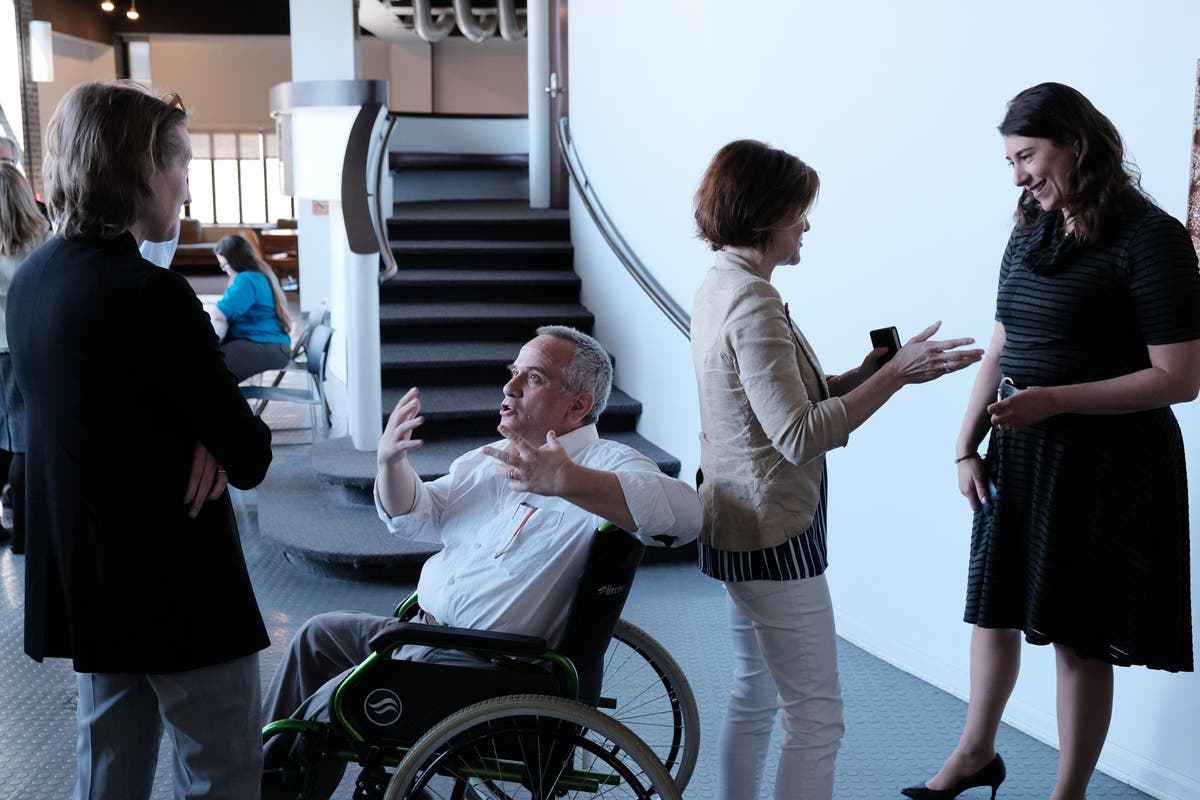
Dr. Antonio Molina-Pachon (center, in picture), the keynote speaker, will discuss why Westchester can compete globally in the field, along with his collaboration with the WBP and its international partners to develop a Rare Disease Research Hub;
David Bettoun, Ph.D., vice president, Discovery and Preclinical Development, Chondrial Therapeutics will discuss the company’s journey to develop treatments for Friedreich’s Ataxia, a rare progressive disease that damages one’s nervous system;
Find out what's happening in White Plainsfor free with the latest updates from Patch.
Scott Mellis, Ph.D., vice president, Rare Disease Early Clinical Science, Regeneron will share what it was like to lead clinical development for ARCALYST® (rilonacept) at Regeneron, a medication for an ultra-rare auto-inflammatory disease;
Scott Schliebner, senior vice president, Center for Rare Diseases, PRA Health Sciences, will discuss recent advancements in data science and what to expect for the future of rare disease research;
Dr. Sergei Petukhov, DVM, partner, Enso Ventures, will provide unique insights into why some companies succeed while others fail.
In bringing together leading researchers and executives from across a broad range of backgrounds and expertise, Westchester Biotech Project is promoting a collaborative culture necessary to succeed while sharing insights into what venture capitalists look for when investing in potential breakthrough medicines. At the symposium, WBP will also highlight current efforts to diagnose and treat some of the 350 million people affected around the world by 7,000 known rare diseases, of which 95 percent do not currently have a single FDA-approved drug treatment.
“There are genuine opportunities right here in Westchester to find cures for some of the world’s most vexing diseases,” said Dr. Molina-Pachon, the symposium’s keynote speaker who is an entrepreneur and scientist developing solutions for cancer and other rare diseases. “We’re in the right spot, and this is the right moment to come together and make an impact that can be felt around the world. All of the dots that we need to connect are here in Westchester.”
Consider this: roughly 20 percent of New York State’s biotech workforce is located in Westchester County. Just north of Manhattan, the county is also home to a number of global biotechnology companies such as Regeneron Pharmaceuticals, Acorda Therapeutics, ContraFect, Histogenetics, Curemark and others, along with world-renowned medical institutions.
In recent years, a biotech incubator was formed in Westchester, and plans are in the works for the North 60, a multi-million square-foot biotechnology and research center adjacent to existing biotech companies, a medical center and a medical school.
When coupled together, the possibilities are endless, notes Dr. Molina-Pachon, who likens Westchester’s potential to what happened in the Boston suburbs more than a decade ago when biotech and pharmaceutical startups flocked to the city’s outskirts because it was more affordable, yet still accessible to the elite universities, medical institutions, laboratories and existing pharma companies. “The same thing happened in Boston,” he says.
As envisioned, this cluster will support researchers who are addressing the most complex, and promising, issues in rare disease treatment and therapies. Dr. Molina-Pachon is well suited to spearhead this effort, having held numerous executive roles, including Director of Discovery, Director of Business Development, CSO, and CEO positions. He has founded six companies, all of which are currently in operation.
Other speakers and topics at WBP’s Rare Disease Symposium include:
- “Addressing Friedreich’s Ataxia: Research, Development, Impact:” David Bettoun, Ph.D., vice president, Discovery and Preclinical Development, Chondrial Therapeutics will discuss the company’s journey to develop treatments for this rare disease. He is a drug discovery and development expert, with extensive experience in preclinical research and development, global research strategy, and startup management. Prior to his position at Chondrial Therapeutics, Dr. Bettoun was chief scientist at HaRo Pharmaceutical, working on pediatric oncology. He has also worked with Eli Lilly, Merck, and GSK in preclinical discovery and lead optimization in oncology, inflammation, and tissue remodeling.
● “The Biotech Perspective: Regeneron’s Rare Disease Strategy:” Scott Mellis, Ph.D., vice president, Rare Disease Early Clinical Science, Regeneron will share what it was like to lead clinical development for ARCALYST® (rilonacept) at Regeneron, a medication for an ultra-rare auto-inflammatory disease. He also guided Regeneron’s translational and precision medicine initiatives across the general medicine portfolio. He is a co-founder of the Regeneron Genetics Center, and is leading an effort to optimize Regeneron’s development of new medications for patients with rare diseases.
● “Innovative Data Science Approaches to Accelerate Rare Disease Clinical Drug Development:” Scott Schliebner, senior vice president, Center for Rare Diseases, PRA Health Sciences, will discuss recent advancements in data science and what to expect for the future of rare disease research. He is interested in disruptive and innovative strategies to accelerate clinical drug development, with a particular focus on orphan drugs and rare diseases. With a belief that the current drug development paradigm is archaic and unsustainable, he seeks to implement strategies to ensure clinical trials become an integrated healthcare option for all.
● “Investors’ Perspective:” Dr. Sergei Petukhov, DVM, partner, Enso Ventures, will provide unique insights into why some companies succeed while others fail. The importance of finding emerging biotech companies that can help patients will be discussed, along with what investment firms look for in target companies. Dr. Petukhov leads Enso's biotechnology investments, holding board positions at several bioscience companies. He has served as advisor to both investment funds and pharmaceutical companies, and worked and studied at The Rockefeller University, University of Edinburgh, University of Cambridge, Moscow 1st Medical Academy, and Moscow State Academy of Veterinary Medicine and Biotechnology.
“All of the speakers and attendees are playing a critical role in developments in the life sciences industry and the growth here in Westchester,” said Joanne Gere, executive director of WBP, which was launched in 2017 and regularly convenes scientists and medical researchers from across the region’s emerging biotechnology industry.
“Researchers, engineers, and data scientists provide and validate every innovation, breakthrough, and lifesaving therapy," said Gere. "We are receiving great feedback that the complexities and opportunities for addressing rare diseases are emerging faster than ever, and we believe that Westchester will one day become a global hub where treatments and cures can be discovered.”
The Westchester Biotech Project is a borderless nonprofit organization supporting cross-silo initiatives to enhance human health. The July 18 Rare Disease Symposium brings together the region’s science brain trust, which is already having international impact. It marks the launch of efforts to build a major research hub and institute.
Registration and more information are at www.westchesterbiotechproject.org.