Neighbor News
White Plains Hospital Makes ‘Wide Awake’ Surgery Available in Westchester
Procedure Offers Better Outcomes, Enhanced Patient Safety, And Cost Savings For A Range of Hand Surgeries

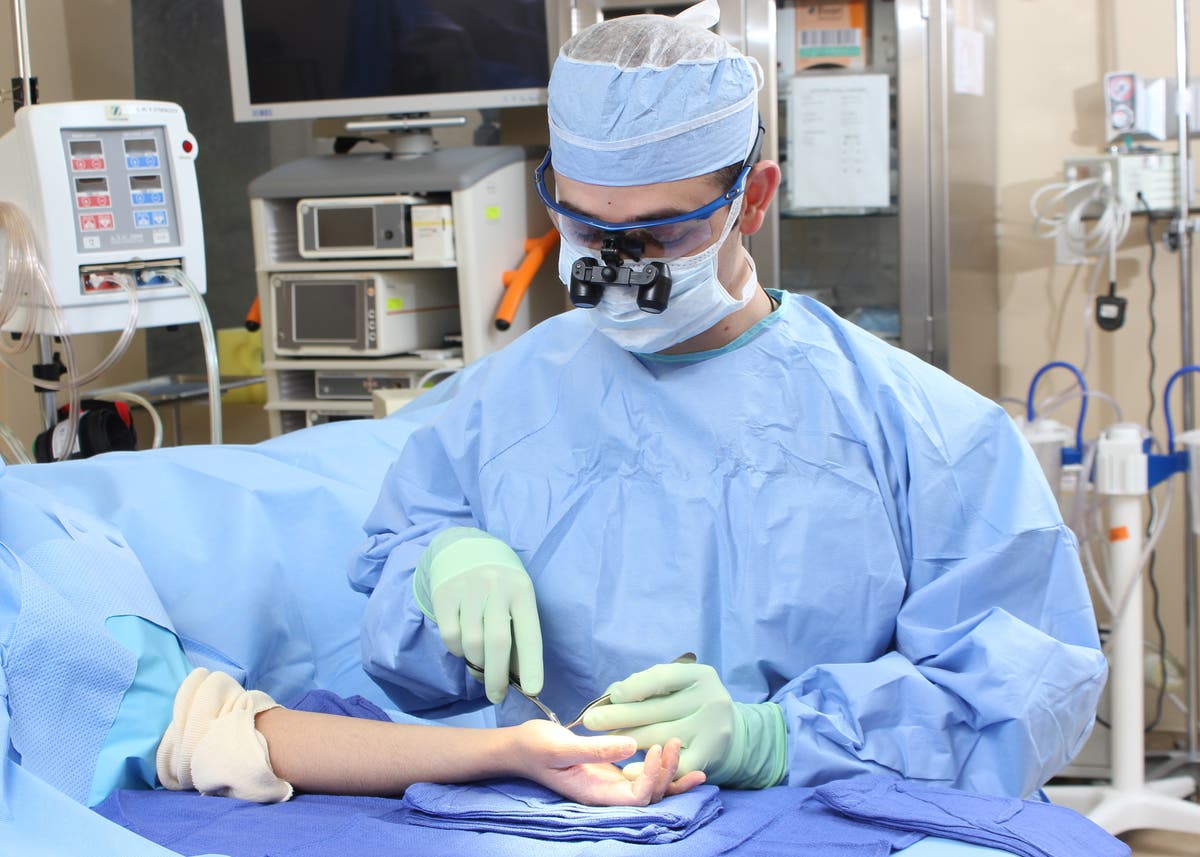
Having surgery is stressful, and the traditional pre-operative prep—medical clearances, fasting, discontinuing medications—and post-operative nausea and disorientation from anesthesia make it even more unpleasant. Now, White Plains Hospital is giving patients the option of “wide awake” surgery for a range of conditions and injuries of the hand and wrist. During wide-awake surgery, a local anesthetic is used so the patient is comfortable and relaxed but also engaged and aware during the entire procedure.
Jeffrey M. Jacobson, MD, a White Plains Hospital hand surgeon and plastic surgeon who has helped pioneer the technique in Westchester, notes that more patients are waking up to its benefits. “Awake surgery lets the surgeon judge repairs in a dynamic, rather than static, way. With wide-awake hand surgery, you can test your results during the surgery so you get it perfect. There are so many procedures where it’s better if the patient can actually move,” says Dr. Jacobson. He estimates that over 90% of his carpal tunnel and trigger finger patients choose to be awake during their surgeries.
While surgeries performed under local anesthesia are common, hand surgeries are not. “Hand surgery has really lagged behind, primarily because there was a belief that you couldn’t put local anesthetic, which contains lidocaine with epinephrine, into the fingers,” says Dr. Jacobson. “There is no data to support that, yet it persists. Awake surgery is really transforming the landscape. It lets us get a better outcome, provides a better experience for the patient, and cuts down on costs for the patient.”
Find out what's happening in White Plainsfor free with the latest updates from Patch.
Yorktown resident Laura Caruolo recently underwent wide-awake surgery with Dr. Jacobson for a carpal tunnel endoscopic release. For Ms. Caruolo, the option to forgo general anesthesia was a huge draw. “I was all for it because I get violently sick from anesthesia,” she says. “The experience was great. I was awake but there was no pain at all. The environment is very upbeat and positive. The doctor and his staff are in constant contact with you. It’s a very interesting experience and was, by far, the best surgical experience I’ve ever had.”
As Dr. Jacobson notes, performing surgery on a wide-awake patient is not for every practitioner. “I’ve seen hospitals where they don’t have the atmosphere and flow for these types of procedures. Making awake surgery a great experience for a patient is an art. In addition to surgical technique, it involves strong interpersonal skills and an experienced team. Patients need to be confident that they are in the right environment,” he says.
Find out what's happening in White Plainsfor free with the latest updates from Patch.
The benefits of awake surgery are many. Although typically safe, general anesthesia does pose risks, and for elderly patients or those with certain medical conditions, it is sometimes not recommended. Awake surgeries let hand surgeons safely perform necessary procedures to improve quality of life. Awake surgery also reduces patient costs by eliminating the need for general anesthesia. Best of all, awake surgery requires less prep and hassles. Patients do not need to fast, and can eat right up to and after their surgery. “If things get delayed, a hungry patient is also an unhappy patient,” Dr. Jacobson notes.
Carpal tunnel release, endoscopic carpal tunnel release, trigger finger release, pinning or putting a screw in a finger fracture, repairing tendons, removing scar tissue, soft tissue injuries—these are some of the many conditions where awake surgery is beneficial.
At White Plains Hospital, Dr. Jacobson employs a range of techniques during the surgery to relieve patient stress. He and his team connect with patients by telling jokes, sharing stories, and letting patients select a surgery “play list.” Often times, just as a patient is in the middle of a story, the surgery is over. During surgery, draping is used to keep the area sterile. If patients want to see their repair before suturing, they can. “Some patients want to see, and some don’t,” says Dr. Jacobson. “I have had a few requests to wear a GoPro during surgery, but I draw the line there,” he laughs.
For Dr. Jacobson, wide-awake surgery adds a new dimension to his surgical practice. “There’s a very human element to it. It’s about using your skill as a surgeon but then also being friendly and warm and making something that’s inherently terrifying not scary at all.”