Arts & Entertainment
From Tales of Rejection to Success: Local Poet Celebrates Publication
Newly published Mohegan Lake author Catherine Wald has history of looking rejection in the eye and facing it down
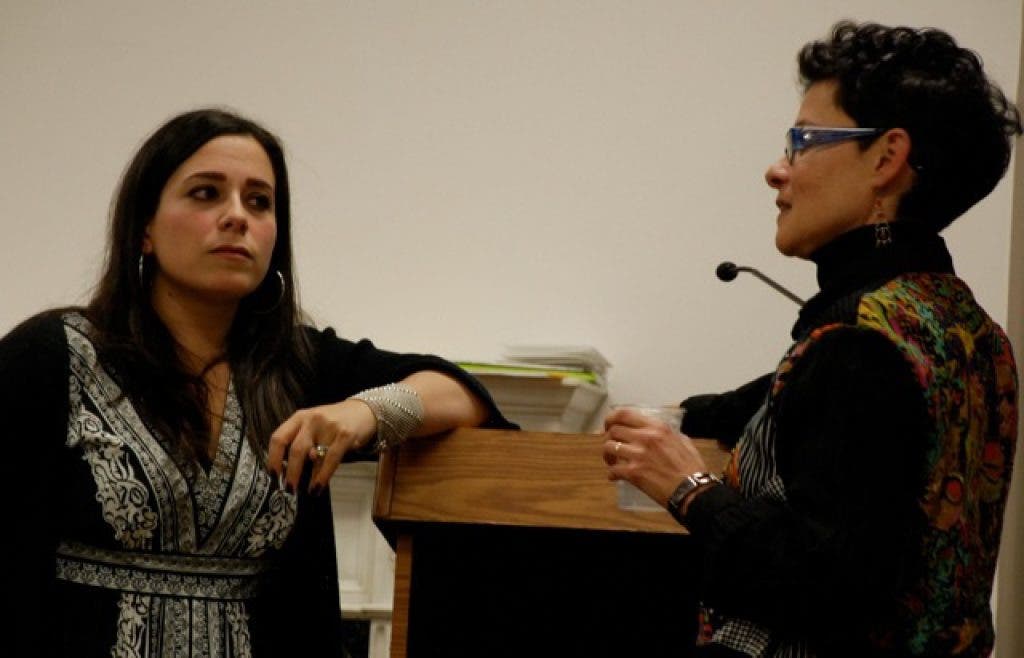

When published author and Mohegan Lake resident Catherine Wald sent her book of poems “Distant, Burned-Out Stars” to four different publishing houses, she knew the odds of rejection were high.
“Getting published in poetry is very difficult because there are so many writers competing in the very small poetry market. Yet, poetry books don’t make a lot of money; therefore, agents are not interested in selling them and publicists are not interested in publishing them," Wald said.
But Wald, who gained critical success in 2005 with her book “The Resilient Writer: Tales of Rejection and Triumph by 23 Top Authors” has a history of looking rejection in the eye and facing it down.
Find out what's happening in Yorktown-Somersfor free with the latest updates from Patch.
“I learned how to cope with rejection – but I like success better,” said Wald, whose book of poems was published in June 2011 by Finishing Line Press in Georgetown, Ky.
We sat down with Wald to learn more about her newly published book of poems, why she is so obsessed with rejection, and her words of advice for aspiring poets.
Find out what's happening in Yorktown-Somersfor free with the latest updates from Patch.
How long were you writing before you were published?
Catherine Wald: I started working as a writer in the field of corporate communications 25 years ago. After the birth of my son, I began working as a freelance writer and I had many articles published. But it wasn’t until 2005 that my first book was published.
What was your first major success as a writer?
CW: There are certain things that grab me by the throat – and that I must write about. I felt this way about the Waco, Texas, event because, when I was young, I had an experience with a cult.
When my article “For My Sister in Waco” was published in Newsday and the Chicago Tribune, this was a huge career leap for me.
It seems like you have been very successful. Why have you spent so much time writing about rejection?
CW: I was part of a writing group in Yorktown for five years, during which time I wrote a novel, and found an agent for my novel. This agent was a famous agent for the stars, but after two years of trying she told me she could not get anyone interested in the book.
I freaked out, and became obsessed with rejection. I figured if I was going to spend so much energy thinking about rejection, I might as well write about it. It was very cathartic, and healing, but you never move on from rejection.
If the poetry market is so small and unprofitable, why do you write poetry?
CW: I believe poetry is an excellent way for understanding ourselves – how we fit into the world.
What are your poems about?
CW: Finding the beauty in ordinary life, looking at life without filters. My aim is to get people engaged where they are at this very moment. I do this by writing poetry about day-to-day stuff; I wrote about my dog, raising children, getting out of bed, etc.
What inspired you to write this book of poems?
CW: I am a 57-year-old woman with grown children. I’m looking for meaning in my life, for a way to connect with other people.
Who are your favorite poets?
CW: Two of my favorite poets (there are so many) are Rumi and Hafiz. They are mystic poets who lived several centuries ago in Persia, and who do a wonderful job of exploring truth by turning logic upside down.
Where can we find your poetry?
CW: You can purchase “Distant, Burned-out Stars” at the or on Amazon. Also, there is a very active poetry community in Peekskill, where I read my poems at open mics. In addition I will make myself available to read poems and do a Q&A for any local book club that wants to read my book.
Do you have any final words of wisdom for aspiring poets?
CW: Stick with it. Be willing to revise your work. Don’t expect instant success and don’t rush it.
Here is a "sneak peek" into Wald's book of poems:
Burying the Black Sheep
by Catherine Wald
My cousin Oscar’s funeral was a great disappointment.
It started promptly at eleven with no consideration for shifts
in alternate-side-of-the-street parking.
The vanilla eulogy that was served up
was most unsuited to a tutti-frutti schizophrenic
with a trenchant sense of humor
ironic attire
and a demeanor that alternated between angelic and criminal.
Due to a clerical error, the rabbi repeatedly referred to the grieving
mother
by someone else’s name.
After each Doris, the family members in the front three rows shouted
back Janet!
in a spontaneous call-and-response that made
my crazy cousin’s coffin wobble with laughter.
A younger rabbi took the mike and likened Oscar to a tzaddik—
one of thirty-six righteous men sent to live among us like embedded
Zen masters.
He read from the Dead Sea Transcripts:
Stuyvesant High School,
president of the Jewish youth organization, Princeton
as if his life had ended already forty years ago.
My cousin’s cohort almost nailed it when he described Oscar as a
luftmensch—a wind person, the Yiddish version of an airhead—
then followed up with a guitar-accompanied ballad about floating
away in a cloud
that Oscar wrote back in the days when he was my hero.
The friend said a famous TV writer said,
All Oscar needs is a little success.
Which Oscar made sure he never got;
he believed in burning his bridges as soon as he got to them.
When it was over, I waited for some outraged Wald or Fruchtman
to leap up and fill in the blanks.
But no one did.
No one hissed:
He was mad, after all!
No one sneered:
We all admired him so much that his name was never mentioned
at family gatherings.
No one nudged:
He ripped out his mother’s heart and fed it to the wolves three times a day.
Nor did anyone proffer the praise Oscar was really due
for making it all the way to sixty while living on the streets
busking for drug money
flushing his meds down the toilet
playing hide and seek with his muse
and hurtling insults at the vendors outside the temple
till the cops had to drag him away.
Worst of all, not a single ashen-faced woman tore her hair,
rent her mourning dress, or wailed
What will we do, now that our black sheep is gone?
You can see Catherine Wald Sept. 29 at the in Yorktown, where she will be teaching a poetry workshop. In addition, she teaches group writing courses from her home studio. For more information contact her at 914.528.3309 or e-mail her at catherinewald@mac.com