Politics & Government
GOP Health Care Plan: Women Face Higher Costs For Less Care
The GOP's Obamacare repeal attempts in Congress and President Trump's budget wishlist leave women's care in unprecedented uncertainty.

Editor's Note: Senate Republicans have postponed a vote on a replacement health care program that would affect millions of Americans. Proposed changes to current law would impact women far more than most men.
Patch editor Kimberly Johnson explores how the GOP plan would impact women should it become law. Among the changes to current law, the Senate's reforms would provide a path for insurance companies to exclude health benefits for maternity care, reduce the availability of affordable contraception and end insurance coverage altogether for millions of women.
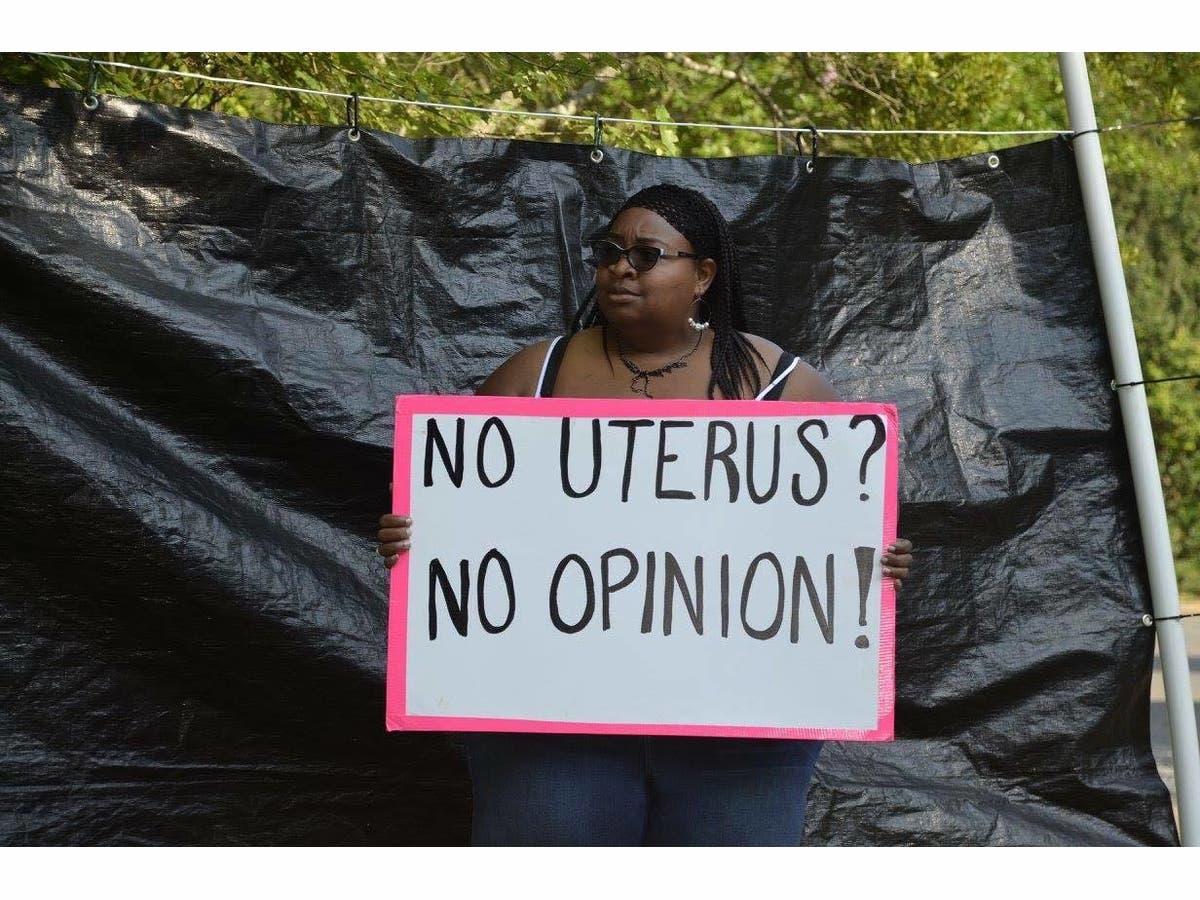
CHARLOTTE, NC — When it comes to political battles over health care in Washington, D.C., Jasmine Sherman says she feels personally under attack.
Find out what's happening in Charlottefor free with the latest updates from Patch.
For the 31-year-old Charlotte resident, a Bank of America contractor, new daily headlines can be terrifying. Recent congressional and Trump administration attempts to repeal the Affordable Care Act, better known as Obamacare, and to cut funding for providers of women’s health care — specifically Planned Parenthood —could have a drastic and immediate impact on Sherman’s body.
Congress has given her reason to worry. Last month, for example, House lawmakers called for cutting off Medicaid reimbursement payments to Planned Parenthood and any health care provider that performs abortions through its repeal of the Affordable Care Act. The Senate version of the bill suspends payments to Planned Parenthood for one year.
Find out what's happening in Charlottefor free with the latest updates from Patch.
For average Americans like Sherman, who understand how quickly the domino effect of federal funding on their medical care can be stacked against them, it’s a time of heightened anxiety.
“I’m following it very closely,” she told Patch. “It seems that I’m leaving my TV on CNN more and more.”

Unlike some attention-grabbing headlines, Sherman doesn’t fall into the category of someone living with a life-or-death medical condition that requires tens of thousands of dollars spent on treatments. She is gainfully employed with a reputable employer, yet like many Americans, doesn’t have employer-paid health insurance. (It’s a growing trend in the corporate world. In 2016, only 9 percent of Fortune’s list of the 100 best companies to work for provided coverage for their employees. And contractors like Sherman are on their own, too.)
»SEE ALSO: GOP Health Care Plan: Elderly Take Brutal Hit — And 40 Is Now Elderly
Her medical condition involves irregular and extremely painful menstrual cycles — so much so that her health has caused her to regularly miss work in the past. For years, she’s combated the pain by getting a Depo-Prevera shot, which also regulates her cycle. The shots, she says, allow her to stay employed.
GOP Health Care Plan: For Women, Higher Costs For Less Care
Depo-Prevera, or the “birth control shot,” is an injection of the hormone progestin that has the side effect of preventing periods for some women.
Her medical care budget includes at least five doctor office visits a year: her annual checkup, plus a visit every three months for a Depo-Prevera shot.
“Whenever I have to go to the doctor, it’s a self-pay situation,” she said. “It’s extremely expensive for me.”
When she has gone to a conventional doctor’s office without insurance in the past, she's faced staggering bills, starting with a fee of about $200 just to be seen by a physician. Then, there were the prescription costs for the shot, which once came in at about $500 because she didn’t have health insurance, she recalled.
About five years ago, however, she started going to Planned Parenthood for all the doctor visits. The organization’s fees are on a sliding scale based on income.
“It cost me $160,” she said. “I can afford to do it without breaking the bank.”
Opponents Take Aim At Planned Parenthood Funding
Sherman is far from alone. On average, one in five women will go to a Planned Parenthood clinic for their health care at some point in their lifetime, according to the organization. Many of the organization’s patients are seeking affordable contraception. It’s made affordable through a federal birth control funding program, called “Title X,” which distributes grants to defray the cost of contraceptives at Planned Parenthood clinics and health departments.
Or, at least that has been the case until this year. Title X spending at Planned Parenthood clinics has come under a multi-front attack since President Donald Trump took office, and it’s unclear whether any legislation will pass without defunding the program.
Under rules from President Obama's Department of Health and Human Services, states could not withhold Title X funding from health care centers like Planned Parenthood because they offer abortion services. Federal law has long prevented federal money from paying for abortions; however, lawmakers and groups opposing abortion have more recently sought to weaken abortion providers by targeting funding they receive for providing other services.
In March, the Senate passed a bill to allow states to strip Planned Parenthood of its federal Title X funding. It’s passage, however, almost didn’t happen after the Senate fell into a deadlocked vote split along party lines.
The intent of the Senate’s effort was replicated a couple of months later when Trump’s budget expressly barred Planned Parenthood from receiving Title X funding. The organization was singled out for exclusion, despite the fact 41 percent of Title X patients rely on it for access to their birth control as well as cancer screenings.
The Trump Administration budget’s hard-line approach toward the organization would also prevent Medicaid recipients from using their health care benefit at the facilities and would cut off funding grants for breast and cervical cancer and sexual assault prevention. For lawmakers intent on striking a blow to Planned Parenthood, eliminating any federal funding going to the organization is a potent tool. More than 40 percent of Planned Parenthood funding comes from federal grants or reimbursements, Mother Jones reported. And for perspective of its role among low-income women, about six out of 10 of its estimated 2.5 million patients rely on Medicaid.
The House proposal to cut off Medicaid reimbursement payments to Planned Parenthood is potentially devastating to the very patients it serves who would be hard pressed to find comparable care elsewhere.
Adding salt to the wound for women’s health care advocates, Trump has also made the controversial appointment of Teresa Manning to head up the Title X program. Manning, a pro-life law professor, has been quoted as saying “contraception doesn’t work” and “family planning is something that occurs between a husband and a wife and God, and it doesn’t really involve the federal government,” The Guardian recently reported.
Women Feel Under Attack
The laundry list of political tactics taking aim at Planned Parenthood has left Sherman worried and prepared to consider a more drastic solution. “If they do pass this, I’m going to have to consider a more permanent option, maybe like an [intrauterine device (IUD)],” Sherman said. “I really don’t want that, but I’m going to make sure while I can afford to get one, I’ll get one if I have to.”
Since the November election, women across the country like Sherman have taken seriously the GOP promise to repeal the Affordable Care Act that provides a birth control coverage mandate. In the last three months of 2016, doctors visits related to IUDs at gynecologists and local Planned Parenthood clinics went up 19 percent, according to The Washington Post.
“I feel personally under attack,” Sherman said. “[Lawmakers] want to take away the places I can go and get treatment for anything that can come up as a woman, but at the same time, [they] want to remove maternity care so if I did get pregnant…” she said, her voice trailing off. “It’s a double-edged F-you.”
“You don’t want me to have care to stop me from getting pregnant, but if I did get pregnant, you don’t want me to have insurance that would cover that, or a place I could go to get affordable treatment while I was planning my family,” she said.
“It’s just a whole bunch of men telling me I’m not valuable,” she said.
Photos courtesy of Jasmine Sherman
Get more local news delivered straight to your inbox. Sign up for free Patch newsletters and alerts.