Politics & Government
Wounded Warrior Findings Announced Today at Bragg
Changes ahead to improve systems and communication within the Warrior Transition Battalion.


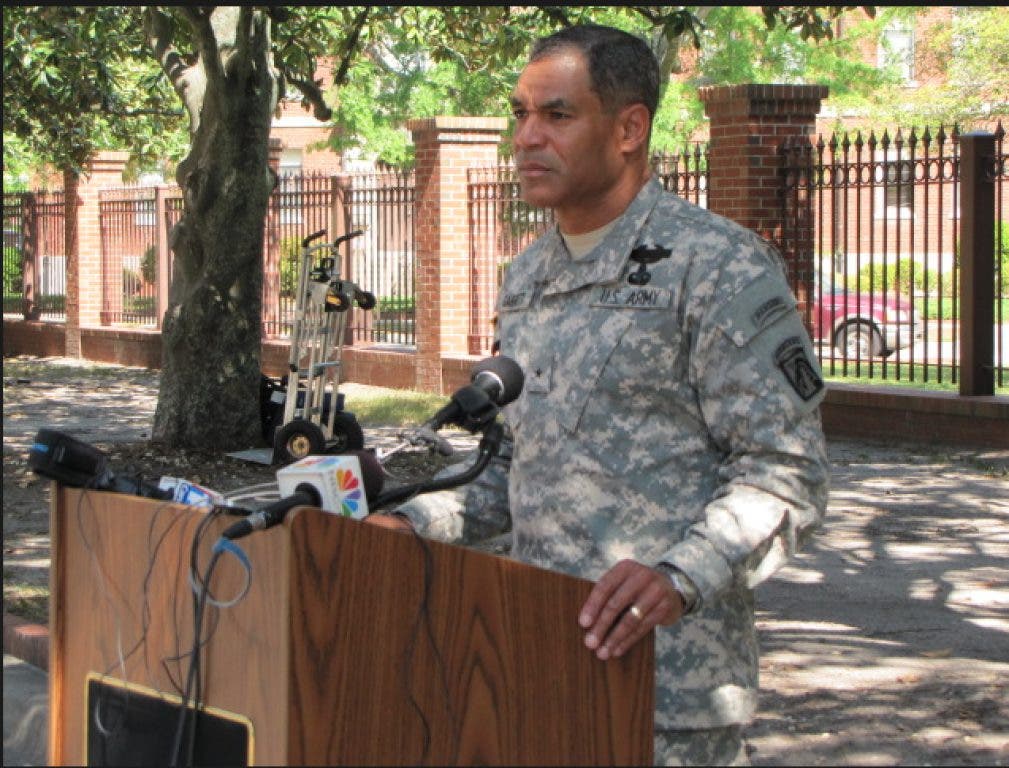
Tuesday afternoon at the 18th Airborne Corps Headquarters, Brig. Gen. Michael X. Garrett, the 18th Airborne Corps' chief of staff, presented the findings of February's inspection to local media.
Following up concerns surrounding wounded warriors and their families, Lt. Gen. Frank Helmick, commander of the 18th Airborne Corps and Fort Bragg, ordered the inspection of the Fort Bragg's battalion for 492 of the installation's wounded soldiers.
"Our challenge, one of the areas identified in this report, is doing a better job keeping our warriors in transition informed, " said Garrett in his opening remarks. "We can do a better job ensuring that the processes that are very long and complex are better understood by our soldiers and their family members."
Find out what's happening in Fort Braggfor free with the latest updates from Patch.
Leading the inspection was Col. Maggie Dunn, inspector general of the 18th Airborne Corps.
Several key findings and recommendations in four main areas have been identified and presented to Lt. Gen. Helmick to enhance the Warrior Transition Battalion (WTB).
Find out what's happening in Fort Braggfor free with the latest updates from Patch.
The first area deals with the cadre selection process. In the past the WTB has limited itself to choosing from cadre assigned to Fort Bragg rather than making a selection for the best qualified candidates across the Army. Another recommendation involves the selection process for the senior leaders at WTB. A request was made to the Department of Army to gain approval to be able to nominate senior leadership already within the WTB, similar to how battalion commanders and command sergeants major are selected.
Administration, training and leadership were the other areas where ideas for improvement will aim to ameliorate the concerns surrounding the care and treatment for these warriors.
Past Town Hall meetings were not well attended and the senior leadership at Fort Bragg view them as a great means and venue for the command to share information with family. In the past, these Town Hall meetings were voluntary, but they will now be mandatory.
The WTB has an overall return to duty rate of 63% over the duration of its existence. However, 72% of those in the Fort Bragg WTB are now in the Medical Evaluation Board process.
Out of the 492 soldier in the WTB, 7% have received their injuries as a result of combat operations and 30% were injured while deployed.
Garrett reiterated that regardless of the cause, they are committed to providing the best possible medical care to their soldiers at Fort Bragg.
Get more local news delivered straight to your inbox. Sign up for free Patch newsletters and alerts.