Politics & Government
Cordray And DeWine Neck-And-Neck In Race For Ohio Governor
The race to succeed Gov. John Kasich will be decided Tuesday during the midterms.


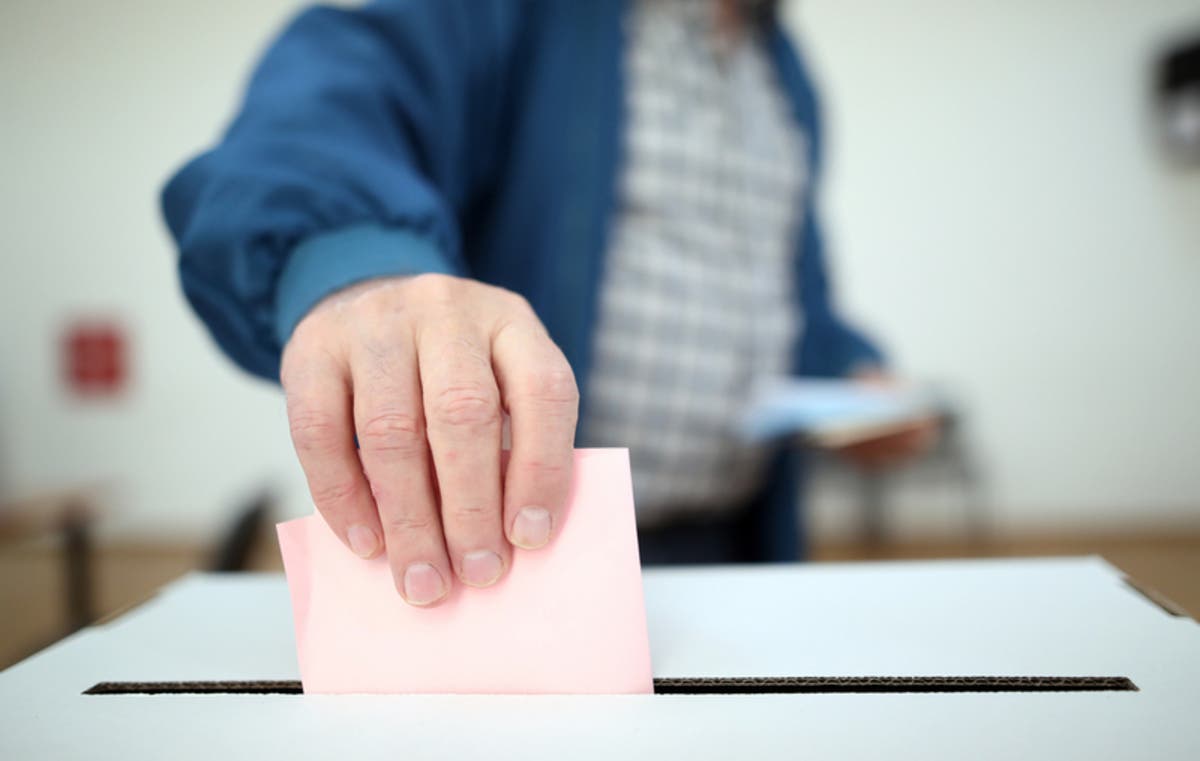
COLUMBUS, OH — Ohio voters will decide the successor to John Kasich during the midterm elections. The heated race to replace the term-limited governor will see Buckeye State residents choose between Democrat Richard Cordray and Republican Mike DeWine. The race between Cordray and DeWine has been incredibly close, with neither man holding the inside track to the statehouse in Columbus. The most recent polls before Tuesday's election showed Cordray with the narrowest of edges.
Both Democrats and Republicans have trotted out heavy hitters with serious name recognition to stump for their candidate. Former President Barack Obama campaigned with Cordray in mid-September, while President Donald Trump came to Cleveland on Monday to stump for DeWine.
The late-in-the-election-cycle campaign events could not have varied more in style. Obama touted Cordray's problem-solving ability, and added he “represents the kind of leadership we need." Trump spent part of his event attacking Cordray, calling him a "bad person" who would be bad for Ohioans. He then hastily added that DeWine was a good candidate who cared about Ohioans.
Find out what's happening in Clevelandfor free with the latest updates from Patch.
Find out what's happening in Clevelandfor free with the latest updates from Patch.
Republicans have owned the Ohio governorship for nearly three decades. Kasich has been the leader of the state since 2011. Prior to his tenure as governor, Ohio was led for four years by Democrat Ted Strickland. Before Strickland there were three consecutive Republican governors, whose combined tenure dated back to 1991.
That means Republicans have controlled the statehouse for 23 of the past 27 years.
Democrats have thrown serious weight behind Cordray in the hopes of winning back a swing state. On Tuesday, voters will decide if their efforts were worth it.
The Scene at the Polls
Poll workers across Ohio have said they're seeing increased voter turnout. Ashley Monaghan, who is volunteering in Munson Township, in rural Geauga County, said staff are expecting a "huge overall turnout" after a big morning. A poll worker in inner-ring suburb Cleveland Heights echoed a similar sentiment, adding that the number of young voters showing up has been surprising.
Lines to vote have been commonplace, according to voters across Northeast Ohio. In Beachwood, Christi, a suburban white woman who previously voted Republican, said it was her "civic duty to vote."
"I'm voting for Richard Cordray and Sherrod Brown," she said. "I liked the things they were doing, the things they were promoting for the state."
She was one of the calmer voices at the polls. Many of the voters on Cleveland's east side said they were motivated by national issues. "I'm terrified by what's going on in this country," said Jonathan, a Cleveland Heights resident. Dennis, a 59-year-old white man, echoed that sentiment, saying he was "horrified by the direction the country was heading."
Activity on Cleveland's east side has been unusually high for a midterm election, with both Beachwood and Shaker Heights topping 50 percent in eligible voter turnout by 2 p.m.. Cleveland Heights was also on pace to top 50 percent voter turnout before 5 p.m.
On The Issues
Both Cordray and DeWine are making last-minute appeals to Ohio's moderate voters. Both candidates have claimed they would try and reduce healthcare costs and expand coverage (though DeWine is moving away from his previous position on the healthcare issue); both have said they would support small businesses; both want to focus on providing premium education to Ohio's students at an early age; and both want to tackle the state's growing opioid crisis.
Here are some key differences in their priorities: Cordray wants to expand protections for senior residents, create a commission on women's and girl's issues in the state, and redevelop Ohio's infrastructure.
DeWine wants to focus on law enforcement by increasing the number of safety vests available to officers in Ohio, reduce standardized testing in Ohio schools, and increase the amount and quality of technology utilized by state government.
Guns in Ohio
Both candidates have set their agendas to try to reduce gun violence in Ohio and, specifically, at schools. In fact, the state's history with attacks at school — including the deadly Chardon High shooting in 2012 — has kept interest in this issue particularly high.
Here's what Cordray wants to do on guns and school violence: institute universal background checks; ban the sale of high-capacity magazines and bump stocks; ban gun sales to residents under 21-years-old; appoint a resource officer in every school; appoint a "gun violence czar" to coordinate statewide initiatives; and create a gun-violence task force.
Here's what DeWine wants to do on guns and school violence: enhance Ohio's background check system and increase enforcement of existing gun laws; make use of the Strategic Analysis and Information Center (a monitoring and analysis center run with Homeland Security) to determine threats against schools and police; and place a mental health professional in Ohio schools.
The Race So Far
This actually isn't the first time Cordray and DeWine have squared off. In 2010, Cordray was Ohio's Attorney General. He was challenged that year by Mike DeWine for the position. After a tense election, DeWine eked out a win, riding a nationwide red wave, and beating Cordray by a 1.3 percent margin.
Now, Cordray is hoping to ride a blue wave to what will likely be a narrow victory. The road to Tuesday was turbulent for both men.
Cordray didn't exactly cruise through his primary campaign, but he didn't face much opposition. He teamed up with, perhaps, his biggest rival (Betty Sutton) early on, and then quickly secured the Democratic nomination for governor.
DeWine's path to his party's nomination was bumpier, if no less assured. He also partnered with one of his biggest rivals — Secretary of State Jon Husted — but faced stiff, unrelenting competition from Kasich's Lieutenant Governor Mary Taylor.
Taylor tried to paint DeWine as a closet liberal and a career politician. DeWine struck back with a series of ads accusing Taylor of also being a closet liberal. The two then engaged in a series of back-and-forths touting their conservative credentials. The primary pushed DeWine to the right on a number of issues, as he tried to secure his base.
DeWine's tactics worked. He netted about 490,534 votes, or 60 percent of the vote, to Taylor's 329,089 votes.
Of course, if a political campaign doesn't really start until the first attack ad is launched, then the race to be Ohio's next governor started in late August. That's when DeWine came out swinging, trying to label Cordray as "soft on crime." He pointed out that a huge backlog of untested rape kits built up during Cordray's tenure as Ohio's attorney general.
The ad was technically true, but ignored several key facts; including the fact that Cordray had begun implementing testing policies before he was ousted from office by DeWine.
The ad was more than just a calculated attack on Cordray's tenure as attorney general, it was also an attempt by DeWine to win public support from residents that value "law-and-order." DeWine took public flak after it was revealed that 53 of 99 Bureau of Criminal Investigation officers (overseen by DeWine's office) received expired Kevlar vests. The Fraternal Order of Police then endorsed Cordray, cleveland.com noted.
Cordray, on the other hand, had been releasing a series of light-hearted YouTube videos showing him reading "Mean Tweets" and taking part in Ohio "Jeopardy!" The videos were clearly an attempt to humanize a candidate with a reputation as a policy wonk and who was largely unfamiliar to young Ohioans, who largely vote Democrat, when motivated.
Eventually, Cordray began releasing his own attack ads against DeWine. In one video, he said that DeWine would side with Trump "no matter what," even if it meant it would hurt Ohioans.
The see-saw of political attack ads swung back and forth throughout the election cycle. Both men have also trotted out a bevy of famous faces to campaign for and with them, including: Obama, Trump, Vice President Mike Pence, former Vice President Joe Biden, Elizabeth Warren, Rob Portman and more.
Here's where everything stood before the election: RealClearPolitics and FiveThirtyEight both had the race between Cordray and DeWine as tight, though it is leaning slightly toward the Democrat. RCP's aggregation of recent polls have Cordray up by about 4.7 points, whereas FiveThirtyEight has Cordray receiving 49.5 percent of the vote, to DeWine's 48.6.
(For more news like this, find your local Patch here. If you have an iPhone, click here to get the free Patch iPhone app; download the free Patch Android app here. And like Patch on Facebook!)
Photo from Shutterstock
Get more local news delivered straight to your inbox. Sign up for free Patch newsletters and alerts.