Schools
Proposed Heights Schools Levy Divides Community
The district says EdChoice funding has blown a hole in its budget. The levy's opponents say the district's spending is out of control.


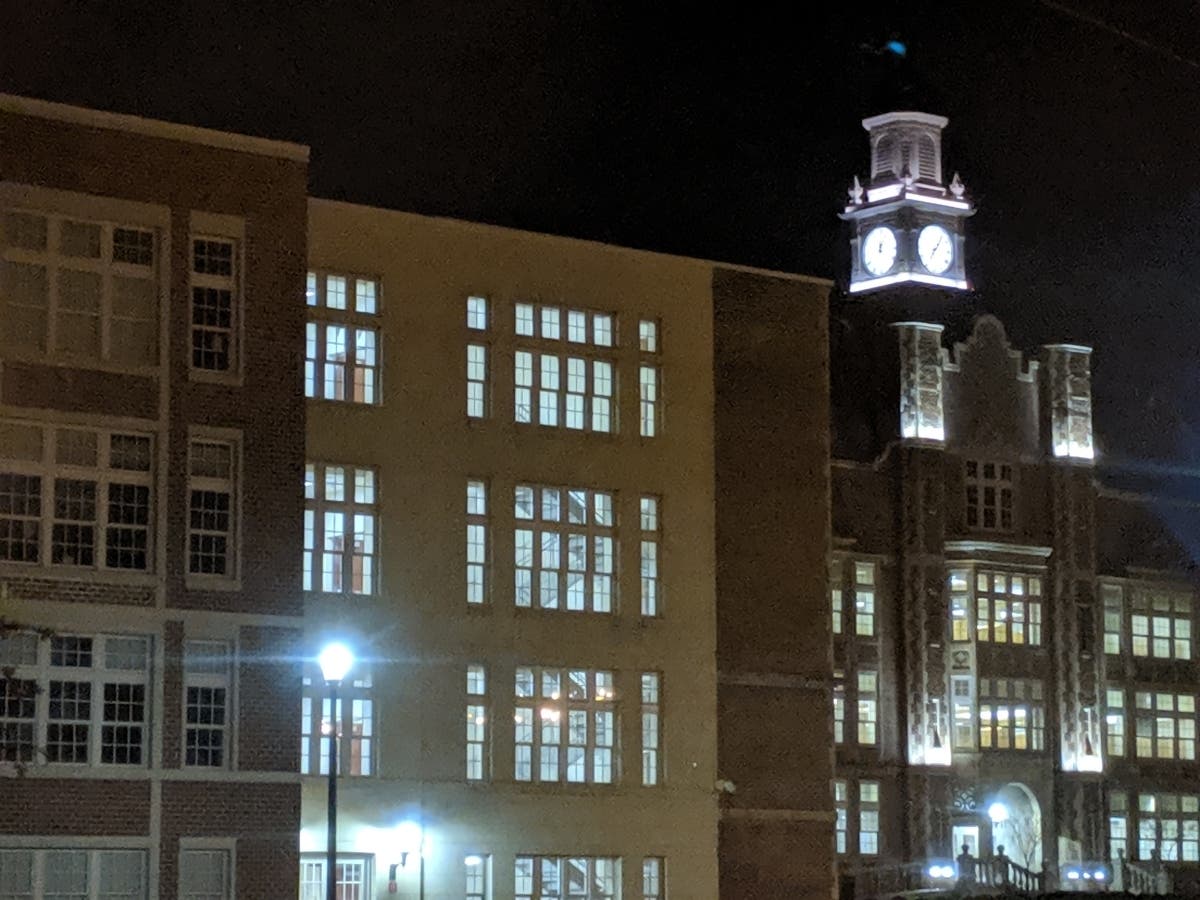
CLEVELAND HEIGHTS, OH — In March, voters in Cleveland Heights and University Heights will decide a 7.9-mill operating levy for the Heights Schools. The levy breaks down to an additional $23 per month for residents with homes valued at $100,000, according to school officials.
“If we don’t pass this levy, we’ll be looking at a $5 million budget reduction next year, which we equate to an average of 67 jobs,” CH-UH Schools Chief Financial Officer Scott Gainer told Patch. He said 80 percent of the district’s budget goes to salaries, so some jobs would have to be eliminated. The district would also likely cut some sports and extracurricular activities, Gainer said.
The levy’s opposition formed a group called Tigers Nation 4 Lower Taxes. The group’s leaders say the district has mismanaged its funds, overleveraged the community and is not producing the academic results to justify higher taxes on residents.
Find out what's happening in Cleveland Heightsfor free with the latest updates from Patch.
The Heights Schools received an overall grade of “D” on the September 2019 Ohio Department of Education State Report Card. CH-UH Superintendent Elizabeth Kirby said the report card was a sign the district needed to work harder for students, but also warned against using the grade to judge the entire school system.
“It does not tell our complete story,” she said.
Find out what's happening in Cleveland Heightsfor free with the latest updates from Patch.
However, the district’s performance on the state report card has led to complications with its budget.
Dealing with EdChoice
Part of the reason for the budget deficit, according to district officials, is the expansion of the EdChoice voucher program.
The Cleveland Heights-University Heights (CH-UH) School District had nine schools on the state’s EdChoice voucher list in 2020. The list designates underperforming schools and gives families living in those districts access to vouchers to attend private school. Funding for the vouchers is pulled out of a public school's budget. Schools qualify for the EdChoice list based on their performance on state metrics.
Gainer said the expansion of the EdChoice list has created a pothole in the district’s finances. The state’s annual budget froze school funding for all districts. The budget also gave high school students at nonpublic schools improved access to EdChoice vouchers. That meant the Heights Schools would lose an additional $2.1 million in funding, he said.
That brings the district’s total payout for EdChoice vouchers to $6.8 million.
“Our district is disproportionately affected by EdChoice because there are so many private school options in and around our schools,” Gainer said.
“If we didn’t have EdChoice at all, we wouldn’t be on the ballot at all,” Gainer said.
A Question of Taxes
“If this levy passes, we will be the most-taxed school district in Ohio. It’s unsustainable,” said Maureen Lynn, the treasurer for Tigers Nation 4 Lower Taxes.
Lynn is worried the tax burden felt by residents in Cleveland Heights and University Heights is already too high. She points to delinquent property taxes data from 2018, which indicates $6.6 million in property taxes from Cleveland Heights and University Heights residents was overdue in 2018.
If the Heights Schools levy passes, Lynn warned, more residents would be unable to meet their tax obligations. She worries residents on fixed incomes, such as the elderly, would be most affected by the levy’s passage and that tax delinquency would increase.
Rather than ask for more assistance from residents, Tigers Nation 4 Lower Taxes wants the district to cut its administrative staff spending. The group specifically wondered why a registered nurse was making more than $100,000 during the 2018-19 school year.
The state’s Cupp report tracks the average salaries of teachers and administrators in a school district. Here’s how Cleveland Heights-University Heights Schools compare to similar districts:
Cleveland Heights-University Heights Schools:
- Average administrator salary - $108,217
- Average teacher salary - $80, 420
Shaker Heights Schools:
- Average administrator salary - $95,407
- Average teacher salary - $77,606
Lakewood City Schools
- Average administrator salary - $104,710
- Average teacher salary - $75,911
Lynn also noted that Cleveland Heights-University Heights Schools funding was higher in 2018 ($136 million) than in 2011 ($107 million), despite having nearly 700 fewer students in the district.
Gainer said the district has already taken several cost-cutting measures, including closing Coventry Elementary, closing Wiley Middle School and cutting 40 staff positions during Talisa Dixon’s tenure as superintendent.
“Our community has high expectations for their public schools. They want us to offer top-flight sports programs, AP classes, art programs — anything a student could want,” Gainer said. “We’re there for the public good. We educate everyone who walks through our doors, and that’s an expensive endeavor.”
Voters To Decide
School districts in Ohio rely on property taxes for funding. However, districts do not immediately see increased revenue when property values increase. Instead, districts must return, again and again, to ballots to ask residents to increase school funding.
Gainer, and public education officials around the state, have lobbied for a change in how public schools are funded. Their pleas have gone unanswered.
On Tuesday, March 17, voters will again head to ballot boxes in Cleveland Heights and University Heights. They will again weigh the arguments for and against a levy. Their decision will again send rippling impacts through the two cities.
(Editor's Note: An earlier version of this story said the district's EdChoice voucher payout was up to $4.6 million. That was for 2019. This year, the district will lose $6.8 million in funding.)
Get more local news delivered straight to your inbox. Sign up for free Patch newsletters and alerts.