Community Corner
It's Official, Washington County's Drug Court Is Working
Washington County's Drug Court just saw its 11th graduate, Judge Kerenyi wants people to see the difference they're making.

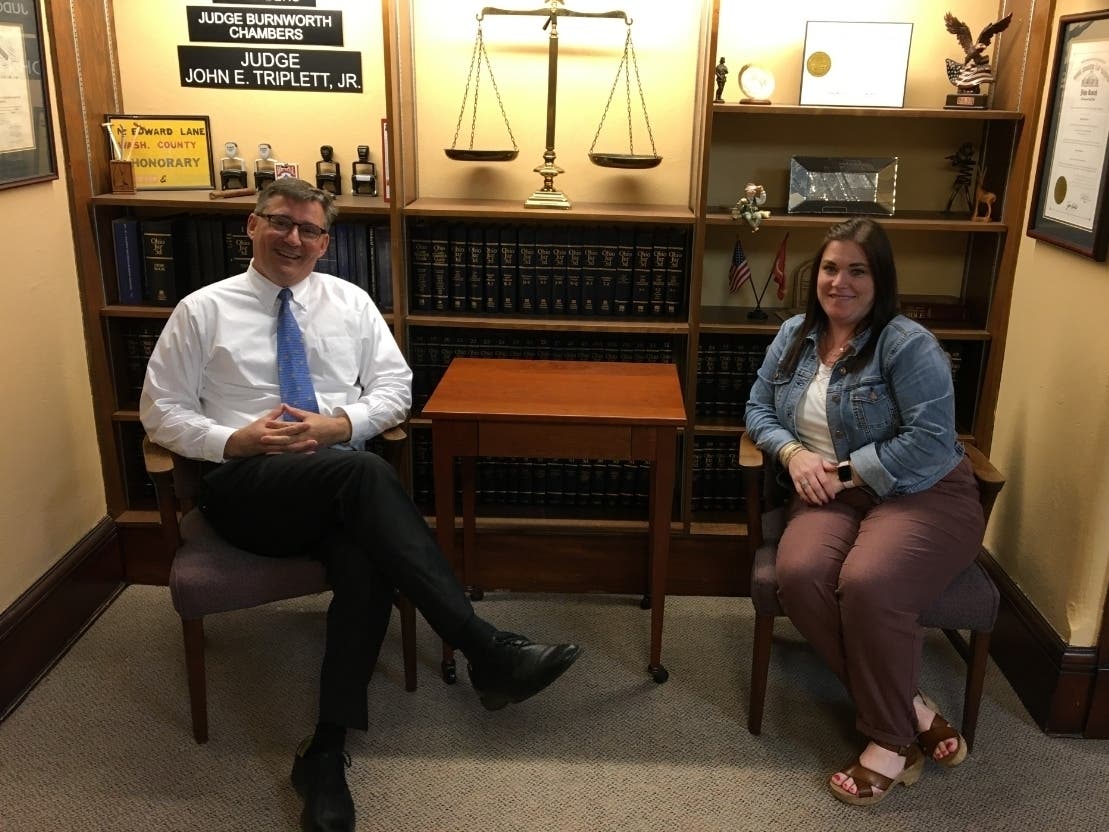
MARIETTA, OH — This week Joseph Antill graduated from drug court. He has 375 days clean and says the whole experience was incredibly positive. His story isn’t unique, Washington County’s Compass Recovery Program, or “Drug Court,” is just over 2 years old, and they already have 11 fully rehabilitated graduates.
Live in Marietta? Click here to subscribe to our free breaking news alerts delivered to your inbox and mobile devices. Follow Marietta Patch on Facebook and Twitter, and download our free Patch mobile app on Android or iPhone
Mark Kerenyi is the Judge of the Washington County Common Pleas Court. He’s also the Drug Court judge. This is his brainchild. He and a couple of others concerned about the local drug problem went to visit Drug Court in Akron. “We liked what we saw. So we brought it back here and tried to redo it.”
Find out what's happening in Mariettafor free with the latest updates from Patch.
The impetus for this program was the apparent changing nature of the drug problem. “There was a time when it was us versus them. The addicts are those people, they’re not us.” Until one day that seemed to change. “It is us, it’s our kids. Good taxpaying people, you’d never think their kid is a drug addict, and it happens.” He said it’s no longer those bad addicts over there. “Everyone now realizes that we need to take care of this problem, cause these are all our people.”
Kerenyi said to think of this as a giant pendulum. “At one time it swung towards incarceration, and I think at this point the state’s like we can’t incarcerate everybody, it isn’t cost-effective.” Now the pendulum is swinging toward treatment. “We can’t incarcerate our way out of this issue, we need to address it and it’s everywhere. It’s no longer, there are a couple bad addicts over there, lock them up and we’ll be a better community.”
Find out what's happening in Mariettafor free with the latest updates from Patch.
The way Drug Court works is that it’s a specialty docket. The Ohio Supreme Court allows them to set up the court to be different from usual court. “Typically with court cases the judge never talks directly to the participants.” Judge Kerenyi said the defendant would usually come to court for a whole formal process seen through a lawyer's lens. “This is a specialty court where we work a lot more intensively with participants.” Kerenyi pointed out that in drug court those involved are always referred to as participants, never defendants.
No one is forced into the program, they have a choice if they’re eligible. To be eligible for Drug Court the participant must meet a number of criteria, they must be charged with a 3rd 4th, or 5th-degree felony, have little or no history of violence, be a Washington County resident, not be a sex offender, or a drug trafficker, be chemically dependent, and demonstrate a willingness to participate in a long-term treatment process. “So they get the option, go through the normal process,” Kerenyi said they’d probably be facing a bunch of jail time. “Or apply, and we can put them in the drug court.”
Carla Archer is the coordinator of the Drug Court, and she says the least amount of time it could take someone to graduate from drug court is 14-months. “That’s if they’re absolutely perfect.” She said they don’t expect perfection when they come into the first phase of drug court. “We realize there are going to be some things that happen along the way.” Things they expect are failed drug tests, missed hearings, missed treatment appointments. “If they do they’re given a violation and sanctioned in court.” Sanctions can range from writing a paper about what they did, or getting a verbal warning from the judge to being sent to treatment or jail.
Antill had spent years as a drug addict before this. “I forgot how to live like a normal person.” He was homeless at the beginning of Drug Court. “They came and saw me when I was in jail and asked me if I would be interested.” He said yes, but he also said it was no walk in the park. Some give up. Antill says you have to really want it. “It’s a lot of work. They ask a lot of you.”
One big ask of addicts, get a routine. “You got to go to meetings, you got to study the big book, make your doctor appointments.” He said as a drug addict, he wasn’t used to having responsibilities. “Paying your bills on time, paying your rent on time, making it to that doctor’s appointment.” Drug Court holds you accountable. “Once you get that routine going, it feels good. I want to pay my bills on time now. I care about that. Before I didn’t.”
Archer says the success they have seen is unbelievable. She pointed to Antill. When he came into the program he didn’t know who he was or what he was going to do with his life. “Now he has a job, he has his own apartment.” He recently completed his Drug Court graduation project. “He raised $1,500 for the veterans in the community by doing a car wash.”
Antill said he would probably be dead without this program. “I’ve overdosed on fentanyl on five different occasions. I’ve been drug out to the side of the street like a sack of trash because people didn’t want me dying in their house.” He’s getting ready to turn 44 and never thought he’d live this long. “Even if I wasn’t dead, I’d probably be on the side of the road stealing to get food and stealing to get drugs.”
Leniency is built into the program because experience has shown when dealing with addicts, it has to be. “We’re more treatment-oriented than correction-oriented,” Kerenyi said in other programs a relapse would automatically mean jail time. “Here we understand they’re struggling, a relapse is definitely possible.” He says with the array of services they have at their disposal the idea is to wrap the participant in services. “They help them find employment, housing.”
This program is fully funded for the next three years. Kerenyi had initially secured funding through a TCAP (Targeted Community Alternative to Prison) grant through the state and through the behavioral health board. “Nothing came from the general fund, we didn’t have to go to the commissioners asking for money.” The Drug Court also secured a federal grant through the Department of Justice. If those in the Drug Court were processed through the county jail and county court system, it would cost local taxpayers. “So this is actually saving local taxpayers money.”
The Drug Court’s goal isn’t to just get the addict clean, it’s to change the entire person. “When they come in we understand there are mental health issues, they don’t have their kids, maybe they lost their spouse. There’s a whole gamut of things as to why they started using in the first place.” Archer said their job is to zero in on what those factors are, correct them, and help make them members of society again. “Not everyone is successful, but the ones who are tell me ‘you changed my life.’”
This program affects not just the individual, their job, or their life, but the whole community. Kerenyi said some of their early graduates are now sobriety coaches for other people. “They’re letting other addicts know that there’s hope for recovery and a better life.” The judge seemed baffled by the fact that many of their participants didn’t know who they even were sober. “It seems weird to not know who you are sober, but they don’t.” He says many of them have been high and chasing drugs for so many years they’ve lost all sense of anything meaningful. “They have no idea how to do things like normal people like shop at a store, without stealing.”
Antill said the support system that the Drug Court provided helped as much or more than anything else. “Having a fellow drug addict try to help me out meant more. It was easier to talk to them because they knew what I’ve been through.”
So far out of 11 Drug Court graduates, not one has shown back up in a courtroom. Remember, they were in court in the first place for felony crimes. Kerenyi pointed out that based on that metric, so far their success rate among Drug Court graduates is 100% “But we’re a new program, so the question is how long does that last?”
The Washington County Drug Court celebrated its 11th graduate this week, but this time it was virtual. Drug Court is returning to a real courtroom setting on June 7. Archer encouraged folks to come out. “It’s open to the public. Anyone is welcome. We encourage the community to do that. We would love to have more support.” She wants people to see and to know that at this point it’s official, this is working.
Antill says he’s happy to be sober and living life. “The people I work with at Subway are super nice, they’re like family.” He has a nice home with nice furniture. He still rides a bike, but he’s working on getting his license. “The local police come into Subway where I work at tell me how good I look, and tell me to keep going. That makes me feel good.” He says little things like this give him the drive to keep going.
Have a news tip or suggestion on how I can improve Marietta Patch? Maybe you're interested in having your business become one of our latest sponsors? Email any and all inquiries to me at christopher.schmitt@patch.com