Neighbor News
Guthrie Woman Turns Migraine Pain Into Advocacy with Shades For Migraine
Through events, outreach, and landmark light ups, Jeannie Black raised migraine awareness as part of global campaign
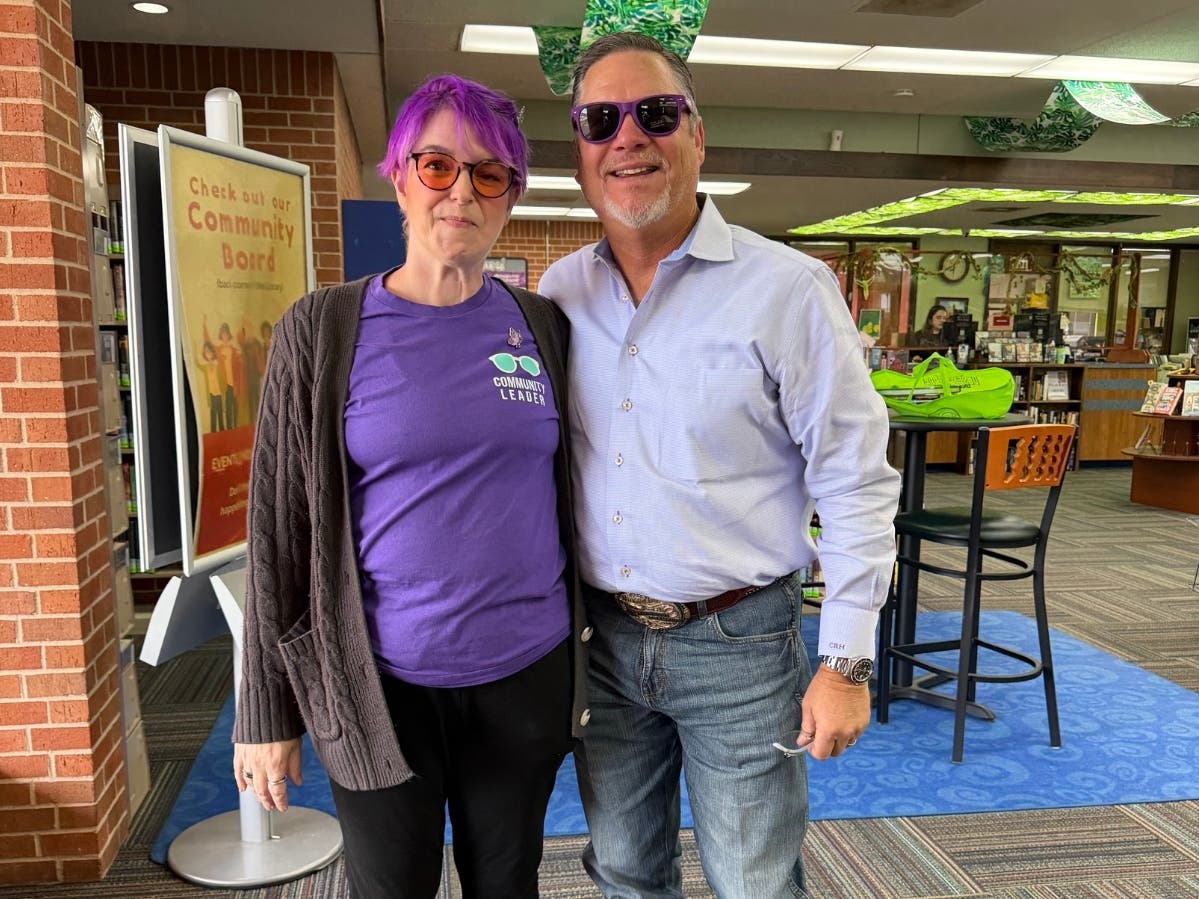

People across Oklahoma joined a global movement to recognize June as Migraine and Headache Awareness Month through the Shades for Migraine campaign, an international initiative led by the nonprofit Association of Migraine Disorders.
Designed to smash stigma, validate lived experience, and drive awareness, Shades For Migraine engages communities through events, social media, and public participation — all to challenge misconceptions about migraine.
Empowered by her personal experience with chronic migraine, Jeannie Black became Shades For Migraine Community Leader, volunteering to raise awareness in the Oklahoma City Metro. The Guthrie woman said migraine significantly impacts nearly every aspect of her life.
Find out what's happening in Oklahoma Cityfor free with the latest updates from Patch.
"I'm unable to work right now, the only friends I have and see in person have chronic migraine,” said Black. “I believe I could do so much more good for the world if I didn't have so many migraine attacks.”
Like many people living with migraine disease, Black experiences a wide range of migraine symptoms including throbbing pain, nausea, dizziness, light and sound sensitivity, neck pain, brain fog, and memory issues.
Find out what's happening in Oklahoma Cityfor free with the latest updates from Patch.
Migraine affects 40 million Americans and is the leading cause of disability in women under 50, yet it remains highly stigmatized and frequently minimized.
"Because migraine is invisible, many patients feel judged or dismissed, and that lack of understanding can be very damaging," said Dr. Franchesca Fiorito, neurologist and Shades For Migraine Medical Ambassador.
To help make migraine and its impact visible, Black helped elevate awareness across Oklahoma by hosting a community outreach event at the Guthrie Public Library, garnering support from Oklahoma State Senator Chuck Hall, securing an Oklahoma City proclamation recognizing Migraine and Headache Awareness Month, and coordinating the illumination of the iconic Skydance Bridge in purple for migraine awareness.
She also helped light up the Skydance Bridge purple and red in recognition of Chronic Migraine Awareness Day.
"There aren't many resources here for treatment, information, or events,” Black said. “I wanted to change that. I want people with migraine to know that they are not alone.”
The Shades For Migraine movement
Shades For Migraine spreads awareness through a fun, engaging, and inclusive approach to spark conversation and break migraine stigma. Using sunglasses as a symbol, Shades For Migraine brings visibility to migraine and its impact, raising awareness and fostering empathy to fuel change.
Every June, Shades For Migraine encourages the public to show their support for the one billion people worldwide living with migraine disease by posting a photo in sunglasses on social media with @ShadesForMigraine and #ShadesForMigraine.
“Shades For Migraine turns a small, everyday action like a selfie, into a global statement,” said campaign program manager Sara Berkowitz. “Shades unites patients, caregivers, healthcare providers, businesses, friends, and advocates around a shared cause.”
Black said she's proud of her efforts helping raise awareness, and looks forward to next year.
"I felt so supported," Black said. "I've learned to get outside my comfort zone and I can't wait to see what I'll do next year."
About Shades For Migraine
Shades For Migraine is a global awareness campaign led by the nonprofit Association of Migraine Disorders. Launched in 2017, Shades For Migraine spreads awareness through a fun, engaging, and inclusive approach to spark conversation and break stigma. Every June, Migraine and Headache Awareness Month, Shades For Migraine encourages the public to show their support for the one billion people worldwide living with migraine disease. In 2026, SFM reached millions of people with participation in 50 states, 48 countries, and 19 languages.