Neighbor News
Veterinary Technology Students Find Joy in New Collaboration Dairy cows become the focus of student instruction
Manor College's Program of Veterinary Technology announces new collaboration with Delaware Valley University.

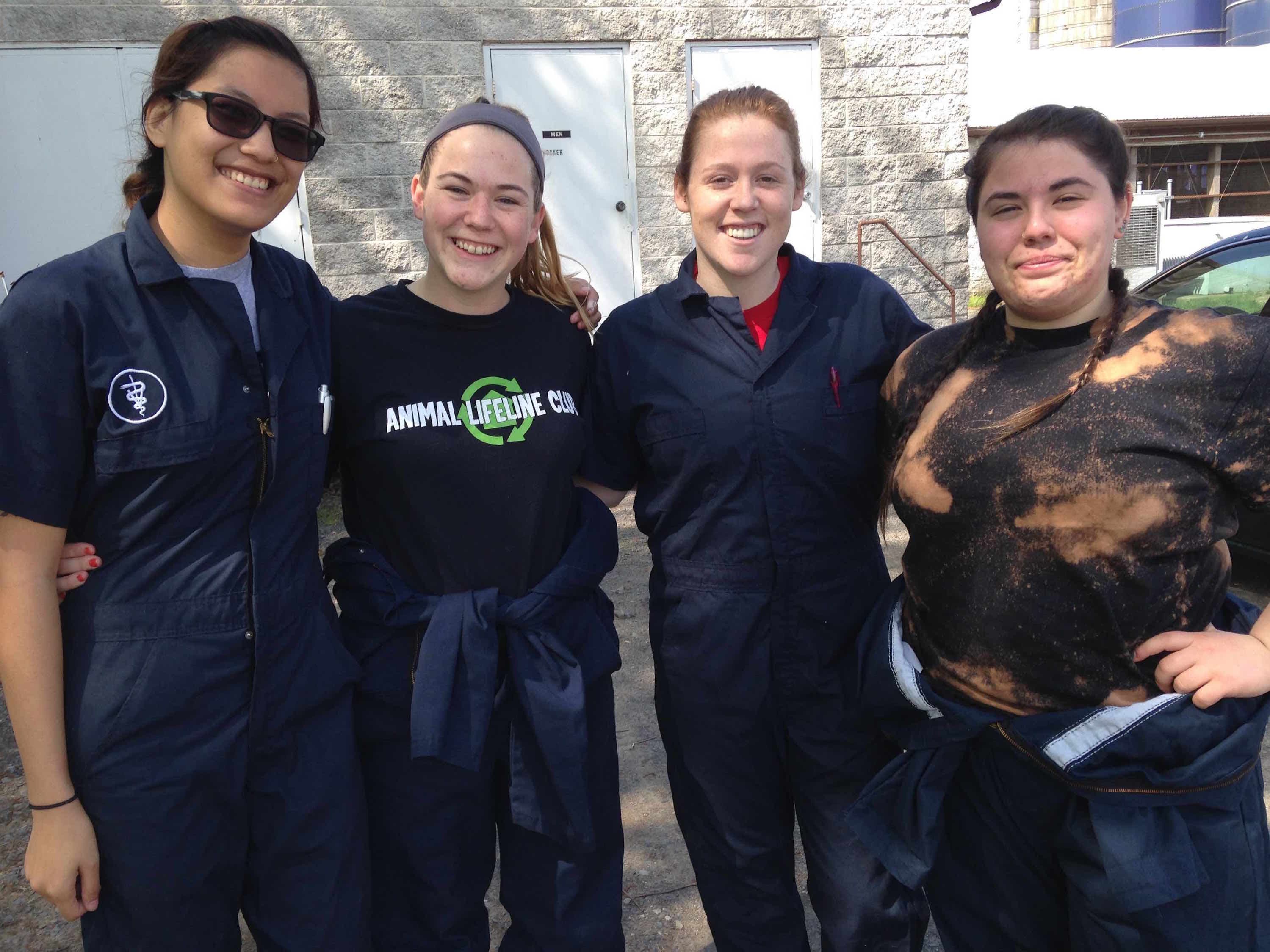
This spring, Manor College’s Program of Veterinary Technology kicked off a new collaboration with Delaware Valley University. The collaboration helped Manor’s Veterinary Technology students learn the foundations of dairy herd health and focuses on physical examination techniques including checks for mastitis and milk production.
Currently, Manor Vet Tech students work with beef cattle, sheep, hogs and chickens at nearby Fox Chase farm where they complete the bulk of the food animal portion of the course, but there are no dairy herds in the neighborhood…at least not any more. At one time, the affiliate St. Basil’s farm located at the corner of Fox Chase Road and Cedar Avenue, had its own dairy herd, but that was sold off over 30 years ago along with the hogs and chickens as surrounding neighborhoods expanded and homeowners objected to the smell of manure. The farm is now home to 9 horses some of which are cared for by the Vet Tech Program’s student-run Horse Care Team.
In addition to working with dairy cattle, the students will also be working in the Breeding Barn where Del Val stands several Standard bred stallions. Reproduction is an important part of managing herds of livestock. Veterinary technicians that specialize in reproduction may work on equine breeding farms where they are responsible for checking mares for signs of estrus and for evaluating and shipping semen.
Find out what's happening in Abingtonfor free with the latest updates from Patch.
“In this course, students are learning what is normal for each species,” explains Dr. Bassert. “Next year, as sophomores, they will learn pathophysiology and what happens when the normal physiologic systems break down.”
Veterinary technicians are often the first to identify a change in a patient’s status, particularly of hospitalized patients, and they must address the needs of the patient quickly and notify the veterinarian. In order to do that, vet techs must be able to recognize what is normal. If the animal is a dog or cat…that can be pretty straight forward, but if the animal is a Fire Salamander or an Angus Bull…that can be a bit more challenging.