Politics & Government
Assault Weapon Ban Advances: What PA's Congressional Leaders Say
Pennsylvania lawmakers are at the forefront of gun control efforts in U.S. Congress.


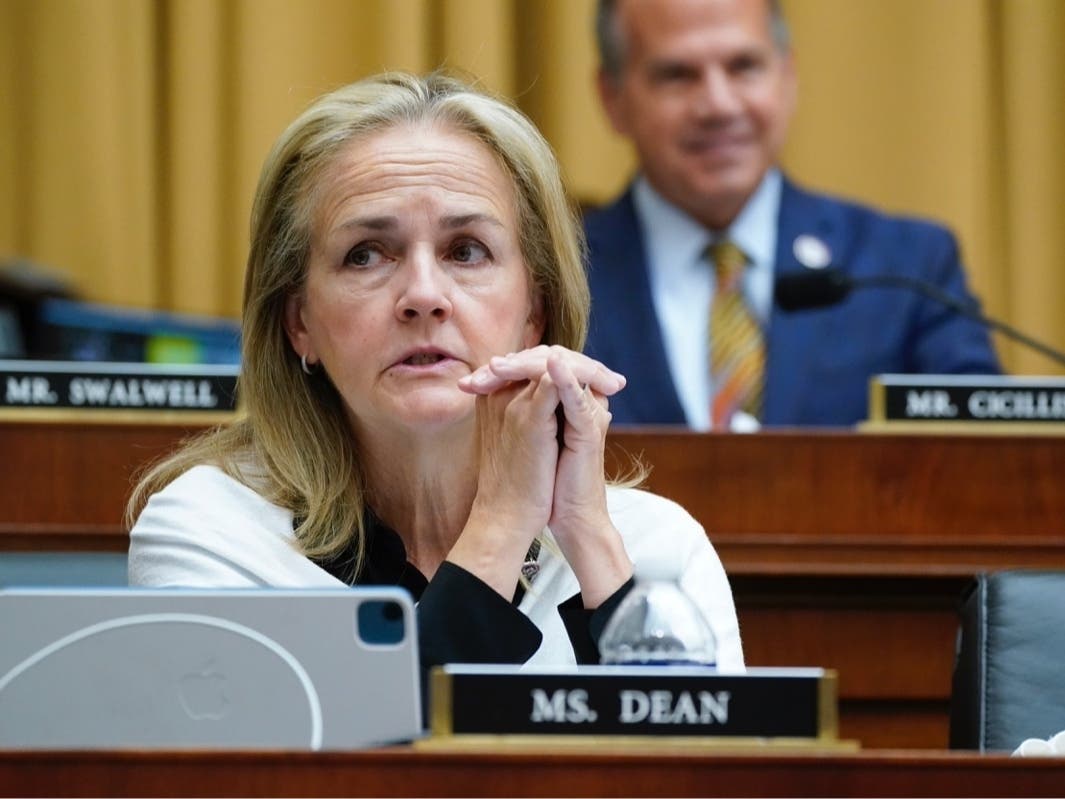
PENNSYLVANIA — As the nation reels from its latest round of deadly mass shootings, the House Judiciary Committee has made another push to ban some semi-automatic weapons. Democrats passed legislation out of the committee, House Bill 1808 — on a 25-18 party-line vote on Wednesday, and Pennsylvania representatives were at the forefront of the effort.
It's possible the proposal could reach the House floor for a vote before the August recess, but significant support from within the Democratic Party's own ranks is still needed. Analysts believe passage in the Senate to be unlikely.
Pennsylvania's U.S. Congresswoman Madeleine Dean, the Vice Chair of the Judiciary Committee, marked the 10th anniversary of the mass shooting in Aurora, Colorado, days ago.
Find out what's happening in Across Pennsylvaniafor free with the latest updates from Patch.
"10 years since the Aurora shooting," she wrote. "One of the weapons used to slaughter 13 people and injure 70 was an S&W M&P15 semiautomatic rifle. Today, (House Judiciary) is marking up the #AssaultWeaponsBan to stop any new purchases of this deadly semiautomatic rifle to civilians."
Dean argued that in addition to Aurora, mass shootings in Las Vegas, the Orlando Pulse Night Club, the El Paso Walmart, the Buffalo supermarket, and the Uvalde elementary school could have all been stopped by this proposed ban.
Find out what's happening in Across Pennsylvaniafor free with the latest updates from Patch.
Another Pennsylvania Democrat from southeastern Pennsylvania on the Judiciary Committee, Congresswoman Mary Gay Scanlon, expressed support for the bill as well.
"It’s past time to regulate the weapons of war that flood our communities, inflicting death and horror on our schools, churches, malls, grocery stores, and parades," she said.
No Pennsylvania Republicans sit on the House Judiciary Committee. Support of a potential ban on that side of the aisle remains unclear, although Bucks County's U.S. Rep. Brian Fitzpatrick has voted favorably on some gun control measures in the past, including last month's bill.
Sponsored by Rep. David Cicilline, a Democrat from Rhode Island, the Assault Weapons Ban of 2021 would prohibit the sale, manufacture, transfer or import of all semi-automatic weapons that can accept a detachable magazine or other feeding device with a capacity of 10 or more rounds, and have at least one of the following characteristics of a military-style weapon:
- a pistol grip
- a forward grip
- a folding, telescoping or detachable stock
- a grenade launcher; a barrel shroud
- a threaded barrel
The ban doesn’t apply to antique firearms, manually operated firearms and more than 2,000 specified models of hunting and sporting firearms.
It also doesn’t apply to assault weapons and high-capacity magazines and other feeding devices legally possessed on the effective date of the assault weapons ban. A similar provision was included in the 1994 assault weapons ban.
Read the text of the 100-page assault weapons bill for more specifics.
‘Death Wish’ For Democrats?
Passage in the House is far from certain.
Some Democratic moderates, especially those in politically divided swing districts, are reluctant to vote for sweeping gun reform packages ahead of the November midterm elections, especially since an assault weapon ban has almost no chance of clearing the Senate.
An Associated Press/National Opinion Research Center poll in late May found 51 percent of Americans favor an assault weapons ban, while 32 percent are opposed to it.
Findings were similar in a Quinnipiac University poll in June. Importantly, the 50 percent of Americans supporting the federal assault weapons ban was the lowest level of support among registered voters for such a measure since Feb. 20, 2018, when 67 percent of Americans supported a ban.
At least two Democrats oppose the bill, according to The Associated Press. If every Republican opposes the legislation, Democrats can only lose four votes.
Reps. Jared Golden of Maine, whose district leans Republican, has said he doesn’t support “any version” of an assault weapons ban. Rep. Henry Cuellar of Texas, the lone Democrat to get an “A” rating from the National Rifle Association, also has said he won’t vote for the bill.
Several other Democrats are on the fence. Oregon Congressman Kurt Schrader, who was defeated in his primary, told Politico the legislation is the equivalent of a “death wish” for Democrats, noting “this is the bill that destroyed Democrats in ‘94.”
Others who are yet to decide are Democratic Reps. Ron Kind of Wisconsin, Vicente Gonzalez of Texas and Tom O’Halleran of Arizona.
“I want to see appropriate protection of the Second Amendment but at the same time protecting our public,” O’Halleran told Politico.
Republican Sacrifices Seat To Support Ban
Democrats could pick up two Republican votes, including that of New York Rep. Chris Jacobs, whose district includes Buffalo, where 10 Black people died in a grocery store shooting in May. Jacobs broke with his party in late May and said he would vote for a federal assault weapons ban — a decision that came at the expense of his political career.
“The last thing we need is an incredibly negative, half-truth-filled media attack funded by millions of dollars of special interest money coming into our community around this issue of guns and gun violence and gun control,” Jacobs said, according to footage of his announcement he would not seek re-election.
Days after 19 children and two teachers were killed in the Uvalde, Texas, school shooting on May 24, Illinois Republican Rep. Adam Kinzinger told CNN he is open to an assault weapons ban.
“Look, I have opposed a ban, you know, fairly recently. I think I’m open to a ban now,” he said. “It’s going to depend on what it looks like because there’s a lot of nuances on what constitutes, you know, certain things.”
Kinzinger, one of 10 Republicans who voted to impeach Donald Trump after the Jan. 6 attack on the Capitol and one of two Republicans on the House Select Committee investigating it, also isn’t seeking re-election. He hasn’t said specifically if he will support H. B. 1808.
Rep. Jim Jordan of Ohio, the ranking Republican on the House judiciary panel, said the legislation “will not reduce violent crime or reduce the likelihood of mass shootings.”
Democrats “are obsessed with attacking law-abiding Americans’ Second Amendment liberties,” he said. “For over 30 years, the Democrats have been running a propaganda campaign to make people believe that ‘assault weapons’ are a specific class of firearms that no one needs.”
Jordan said the ban leaves Americans at a disadvantage against “violent intruders in their home.”
“Prevented from defending themselves, their family, their property because of this legislation,” he said. “This legislation is dangerous, it doesn’t square with the Constitution, with the Second Amendment in any way, and it has failed in the past.”
Rep. Tom Massie, a Kentucky Republican, said Democrats are taking aim at “the most commonly sold sporting weapons.”
Cicilline, the bill’s sponsor, said the bill is narrowly focused on assault-style weapons, which aren’t the type most Americans buy or own, and also that Second Amendment protections aren’t absolute.
“Dangerous military weapons that were created to fight on the battlefield and slaughter enemies do not belong in the neighborhoods and schools and movie theaters where we live,” he said, according to the AP report.
1994 Assault Weapon Ban Effects
If approved, the ban would be the most substantive gun package since the original ban passed in 1994, led by then-Sen. Joe Biden.
Mass shootings were down in the decade the Clinton era semi-automatic weapons ban was in effect — even with an exemption that made it legal to own or resell assault weapons and high-capacity magazines manufactured before the law took effect in 1994. That and other loopholes made it easy for people to tap into an inventory of approximately 1.5 million assault weapons and 24 million high-capacity magazines that remained in private hands, according to a Washington Post analysis.
For his 2016 book, “Rampage Nation,” Louis Klaravas found that gun massacres — which he defined as six or more people shot and killed — decreased 37 percent and the number of people killed fell 43 percent in the 10-year period the ban was in effect, compared with the 10 years prior.
After the ban expired in 2004, gun massacres accelerated at a “staggering” rate, Klaravas told The Post. Incidents went up 183 percent, and gun massacre deaths went up 239 percent, he said.
Additional research from a group of injury epidemiologists and trauma surgeons found that after the assault weapons ban expired, mass shooting deaths increased to an average of 25 a year between 2004-2017, up from 5.3 a year during the tenure of the ban, and 7.2 a year in the years before the assault weapons ban.
Last month, Congress passed a bipartisan bill that, among other things, mandates background checks for gun buyers ages 18-21, allocates money for states to implement “red flag” laws” and closes the boyfriend loophole.
Get more local news delivered straight to your inbox. Sign up for free Patch newsletters and alerts.