Politics & Government
COVID Hospitalizations Spike Nearly 50 Percent In PA
In addition to the surge in omicron cases, many people hospitalized for other reasons are testing positive after they arrive.


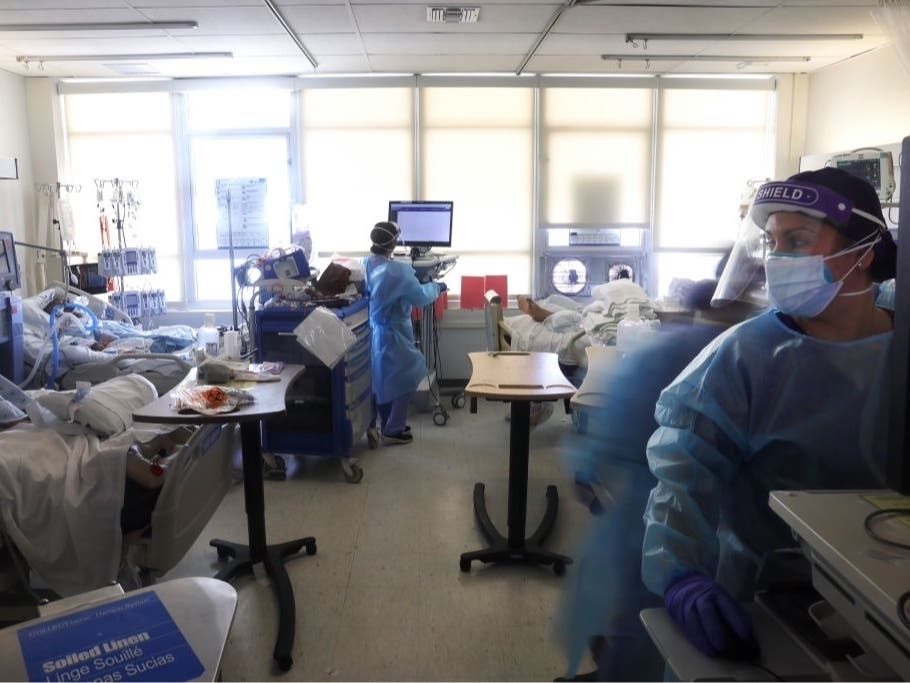
PENNSYLVANIA — Pennsylvania's hospitals, already taxed by staffing shortages and overworked employees who have been battling the front lines of the pandemic for nearly two years, are continuing to be overrun. The state has seen an 18 percent rise in hospitalizations over the past week, and a 49 percent increase over the past two weeks.
Pennsylvania is showing a rate of 57.7 COVID-19 hospitalizations per 100,000 people, according to an NBC News analysis of Health and Human Services Department Data.
The rise comes along with a massive increase in the total number of cases due to the new omicron variant. While many of these cases are mild or asymptomatic, the numbers are so vast they're still contributing to pushing capacity to its limits, officials say. As in New Jersey, many people are being hospitalized for non-coronavirus related reasons, contracting the virus, and requiring a longer stay.
Find out what's happening in Across Pennsylvaniafor free with the latest updates from Patch.
RELATED: Gov. Wolf Urged To 'Declare Emergency On Omicron' Amid Surge
"While initial data suggest that fewer patients are being admitted specifically for COVID-19, there are more patients who test positive upon arrival,” Pennsylvania's Acting Secretary of Health Keara Klinepeter said.
Find out what's happening in Across Pennsylvaniafor free with the latest updates from Patch.
The strain recently led Gov. Tom Wolf to request aid from the Federal Emergency Management Agency, which sent strike teams to hospitals last week. While some rural hospitals face the steepest challenges — Geisinger has said its hospitals have been over capacity for weeks — the densely populated suburbs of both Philadelphia and Pittsburgh are seeing challenges as well. All hospitals in places like Delaware County are full.
There's also a strain on limited resources, like ICU beds. The percent of available adult ICU beds fell to 13.8 percent last week. Roughly 31 percent of all those individuals are COVID-19 patients. Other resources are more widely available: 68.3 percent of ventilators are unused.
“In talking to healthcare workers and hospital leaders, it is clear that regardless of why they are admitted to the hospital, every patient with COVID-19 places significant strain on healthcare workers because they require additional care and precautions such as isolation and PPE," Klinepeter added.
Although the federals trike teams are, for now, only being disbursed to two health systems in Reading and York, Klinepeter says the impacts will be felt across the state, as relieving pressure on overburdened hospitals relieves neighboring areas in a trickle effect. She added, "we know that this alone will not solve our capacity issues."
Vaccines remain the state's top focus in relieving the burden on hospitals.
“Getting a booster dose of COVID-19 vaccine is the best thing we can do to help the healthcare workers across the state who are overwhelmed by the number of patients with COVID-19 who need specialized and extensive care as hospitals are nearing capacity,” Klinepeter said. “Sadly, the risk of hospitalization due to COVID-19 is significantly higher for those that are unvaccinated.
As sharp as the increases have been, Pennsylvania is faring better than mid-Atlantic neighbors. New York (105 percent), New Jersey (117 percent), Delaware (72 percent), and Maryland (85 percent) are all seeing higher increases.
Other states are seeing even bigger numbers. Hospitalizations in Texas are up 141 percent, and 143 percent in California. In Louisiana, they're up 342 percent, according to the data.
Currently, anyone in the hospital who tests positive for the coronavirus is included in coronavirus hospitalization counts sent to the U.S. Centers for Disease Control and Prevention. That includes "incidental" COVID-19 cases, or patients who tested positive after showing up at the hospital for other reasons.
Get more local news delivered straight to your inbox. Sign up for free Patch newsletters and alerts.