Crime & Safety
Drought Watch Declared Across Pennsylvania
Officials are urging residents reduce their water consumption, as they expect little rain in the summer months to come.


PENNSYLVANIA — Weeks of little to no rain has led to state officials to declare a drought watch across Pennsylvania, with residents urged to take steps to conserve water. Lowered stream flows and lower groundwater levels are general, causing impacts to both the ecosystem and available drinking water.
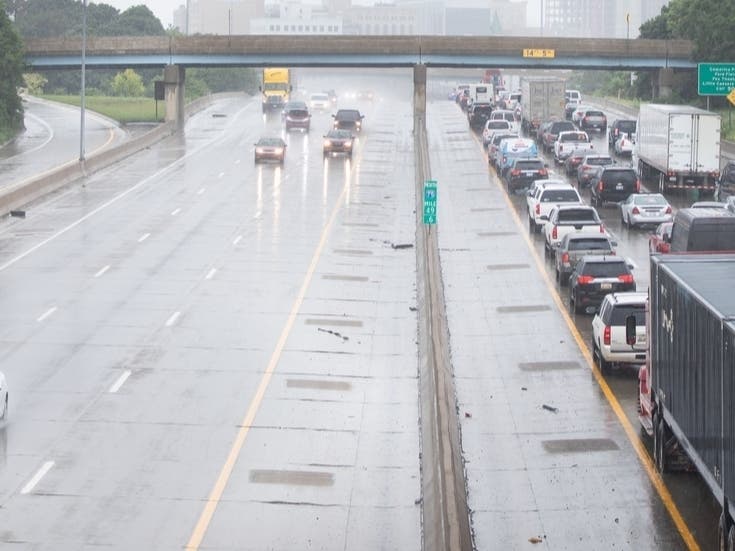
The declaration was made even as a major storm swept across the eastern region on Friday, bringing a tornado warning and severe thunderstorms to the area.
"Although this week has brought some welcome rain to much of the state, it's not enough to make up for the lack of rainfall this spring, following a winter that brought little snowfall in many areas," Department of Environmental Protection Acting Secretary Rich Negrin said in a statement.
Find out what's happening in Across Pennsylvaniafor free with the latest updates from Patch.
Rainfall is expected to continue to be sparse throughout the summer, so conservation measures are even more important. Wildfire risks skyrocket with drought, so officials are also urging extra precautions around open flames.
Negrin called for a reduction in water consumption by 5 to 10 percent, but the state considers the request "voluntary." Statewide, 18 public water suppliers are reiterating this call. A full list, including 11 in Bucks County, one each in Montgomery, Cameron, Perry, and Chester counties, and two in Lebanon County, is available online here.
Find out what's happening in Across Pennsylvaniafor free with the latest updates from Patch.
This is not the first drought watch issued in Pennsylvania recently. A watch was issued in 36 counties in Sept. 2022, and lingered in place in many parts of the state for weeks. At the time, officials also called for a reduction in water consumption.
Drought watches and related declarations are based on four factors: stream flow, groundwater level, precipitation, and soil moisture. They take into account weeks and months of patterns, and a bout or two of severe rainfall — particularly when it is concentrated in short bursts — is not sufficient to alleviate the lingering effects of a system that is behaving with increasing irregularity.
Periods of drought interspersed with the severe and devastating storms that have hit the Delaware Valley are likely to be the norm heading into the future, as the impacts of climate change continue to make themselves felt. Climate change creates conditions that exacerbate both severe weather and drought: when things are dry, lingering heat and increased evaporation rates are likely to make them even drier. And when storms hit, they draw more moisture from a warmer ocean.
For droughts specifically, water evaporates more quickly when it's warmer. Hotter soils are drier. Drought conditions mean less greenery is growing, which means that plants are absorbing less CO2, creating a feedback loop that contributes to warming.
The state urges residents to take the following steps to conserve water:
- Run the dishwasher and washing machine less often, and only with full loads.
- Don't let the faucet run while brushing your teeth or shaving. Take shorter showers. For example, consider not washing your hair daily.
- Water your lawn only if necessary. Avoid watering on windy and hot days. Watering grass lightly and efficiently will encourage healthier, deeper grass roots. Overwatering is wasteful, encourages fungal growth and disease, and results in shallow, compacted root systems that are more susceptible to drought.
- When mowing your lawn, set the blades 2-3 inches high. Longer grass shades the soil, improving moisture retention.
- Water your garden less often. If necessary, water only in the cooler evening or morning hours, and direct the water to the ground at the base of the plant. Focus on new plantings, which have shallow root systems. Older plants may endure dry conditions longer.
- Skip the car washing. If you have to wash your car, it's better environmentally to go to a drive-through car wash that recycles the water.
- Sweep your sidewalk, deck, or driveway, instead of hosing it off.
- Check for and repair household leaks. For example, a leaking toilet can waste up to 200 gallons of water daily.
- Set up a rain barrel to be ready to repurpose rain when it does fall. For helpful information, see this Penn State Extension guide.
Get more local news delivered straight to your inbox. Sign up for free Patch newsletters and alerts.