Politics & Government
Pandemic Sign Language Use Earns PA National Accolades
In the midst of crisis, Pennsylvania COVID-19 briefings were among the most accessible in the nation, a new study found.


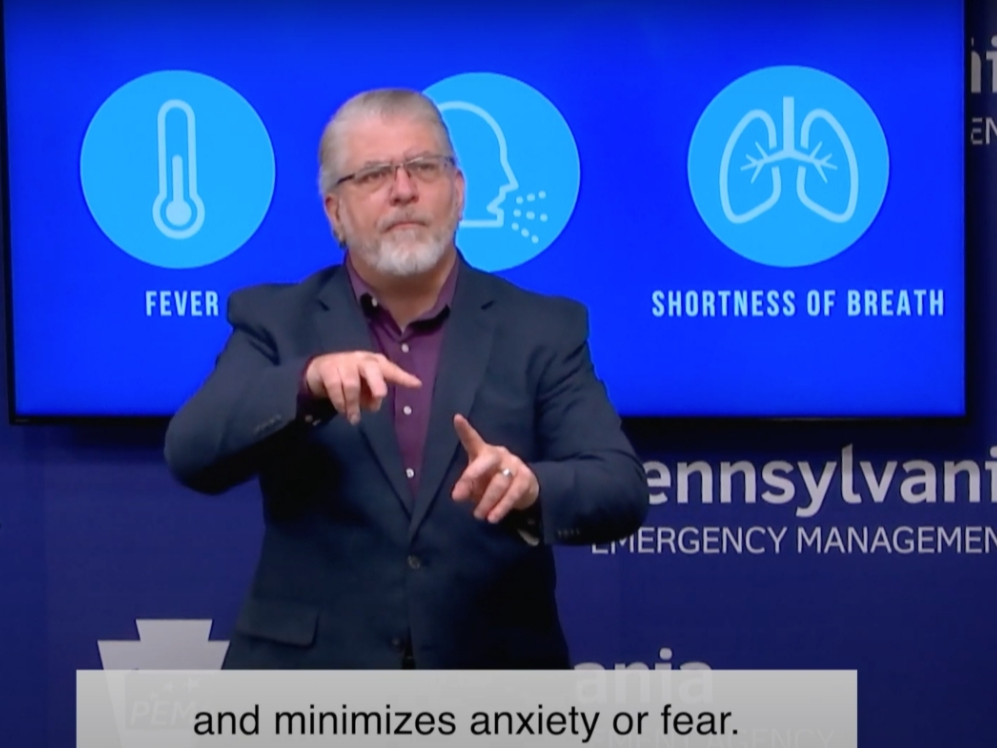
PENNSYLVANIA — There was perhaps no sign of the times more emblematic of 2020 than the image of a sign language interpeter framed against the navy blue and gold flag and coat of arms of Pennsylvania, casting out to the world the words of a somber government official in a small screen in the corner.
Pennsylvania has been recognized by the National Association for the Deaf for its use of sign language to communicate critical information during the pandemic.
"When the COVID-19 pandemic hit and became classified as a national emergency, the deaf and hard of hearing community were frequently deprived of communication access to critical and urgent information," the Association noted in an announcement of its new ranking and awards. "The accessibility of information from each governor for deaf and hard of hearing individuals varied greatly."
Find out what's happening in Across Pennsylvaniafor free with the latest updates from Patch.
Pennsylvania was ranked 10th in the nation for its use of sign language during briefings. Specifically, the study judged how states handled the "clarity and visibility" of interpreters and how successful the translation was in efficiently communicating important information.
Further, the Keystone State was one of only 15 states to receive three stars — the highest merit given — for the frequency of interpreter use. It indicates that Pennsylvania used interpreters in between 90 and 100 percent of their briefings.
Find out what's happening in Across Pennsylvaniafor free with the latest updates from Patch.
The Association said their criteria included an analysis of angle, depth, and lighting. They considered the closeness of the interpreter to the camera, the placement of the interpreter within the frame, the brightness of the image of the interpreter, and the ratio of the size of the interpreter's part of the screen to the presenter's part.
Pennsylvania's screen size ratio for interpreters was about 23.59 percent, the Association found, which they held up as an example for what's ideal.
"Given the tremendous impact of (screen) size on the visibility of interpreters during important broadcasts such as the pandemic briefings, the NAD is advocating for legislation that would establish minimum standards for PIP usage on television or Internet broadcasting," the group added.
Get more local news delivered straight to your inbox. Sign up for free Patch newsletters and alerts.