Politics & Government
Railway Union Could Strike Over No Sick Time: How PA Workers, Rails Are Impacted
Rail workers said the deal did not address exploitative working conditions. "It's destroying their livelihoods," one conductor said.


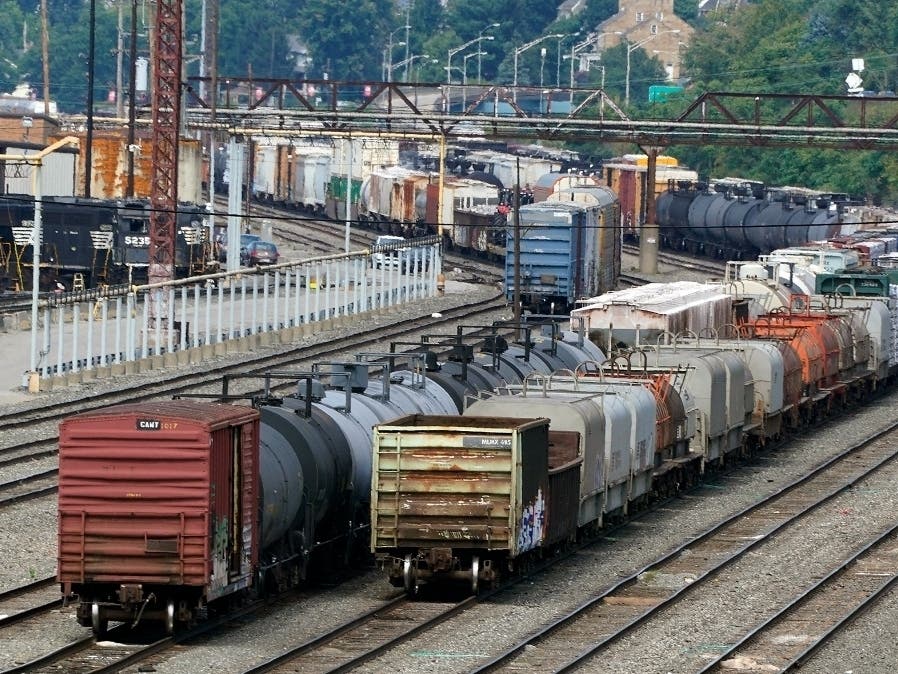
PENNSYLVANIA — A major railroad union representing employees in Pennsylvania and around the nation could go on strike after rejecting a proposed labor deal that they said failed to address exploitative working conditions, insufficient paid sick leave, unrealistic working schedules, and overall quality of life, among other issues.
The SMART-TD union, which represents some 28,000 rail conductors nationwide, voted no by a 50.87 percent margin on the deal with freight executives that was brokered by U.S. Secretary of Labor Marty Walsh. Another large division representing some 24,000 freight train engineers, the Brotherhood of Locomotive Engineers and Trainmen, voted yes. But the Brotherhood said they would not cross the picket-line and would support conductors in their dissention.
"It is beyond belief that in the year 2022 rail workers in America have zero guaranteed paid sick days," U.S. Sen. Bernie Sanders said Monday. "Zero. The rail industry, which made a record-breaking $20 billion in profits last year, must come to the table and negotiate a contract which treats their workers with respect."
Find out what's happening in Across Pennsylvaniafor free with the latest updates from Patch.
The unions further argued that the pandemic exposed how their workers — many of them who risked their health by remaining on the frontlines of coronavirus for months — are way overdue for an update to their paid sick time benefits. The proposed deal from the nation's rail giants, including Union Pacific, CSX, Norfolk Southern, BNSF, and Kansas City Southern, included just three days a year to "tend to medical needs," and required they be scheduled 30 days in advance.
“A lot of these things...cannot be seen but are felt by our membership," Jared Cassity, the national legislative director at SMART Transportation and a conductor, told the Washington Post. "It’s destroying their livelihoods."
Find out what's happening in Across Pennsylvaniafor free with the latest updates from Patch.
SMART-TD President Jeremy Ferguson, who has faced deep criticism from the union's rank and file as a "union bureaucrat" who sides with railroads, has made threats that U.S. Congress itself had legal authority to stop a strike. He said this week that the dispute could be settled without a labor halt.
"SMART-TD members with their votes have spoken, it’s now back to the bargaining table for our operating craft members...a settlement would be in the best interests of the workers, the railroads, shippers and the American people," he said in a statement, later adding, "Everyone's ready to get it done."
"Except for the majority of #RailLabor," Railroad Workers United, representing the rank and file of the union, replied to the quote on social media.
Both SEPTA and New Jersey Transit said they would not be significantly impacted by a strike, as the majority of their tracks are not run on freight rails, as Politico first reported. Amtrak lines in most of the northeast similarly would not be impaced, although commuter lines in much of the rest of the nation could see major delays.
In western Pennsylvania, shipping lines like the Allegheny Valley, Buffalo, and Pittsburgh railroads rely on Norfolk Southern and CSX tracks. These lines would be impacted.
The railroad's refusal to offer more sick time and benefits comes as the nation sees historic inflation rates, spurring skyrocketing rent and cost of living. Meanwhile, corporations across industries and around the country have largely declined to provide inflation-adjusted wages.
Railroads, meanwhile, maintain that they refused to offer paid sick time because the panel led by Labor Secretary Walsh did not recommend it. They also said that unions agreed in the past to forgo paid sick time in favor of higher pay.
A strike would halt shipments of food and fuel at a cost of $2 billion a day, according to a report earlier this year by the Association of American Railroads, an industry trade group. Supply chain issues are easing, but likely would become tangled again by a strike, according to the report.
The railroads also lost out on their bid to cut crew sizes down to one person as part of the negotiations.
Get more local news delivered straight to your inbox. Sign up for free Patch newsletters and alerts.