Politics & Government
U.S. Steel Pledges Up To $2.5 Billion In Upgrades To Mon Valley Works In Allegheny County
After the Pittsburgh-based company's purchase by Nippon Steel, the metals icon says it will secure the region's place in the industry.

June 9, 2026
U.S. Steel plans to invest up to $2.5 billion into upgrades to its Mon Valley Works, which it forecasts will generate $1.7 billion for the state’s economy, according to a Monday report from the steelmaking giant.
Find out what's happening in Across Pennsylvaniafor free with the latest updates from Patch.
The economic impact is expected to include the combined dollars spent on things such as wages and construction costs associated with the upgrades, according to the report.
The investment will preserve the roughly 3,000 jobs at Mon Valley Works and create nearly 3,200 indirect and induced jobs over a three-year period, according to the report. The company projects the upgrade work will generate up to $58 million in state and local tax revenues over the next three years. It comes as a part of the company’s larger commitment to invest $11 billion into its domestic footprint by 2028, on the heels of a $15 billion acquisition by Japan-based Nippon Steel last year.
Find out what's happening in Across Pennsylvaniafor free with the latest updates from Patch.
The investment includes a new hot strip mill at the Edgar Thomson plant in Braddock. The new mill will replace an 87-year-old hot strip mill at the nearby Irvin plant in West Mifflin, and will allow U.S. Steel to produce products for the automotive industry and other high-strength steels that the Mon Valley Works “cannot competitively produce,” according to materials the company has shared with community leaders.
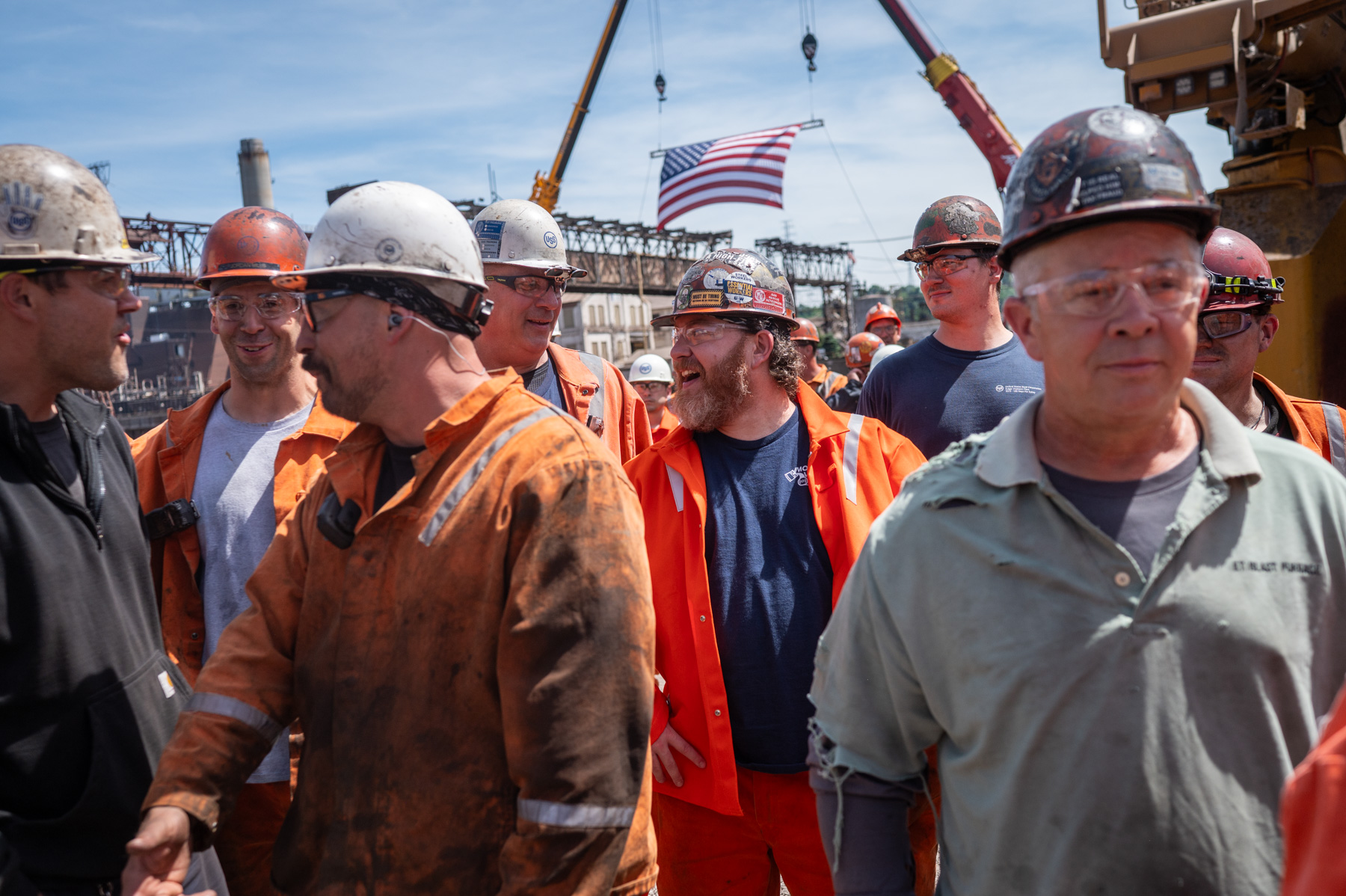
U.S. Steel employees wait to greet company and government officials at the announcement of investment at the Mon Valley Works on June 8, at U.S. Steel’s Edgar Thomson Plant in Braddock. (Photo by Stephanie Strasburg/Pittsburgh’s Public Source)
“The Mon Valley Works is where the American steel industry was first forged, and this investment is proof that its best days are still ahead,” the company’s President and Chief Executive Officer, David Burritt, said in a statement.
Burritt debuted the investment at a press conference Monday. He was joined by federal Secretary of Commerce Howard Lutnick, who he credited with making the Nippon deal happen. Tokyo-based Nippon’s acquisition of U.S. Steel was approved by U.S. Steel shareholders in April 2024, but the deal faced pushback from the United Steelworkers Union, as well as then-President Joe Biden, who blocked the deal through an executive order at the end of his term, citing national security concerns.
Nippon’s nearly $15 billion acquisition closed last year under the Trump Administration. It includes a “golden share” provision that gives the federal government the right to exercise some control over the company, including appointing a board member. Nippon also needs permission from the president, or his designated appointee, to reduce its capital commitments.
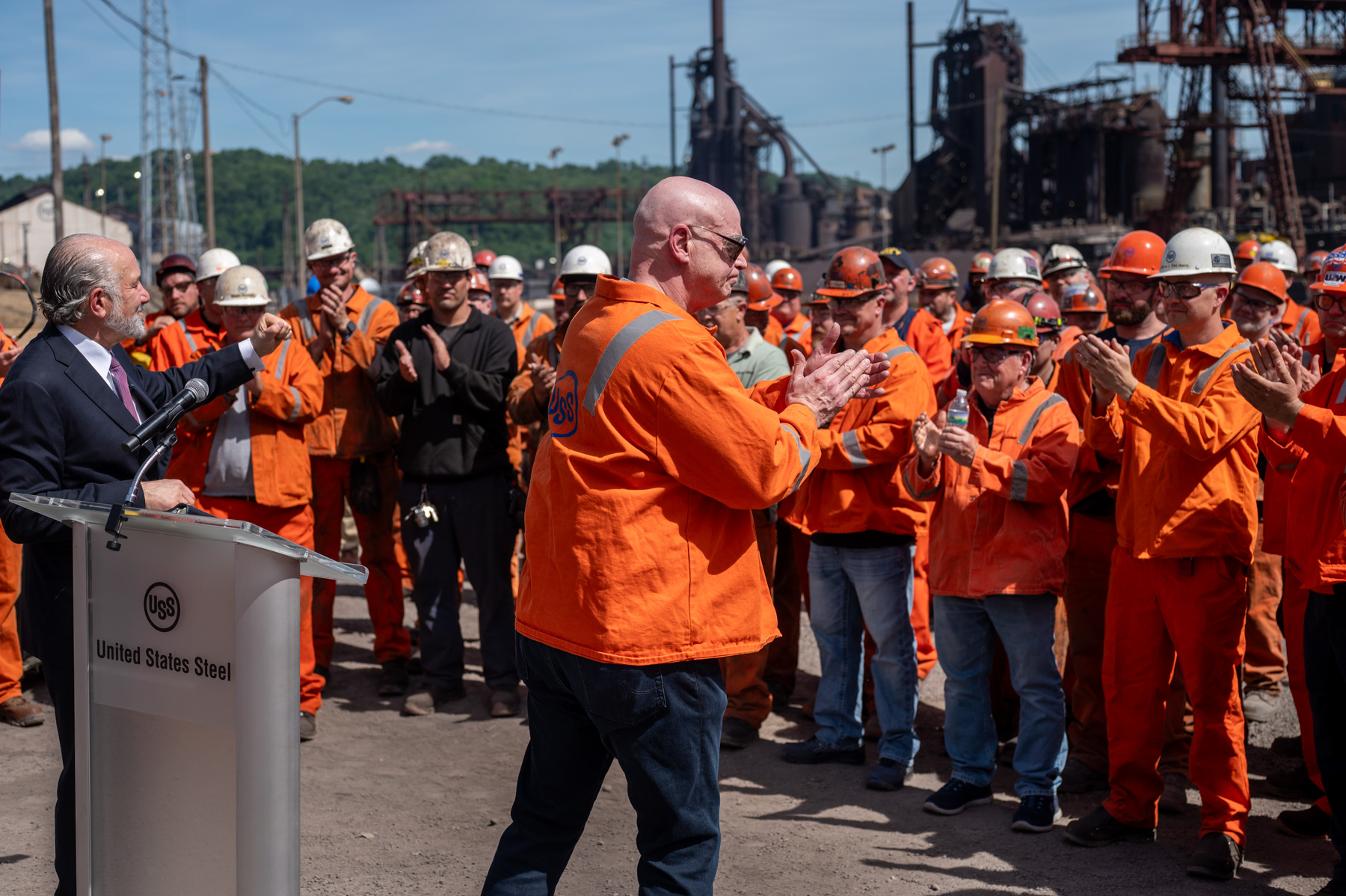
U.S. Secretary of Commerce Howard Lutnick, left, and David B. Burritt, president and CEO of U.S. Steel Corp., clap following a press conference at U.S. Steel’s Mon Valley Works – Edgar Thomson Plant during a visit marking the one-year anniversary of U.S. Steel’s partnership with Nippon Steel, on June 8, in Braddock. Burritt doubled down on the company’s planned investment in the Mon Valley Works. (Photo by Stephanie Strasburg/Pittsburgh’s Public Source)
Lutnick said at the conference that he does not think the federal government will “need to use” its golden share provision rights. Nippon has been “absolutely” living up to their end of the deal, he said.
“When steel is made here in Braddock, America is stronger. When steel workers have a strong future, this region has a strong future,” he said.
After debuting the $11 billion plan in November, U.S Steel hasn’t fully laid out how it intends to divvy up the investment across its domestic footprint. It originally pledged to invest $1 billion into the Mon Valley Works.
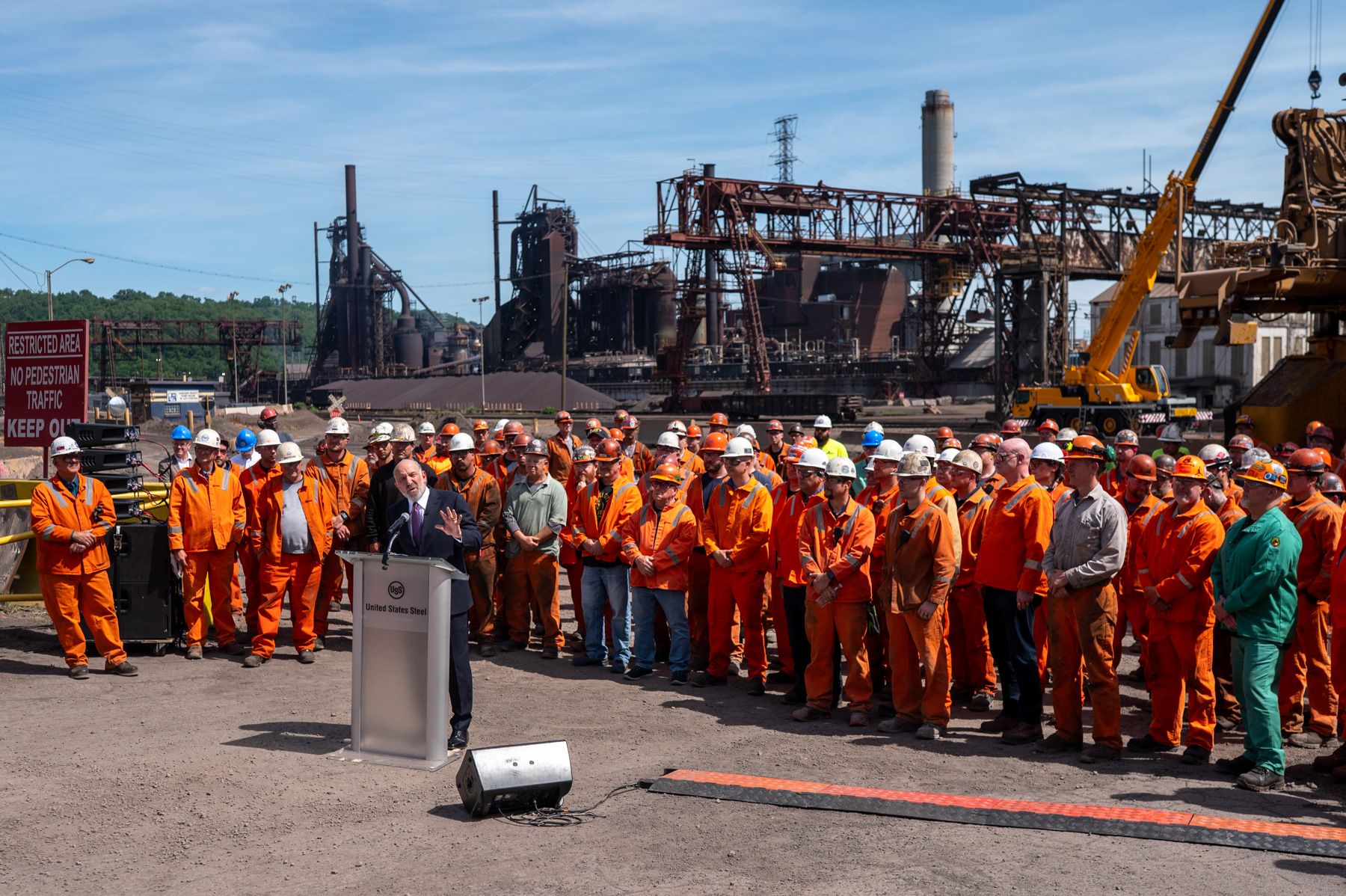
U.S. Secretary of Commerce Howard Lutnick praises President Donald Trump’s role in the U.S. Steel/Nippon Steel deal during a press conference in front of employees at U.S. Steel’s Edgar Thomson Plant, June 8, in Braddock. (Photo by Stephanie Strasburg/Pittsburgh’s Public Source)
The upgrades will implement new technology that the company says will reduce its emissions and produce a “cleaner, more efficient production process.” The push toward a less emissions-intensive steelmaking process comes as Allegheny County is working on its climate action plan that urges U.S. Steel to phase out its current processes in favor of carbon capture and direct reduced iron technology.
Philadelphia-based consulting firm Parker Strategy Group created Monday’s economic impact report.
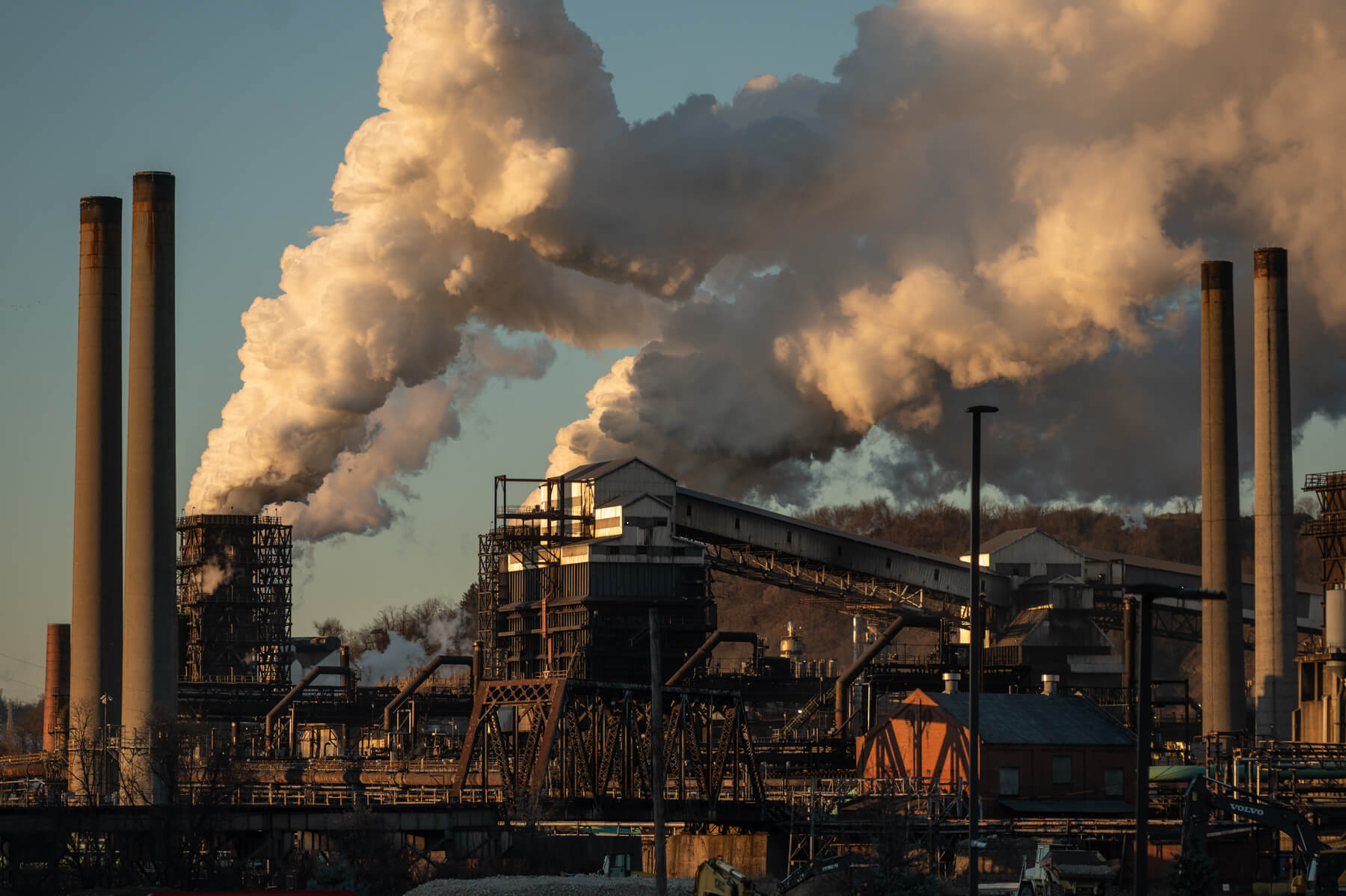
U.S. Steel’s Clairton Coke Works belches steam into the sky above Clairton on Thursday, Dec. 12, 2024, when hundreds of U.S. Steel workers braved freezing temperatures as they rallied outside of the facility in support of the company’s sale to Nippon Steel. The company did not announce any new investment plans at the Coke Works. (Photo by Stephanie Strasburg/Pittsburgh’s Public Source)
U.S. Steel’s Mon Valley Works is made up of three sites: the Edgar Thomson plant in Braddock, the Clairton Coke Works and the Irvin plant in West Mifflin.
None of the $2.5 billion is indicated as slated for the Irvin works or the Clairton plant, which was rocked by a fatal explosion last year. Two workers died and 10 more were injured in the blast.
U.S. Steel was fined $118,000 in the aftermath of the explosion. The federal Occupational Safety and Health Administration cited the plant for inadequate safety procedures, training and equipment.
Nippon was the third-largest producer of steel in the world last year, according to the World Steel Association.
Increasingly, U.S. Steel and other manufacturers are looking South to produce more steel for the automotive industry. The company’s holdings in Arkansas and Alabama are non-unionized and sit close to the Southern automotive corridor — a network of manufacturing hubs stretching from South Carolina to Mississippi.
The company plans to invest $3 billion into its Big River Steel site in Arkansas. Of that, $1.9 billion will go toward a direct reduced iron plant — a steelmaking process that produces high-quality iron by removing oxygen from iron ore pellets using reduced gases, such as hydrogen or natural gas, rather than melting it in a blast furnace. That iron is a key ingredient in steel.
Burritt called Big River the “beating heart of America’s steel industry” in an address to the Arkansas Chamber of Commerce in November.
An Lewis, executive director of the Steel Rivers Council of Governments — a resource-sharing nonprofit membership organization for Mon Valley communities — said at a June Steel Rivers board meeting that the communities “need to be thinking about what it is we can do in our communities to help U.S. Steel want to stay here.”
“If they don’t build here, what are we going to be left with?” Lewis said.
Nippon Steel has pledged to become carbon neutral by 2050. Direct reduced iron facilities, like the planned Arkansas plant, are typically less carbon intensive than other iron-making methods. Big River also utilizes electric-arc furnaces, which melt recycled scrap steel, producing fewer emissions than the traditional blast furnaces such as those at Edgar Thomson.
“We’re here to stay not for the next generation, but generations and generations to come,” Burritt said. “All I can say about the way we do business in Pennsylvania — you ain’t seen nothing yet.”
U.S. Steel’s massive Gary Works steel mill in Indiana is the company’s largest manufacturing plant by volume. It produces products for the construction, automotive and appliance industries.
The company met with officials in the Mon Valley last week to discuss the investment, according to Lewis.
Together, the Mon Valley Works produce around one-quarter of Allegheny County’s greenhouse gases, according to the county’s in-progress climate action plan.
The developing plan is expected to be finalized by the end of August. It also urges the company to invest in a new strip mill at the Irvin plant and invest in carbon capture technology for any remaining emissions.
Last week U.S. Steel continued its yearslong legal appeal of more than $4 million in fines issued by the Allegheny County Health Department for alleged hydrogen sulfide air quality violations between 2020 and 2023. The company agreed to a $1.5 million class action settlement in 2025, which compensated residents within one mile of Edgar Thomson over odors and other emissions from the facility. U.S. Steel denied allegations made against it as part of the settlement.
The Pennsylvania Capital-Star, a nonpartisan, nonprofit news site, delivers honest and aggressive coverage of state government, politics and policy. Since launching in February 2019, the Capital-Star has emerged as a go-to source for in-depth original reporting, explainers on complex topics, features that ground policy debates, and progressive commentary on a range of issues. The Capital-Star is part of States Newsroom, a national 501(c)(3) nonprofit supported by grants and a coalition of donors and readers.