Community Corner
UPenn Scientists Awarded Nobel Prize For Work On COVID Vaccines
Katalin Karikó and Drew Weissman—both professors at UPenn—have been praised for crucial discoveries in the development of mRNA vaccines.


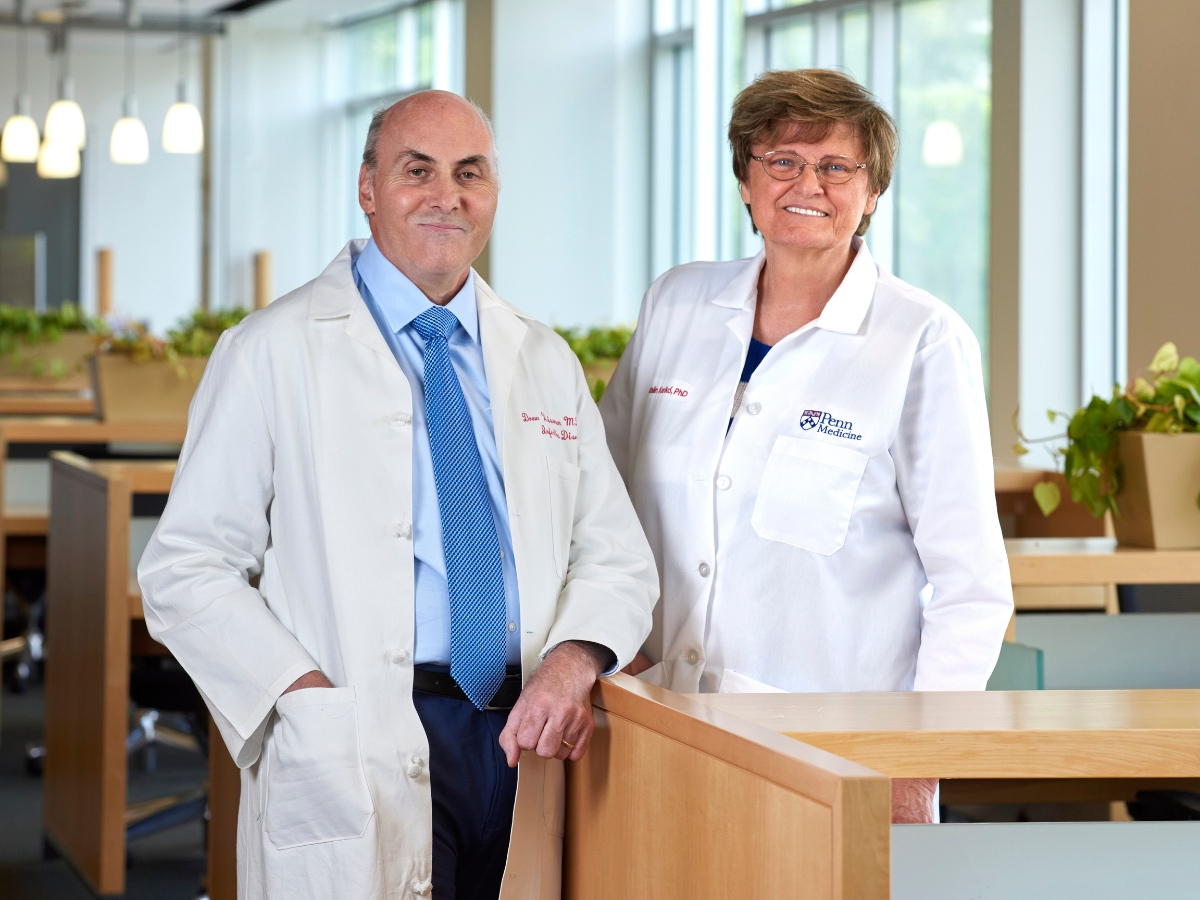
PHILADELPHIA, PA — The 2023 Nobel Prize in Physiology or Medicine has been awarded to two University of Pennsylvania scientists for their work in developing life-saving mRNA vaccines for COVID-19, the Nobel Prize committee announced Monday.
Katalin Karikó and Drew Weissman—both professors at UPenn—are being honored for crucial discoveries concerning nucleoside base modifications.
"The discoveries by the two Nobel Laureates were critical for developing effective mRNA vaccines against COVID-19 during the pandemic that began in early 2020," the committee wrote. "Through their groundbreaking findings, which have fundamentally changed our understanding of how mRNA interacts with our immune system, the laureates contributed to the unprecedented rate of vaccine development during one of the greatest threats to human health in modern times."
Find out what's happening in Across Pennsylvaniafor free with the latest updates from Patch.
After realizing that they could mitigate inflammation levels by altering chemicals in mRNA bases, Karikó and Weissman published their findings in 2005, fifteen years before the COVID-19 pandemic.
Over the next couple of years, interest in mRNA technology began to pick up, and in 2010, several companies were working on developing the method, the committee noted. When the COVID-19 pandemic hit, mRNA vaccines were developed at record speed.
Find out what's happening in Across Pennsylvaniafor free with the latest updates from Patch.
"The impressive flexibility and speed with which mRNA vaccines can be developed pave the way for using the new platform also for vaccines against other infectious diseases," according to the committee. "In the future, the technology may also be used to deliver therapeutic proteins and treat some cancer types."
Vaccines work by stimulating an immune response to a particular pathogen, giving the body a head start in the fight against disease in the event of a later exposure, the committee explained.
Katalin Karikó was born in 1955 in Szolnok, Hungary, according to a short biography provided by the Nobel Prize committee. She received her PhD from Szeged’s University in 1982, going on to perform postdoctoral research at the Hungarian Academy of Sciences in Szeged, Temple University in Philadelphia, and the University of Health Science in Bethesda.
She served as an Assistant Professor at the University of Pennsylvania from 1989 until 2013, when she became vice president and later senior vice president at BioNTech RNA Pharmaceuticals. Since 2021, she has been a Professor at Szeged University and an Adjunct Professor at Perelman School of Medicine at the University of Pennsylvania.
Drew Weissman was born in 1959 in Lexington, Massachusetts, according to his own Nobel Prize biography. He received his MD, PhD degrees from Boston University in 1987 before doing his clinical training at Beth Israel Deaconess Medical Center at Harvard Medical School and postdoctoral research at the National Institutes of Health.
In 1997, Weissman established his research group at the Perelman School of Medicine at the University of Pennsylvania. He is the Roberts Family Professor in Vaccine Research and Director of the Penn Institute for RNA Innovations.
Get more local news delivered straight to your inbox. Sign up for free Patch newsletters and alerts.