Politics & Government
Residents Take City Avenue Zoning Conversation in a New Direction
Some residents said they feared a casino would be added.
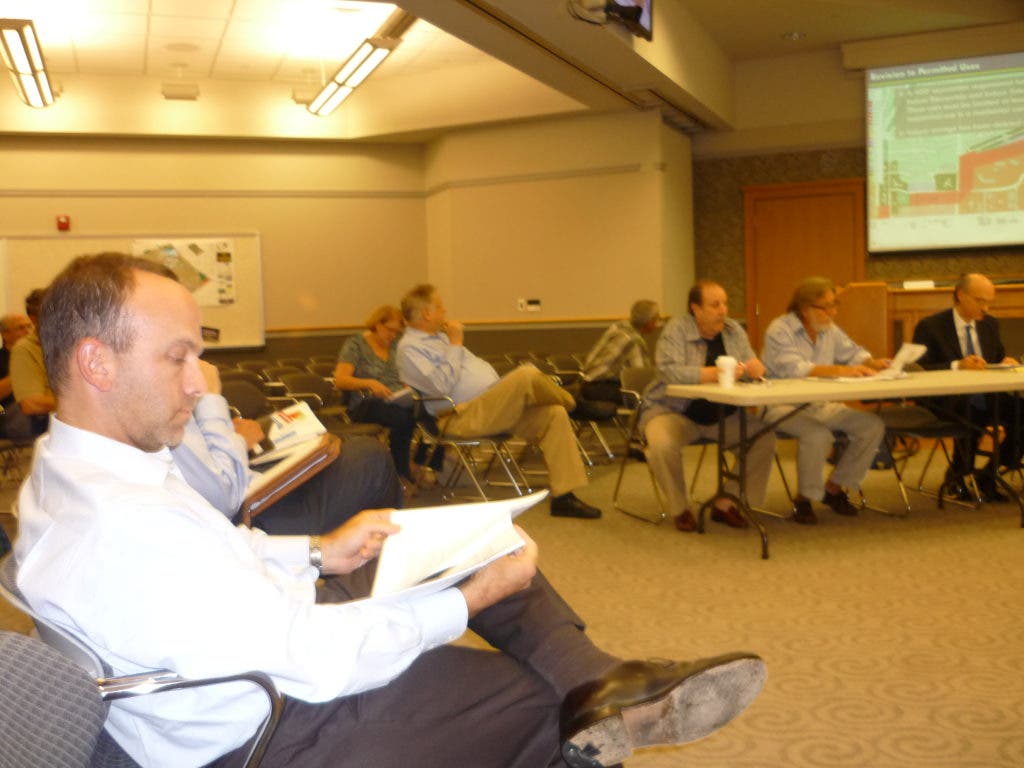
The agenda for a public workshop Monday night on the proposal to rezone City Avenue to attract new development was derailed when residents demanded the creation of a master plan and expressed fears about City Avenue recently .
The meeting was intended to discuss recent amendments which township staff made to the City Avenue rezoning proposal in response to residents’ concerns, and talk about the next steps in the proposal process, but it only briefly touched upon the first item and did not accomplish the second.
Gladwyne Civic Association President Karen Aydt said the rezoning proposal needed a master plan and other residents agreed with her.
Find out what's happening in Narberth-Bala Cynwydfor free with the latest updates from Patch.
However, Board of Commissioners President Liz Rogan and Planning Director Bob Duncan said that there was no enabling legislation that would give the township the ability to require landowners in the proposed rezoning district to implement the provisions of a master plan, if there was one.
Commissioner Daniel Bernheim asked residents to tell him what they thought the proposal was missing that a master plan might add. “What I’m trying to do is look forward, rather than bickering in the rearview mirror,” Bernheim said.
Find out what's happening in Narberth-Bala Cynwydfor free with the latest updates from Patch.
Bernheim’s question led to another round of what has been an ongoing debate at the City Avenue workshops: residents who think the proposal lacks a vision and township officials who disagree.
David I. Haas, a member of the Neighborhood Club of Bala Cynwyd, said the problem was not a lack of a master plan, but that “There’s not been enough attention drawn…to how people can visualize this in pictures.”
Haas said residents can not envision the project when they look at the some 50-page proposal document with all of its little black and white pictures.
“We all have the same problem,” Haas said. “We can’t see what this looks like.”
Other residents said what they thought was missing from the plan was: addressing residents’ quality of life issues; making the district pedestrian-friendly; and encouraging use of public transit or adding more of it.
In regards to encouraging use of public transit, Bala Cynwyd resident Barry Polis said it was “critical” that the SEPTA R6 rail line (now split into the Cynwyd and Norristown lines) be revitalized.
“We don’t want to be like King of Prussia where those poor people fight to get home every night,” Polis said.
Duncan said he knew of “no legal means to tie zoning into use of the train” but SEPTA and Amtrak would adjust its service if it was needed.
Residents also expressed fears about the findings of a demographic research report released last week that identified City Avenue--which is has one side of its street in Lower Merion and the other side in Philadelphia-- as among the most lucrative prospective casino locations in eastern Pennsylvania.
Richard Kaufman of Bala Cynwyd said the rezoning proposal “is becoming more and more of a back door way of sneaking gaming in, whether it’s on the Philadelphia side or the Lower Merion side.”
But Duncan said gaming is a prohibited use in the City Avenue District.
“If we had wanted gaming, we wouldn’t have prohibited the use,” Duncan said.
Residents briefly discussed some of the amendments that were made to the rezoning proposal.
One of the amendments is a new traffic impact standard which requires a new traffic study when development in the district exceeds the limits established by the Land Use Assumption Report, Duncan said. When this occurs, no development can have a traffic impact that reduces the level of service below the established Level D, without making improvements to maintain a Level D service, Duncan said.
Level D refers to the preferred level of service for intersections within the City Avenue Transportation Service Area district, which is a delay of 35 to 55 seconds. Level of service for intersections ranges from a grade of A, which is the best, with a delay of less than 10 seconds at intersections, to F, which is a congested area with a wait of more than 80 seconds at an intersection.
Teri Simon, president of the Wynnewood Civic Association, questioned whether the new amendment for traffic impact standards would be altered in the future.
Simon asked if future boards of commissioners would have the ability to change the Land Use Assumptions Report standards and Duncan said yes.
Simon asked, "When the township also has so many intersections in the township that are below Level D, how can you guarantee that a future board won’t amend it?”
Another amendment to the proposal adds a 400-foot separation requirement for indoor recreation and indoor entertainment uses, Duncan said. Any recreation or entertainment use would need to be at least 400 feet from any residential use in a residential zoning district.
Some residents said they were opposed to indoor recreation or entertainment complexes.
Residents said they thought the use was a new proposal under the rezoning, but commissioners at the meeting said indoor recreation and indoor entertainment complexes are a permitted use, which is already exists, even without the rezoning.
John Grugan, president of the Neighborhood Club of Bala Cynwyd, said what is already permitted in terms of zoning in the area is “tremendously permissive.”
“What we can do through this process is further restrict what we don’t want,” Grugan said.