Politics & Government
School for Young Children Lobbies for Artificial Turf
T-Mobile's antennae proposal for Bala Cynwyd was withdrawn.
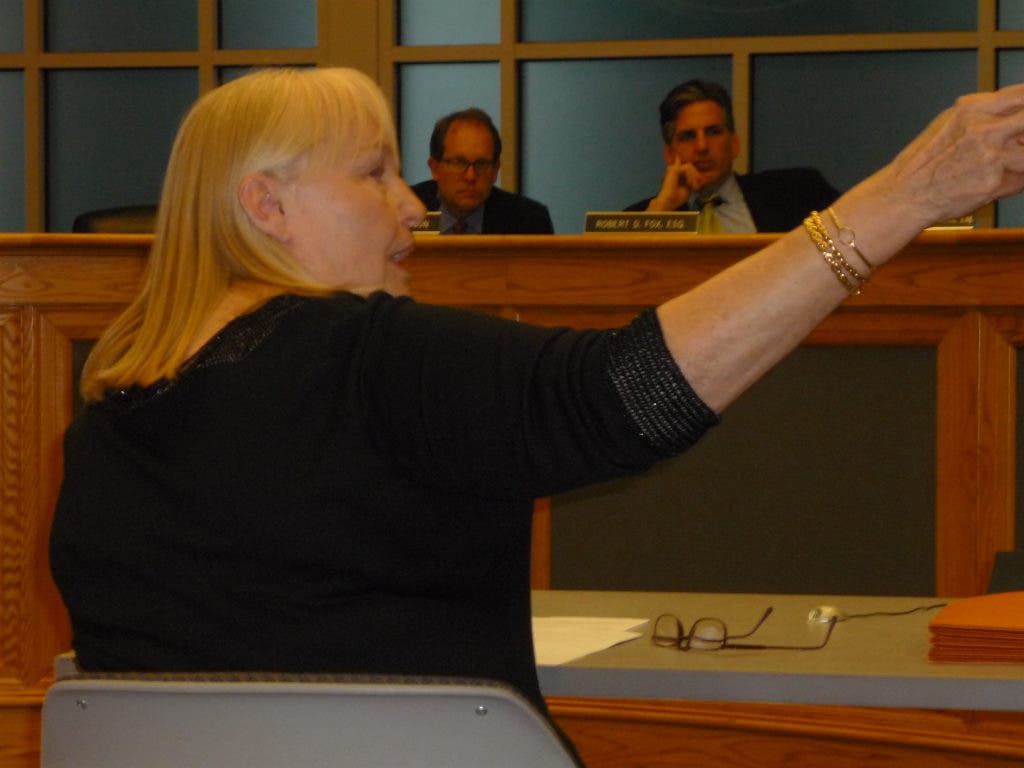
The Lower Merion Zoning Hearing Board considered but did not vote Thursday night on a variance to allow for an artificial turf system in the side yard of the .
An appeal for another Bala Cynwyd property was withdrawn by the applicant, T-Mobile Northeast LLC, before the meeting. The appeal was listed on the agenda for Thursday night’s Zoning Hearing Board meeting, with a note at the top that said “withdrawn.”
T-Mobile had made a proposal to install nine roof-mounted Wireless Communication Facility antennae with visual screens at 199 City Ave. and had planned on requesting a variance to allow the antennae on a structure that is less than 35 feet in height , according to the board’s meeting agenda.
Find out what's happening in Narberth-Bala Cynwydfor free with the latest updates from Patch.
The Bala Cynwyd School for Young Children at 11 St. Asaphs Road wants to install a permeable artificial turf system on a previously approved play area along the western property line and is seeking a variance to allow a portion of the turf within the required side yard.
The side yard is a 16-foot-wide area, said Eileen Hanley-Meline, the applicant of the appeal and the executive director of the Bala Cynwyd School for Young Children, which serves 145 children ranging from infants to kindergarteners.
Find out what's happening in Narberth-Bala Cynwydfor free with the latest updates from Patch.
For the play area where the artificial turf is proposed, the school must meet a new state regulation which requires that play areas for children age three and younger have playground surfaces which are made out of poured rubber, sand, or artificial turf with a foam pad underneath it, said the school’s attorney, Jamie Jun of the law firm Fromhold, Jaffe & Adams.
The surfacing requirements must meet “fall height safety zones” to ensure the safety of young children, even if the height of the fall is from a trike, Hanley-Meline said. This is done to help prevent head injuries, she said.
Natural grass isn’t soft enough to prevent head injuries during a fall, Hanley-Meline said.
“We had wood chips,” Hanley-Meline said. “Those are no longer acceptable because of the chance of children ingesting them.” Shredded rubber is also prohibited for the same reason, she said.
Sand is acceptable for state safety regulations but it does not meet the federal Americans with Disabilities Act (ADA), Hanley-Meline said.
She said she also preferred turf over sand because children can ingest the sand, and animals often defecate in it.
Robert Fox, chairman of the Zoning Hearing Board, asked if the playground surface could be designed so that some areas have artificial turf and others have sand in order to cut down on the turf in the setback.
Hanley-Meline said the school could use more than one type of material but “that prevents a tripping area for kids as they move from one area to another.”
The school met with the Neighborhood Club of Bala Cynwyd and some members of the the Fairmont condominiums and both groups said they did not have a problem with the proposal, Hanley-Meline said.
A neighbor whose home is in the rear of the school attended the hearing and said she did not have a problem with the playground as described.
The board did not vote on the school’s appeal on Thursday night.
In another appeal, the Haverford School went before the Zoning Hearing Board to seek a special exception to construct a 1200-square-foot addition to the Palmer House, near the intersection of Buck Lane and Old Buck Road.
The addition would be used as a meeting and gathering space for the Advancement Office for school development, and for parent and alumni functions.
The existing building has a second-floor meeting room for 12 to 15 people, said the school’s attorney, Greg Davis of the law firm Saul Ewing in Wayne. The addition would make the space more comfortable for gatherings, he said.
Joseph Cox, headmaster of the Haverford School, said the new space would be “essentially a place where adults gather.” Cox said he tries to keep alcohol separate from the campus and the Palmer House is “where we entertain.”
No additional faculty or staff, or students would be using the addition, Cox said.
“We don’t perceive it attracting more people or activities,” Cox said.
Maarten Pesch, the architect for the Palmer House addition, said the space was designed as a meeting area for 20-40 people, and it would be ADA-compliant, unlike the existing second floor meeting space.
The school met with neighbors in 2010 and the Haverford Civic Association last week, and in both cases, there was no opposition to the addition, Davis said. The comments made by residents at both meetings were positive, according to Davis and Pesch.
Fox commented on the fact that the school had not completed a lighting plan for the project.
“We’ve actually denied plans on that basis, where plans don’t comply with the code and there’s a special exception,” Fox said.
Fox said he would keep the case open in order to give the school time to submit the lighting plan before the board voted on the special exception request. He said the school should come back to the board when it meets again on April 14.
Davis asked if it made any difference that there were no neighbors at the board meeting.
Fox said it did not matter. He said that the board could not make an exception for the school regarding the lighting plan, because it would set a precedent for other applicants.
The civil engineer for the school’s project, Michael Bowker of Momenee and Associates Inc. in Bryn Mawr, said, “The only new exterior light we’d be adding is a recessed light over the front door.”
Zoning Hearing Board member Charles Davidson said the school was supposed to provide lighting along the walkway.
“The safest thing to do is come back on April 14," Fox said.