Business & Tech
Baldwin Resident Keeps Family Farm Growing
Tara Rockacy purchased her grandfather's farm five years ago and now is part of the CSA (community shared agriculture) movement.


On a humid Saturday morning, Tara Rockacy is doing a walk-through of her crops as the sky threatens rain.
Rockacy carefully walks in between rows of tomatoes, each plant bending just slightly under the weight of green tomatoes still weeks away from being ripe. She bends down and plucks off two stinkbugs who have planted themselves on bright green leaves.
“Look at this,” she said, spreading leaves to reveal a twisted, gnarled, pale green vegetable. “This is one of our heirloom varieties,” she adds, confirming that it is indeed a tomato, and it is indeed designed by nature to look just so.
Rockacy, along with her partner, Kate Romane, own Churchview Farm in north Baldwin Borough. Along with several interns and other help, Rockacy and her parents tend the seven-acre farmette. The farm has been in the family since the 1940s. Rockacy's grandfather used to farm the land, and in 2006, Rockacy purchased it to start her own agricultural adventure.
Rockacy specializes in heirloom varieties. Churchview offers more than 75 varieties of tomatoes, 30-plus varieties of peppers (and so on) to give consumers a taste of something that they otherwise may not have known existed.
Everything at Church is non-certified organic, right down to the natural pesticides. Rockacy also uses non-GMO seeds, which means that they haven't been genetically altered.
The farm sells raw, unprocessed and unfiltered honey. In the spring, the honey is light in color. By fall, it will be darker and richer, almost like molasses, Rockacy said.
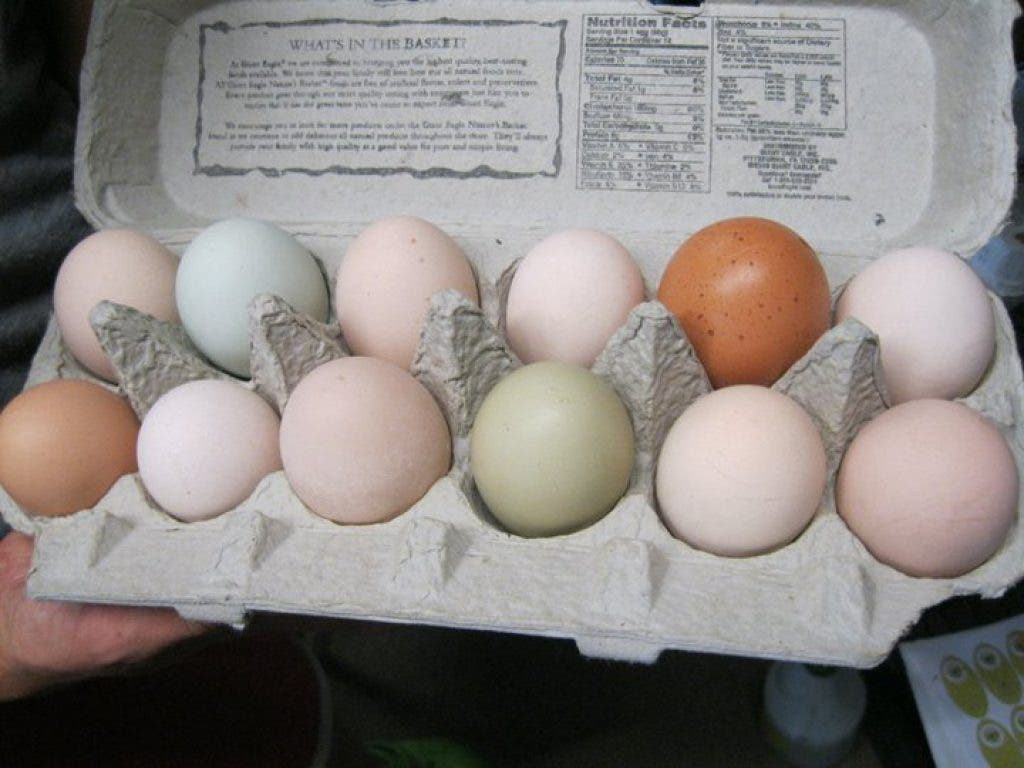
Free-range hens produce beautiful, organic eggs, too. The hens are free to roam, foraging for grass, bugs, seeds, et al. Their diet is supplemented with organically grown grains from a local farm.
Churchview also happens to be one of a growing number of farms participating in community shared agriculture, or CSA.
CSA has become increasingly popular in recent years. According to Local Harvest, CSA is mutually beneficial way for consumers to buy local, seasonal food directly from a local farmer.
Farmers offer a certain number of "shares" to the public. Typically, the share consists of a box of vegetables, but other farm products may be included. Consumers purchase a share (sometimes called a "membership"), and in return, they receive a box of seasonal produce each week throughout the farming season.
Rockacy, who once worked for the Carnegie Library of Pittsburgh full-time, cut down on her library hours as farming became her livelihood.
"I do it because I love it and because I'm passionate about it," she said. "People have become so disconnected with their food."
Members get fresh produce from Churchview Farm for at least 22 weeks. Shares each week contain 7-10 items, enough to feed 3-4 people. A recent week's, for example, included eggplant, cucumbers, sweet basil and chard and hot peppers, just to name a few.
There are designated drop-off points where members receive their weekly share and can trade produce with other members. The majority of produce is in the consumer's hands within 24 hours of being harvested.
Sometimes, other goodies, like bread baked with fresh herbs, are included in the share, as was the case early in the season following a very wet spring when the growing schedule was thrown off.
Find out what's happening in Baldwin-Whitehallfor free with the latest updates from Patch.
This year, the going rate for a share at Churchview was $600. Rockacy currently has her list capped at 20 shares with many people on the waiting list.
But you don't have to have a membership to purchase produce from Churchview Farm. Rockacy has numerous varieties of vegetables for sale, too. What she has available at any given moment is largely dictated by what the weather has been like, especially in early spring.
Rockacy also sells produce to local restaurants, including Salt of the Earth in Pittsburgh's Garfield neighborhood and Kate's E2 ("E Squared") in Pittsburgh's Highland Park.
"It's really catching on," Rockacy said. "It's important to chefs to have a quality product and to have that relationship."
Rockacy hopes that the CSA movement becomes even more alluring. She also hopes to offer classes on ways to preserve food and plans to do a family-style farm dinner for members.
"The responsibility of a farmer is not just to hand off a box of vegetables," she said, "but it's to educate (consumers) a little bit, too."
For more information on CSA, including locations of local markets or recipes for bumper crops, visit www.buylocalpa.org and/or www.pasafarming.org.